Aluminum alloys have been used in shipbuilding since 1891. After nearly a century of research and development, their application in marine engineering has expanded significantly, making them one of the most promising materials in the shipbuilding industry.
In the 1930s, 6061-T6 aluminum alloy was introduced and used in riveted ship structures. In the 1940s, weldable and corrosion-resistant Al-Mg alloys were developed. The 1950s saw the adoption of TIG welding technology. In the 1960s, the U.S. Navy developed 5086-H32 and 5456-H321 alloy plates, as well as 5086-H111 and 5456-H111 extrusions. These innovations eliminated grain boundary precipitation networks and solved exfoliation and intergranular corrosion issues—marking a major breakthrough in marine aluminum alloy development.
Why Choose Aluminum Alloys for Shipbuilding?
1. Lightweight
The density of aluminum is only about 34% that of steel. Aluminum structures can reduce vessel weight by 15%–20%, resulting in higher speed, lower fuel consumption, or increased cargo capacity.
2. Excellent Seawater Corrosion Resistance
Seawater is a highly corrosive electrolyte. While steel requires complex coatings and cathodic protection, aluminum alloys naturally resist corrosion. In marine atmospheres, corrosion depth is less than 0.4 μm/year after 8 years of exposure.
3. Good Weldability
Modern ships rely heavily on welded structures. 5000 and 6000 series aluminum alloys can be welded using TIG (GTAW) and MIG (GMAW) processes, ensuring high construction efficiency and structural integrity.
4. Non-Magnetic Properties
Aluminum alloys are non-magnetic, making them ideal for naval vessels such as minesweepers. They also perform well at low temperatures and are easy to fabricate.
Classification System of Marine Aluminum Alloys
| Alloy Series | Alloys | Main Elements | Key Features | Marine Applications |
| 5xxx Series | 5052, 5083, 5754, 5456, etc. | Mg | excellence corrosion resistance, good weldability, medium strength | Primary hull structures, seawater-contact parts |
| 6xxx Series | 6061, 6063, 6082 | Mg + Si | Heat-treatable, high strength, moderate corrosion resistance | Superstructures, outfitting parts |
Common Tempers of Marine Aluminum Alloys
O (Annealed): Softest condition, excellent formability
H111: Slightly strain-hardened, moderate strength
H112: Strain-hardened after hot rolling without special treatment
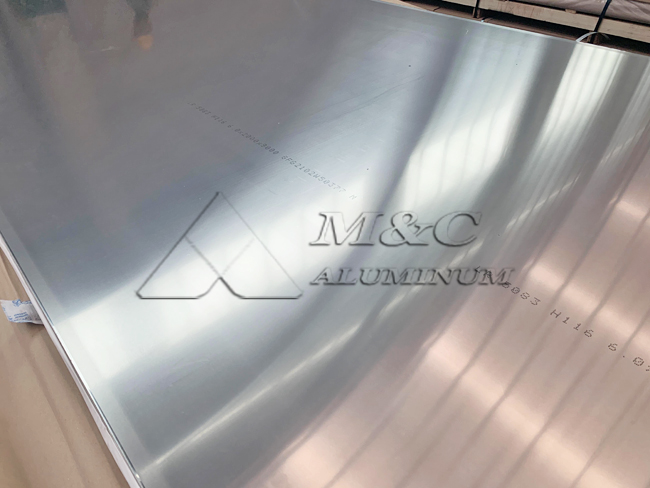
H116: სპეციally treated for marine use with excellent exfoliation corrosion resistance (standard for 5083 plates)
H321: Stabilized temper, similar to H116, often used for high-Mg alloys like 5456
T6: Solution heat-treated and artificially aged (typical for 6000 series)
Product Specifications of Marine Aluminum Alloys
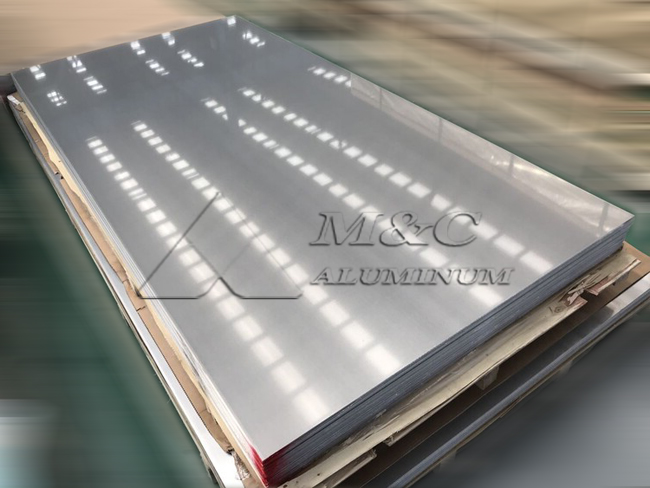
Aluminum Plates
| Item | Specification |
| Alloy | 5083 / 5086 / 5456 / 5059 / 5383 / 6061 / 6063 / 6082, etc. |
| Temper | H116 / H321 / H111 / O / T5 / T6 / T651, etc. |
| Thickness | 3 mm – 50 mm |
| Width | 1000 mm – 3000 mm |
| Length | 2000 mm – 12000 mm |
| Tensile Strength | 275 – 420 MPa |
| Yield Strength | ≥ 125 – 300 MPa |
| Elongation | ≥ 10% – 20% |
| Surface | Mill finish / brushed / pre-treated |
| Flatness | ≤ 3 mm/m |
| Certification | ABS / DNV / LR / BV / CCS |
| MOQ | 1–3 tons |
Aluminum Extrusions
| Item | Specification |
| Alloy | 6061 / 6082 / 6063 |
| Temper | T5 / T6 |
| Profile Shape | Custom |
| Max Circumscribed Circle | ≤ 500 mm |
| Length | ≤ 12 m |
| Tensile Strength | 240 – 340 MPa |
| Surface Treatment | Anodized / coated / mill finish |
| Tolerance | EN / ASTM standards |
Application Areas
| Application | Recommended Alloys | Temper | Reason |
| Hull plates / side plates | 5083, 5086 | H116, H321 | Excellent corrosion resistance and weld strength |
| Superstructure / deck | 5052, 5454 | H32 | Lightweight and corrosion resistant |
| Frames / profiles / masts | 6082, 6061 | T6, T651 | High structural strength, good extrudability |
| LNG tanks (low temperature) | 5083 | O, H112 | No brittleness at low temperatures |
Classification Society Certifications
Marine aluminum materials must be certified by recognized classification societies, including:
CCS (China Classification Society)
DNV (Det Norske Veritas)
ABS (American Bureau of Shipping)
LR (Lloyd's Register)
MC Aluminum's 5083 and 5086 plates have obtained relevant certifications and meet international marine standards.
FAQ
Q1: Why is 5083 widely used in shipbuilding?
A: 5083 aluminum offers excellent seawater corrosion resistance, good weldability, high strength, and stability, making it ideal for hull structures and decks.
Q2: Can marine aluminum alloys be welded with regular electrodes?
A: No. Proper aluminum welding wires must be used:
5083/5086 → ER5183 or ER5356
6061/6063 → ER4043 or ER5356
Steel or copper electrodes must NOT be used. Recommended methods include MIG and TIG welding. For large structures, Friction Stir Welding (FSW) is more advanced.
Q3: What is the price of marine aluminum alloys?
A: Prices depend on alloy grade, temper, thickness, certification, and logistics. Typically, marine-grade aluminum is 30%–50% more expensive than standard industrial aluminum.
For example:
5083-H116 (4–10 mm): approx. RMB 25,000–35,000/ton (subject to market fluctuations)
Q4: Can marine aluminum alloys be customized?
A: Yes, customization includes:
Thickness and dimensions
Alloy and temper selection
Surface treatments (anodizing, coating, etc.)
Special performance requirements (high strength, corrosion resistance)
Original Source: https://www.marinealum.com/a/development-history-of-marine-aluminum-alloy-grades.html
Tag: marine aluminum alloy 5000 series marine aluminum 6000 series marine aluminum aluminum for shipbuilding marine aluminum plate manufacturer marine grade aluminum material ABS certified aluminum plate DNV marine aluminum 5083 marine aluminum plate