
- sales@alummc.com
- Zhengzhou,Henan,China
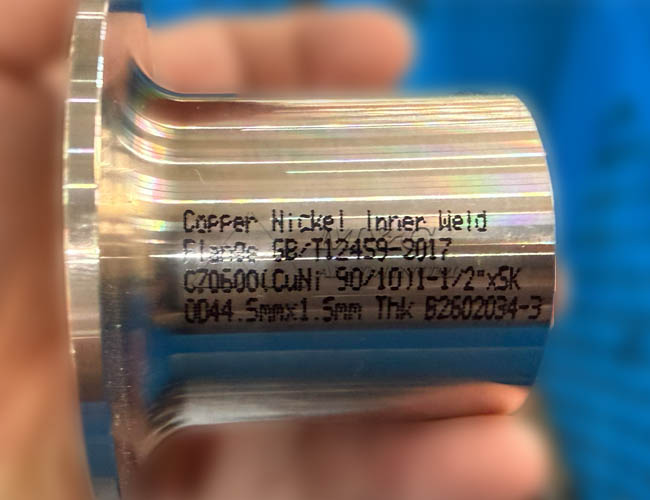
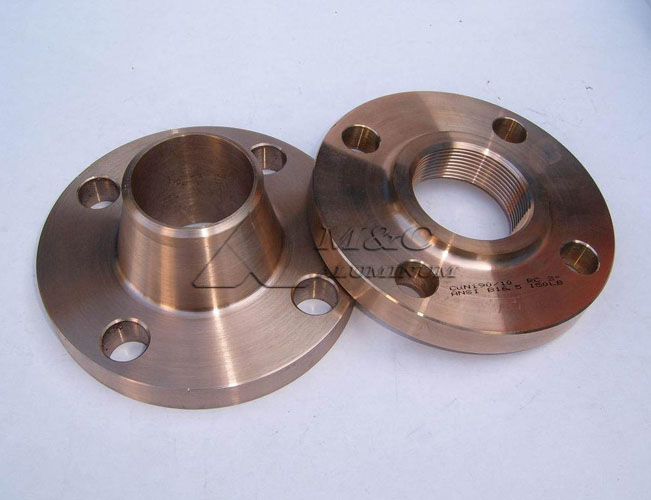
Our company keeps a large stock of copper-nickel alloy C70600 (90/10) flanges. Copper-nickel alloy has been proven to offer excellent corrosion resistance against seawater, brine, organic compounds, salts, diluted non-oxidizing acids, and other media. Due to its high resistance to marine organisms such as barnacles, copper-nickel alloy is commonly used in seawater piping systems.
Copper-nickel flanges, also commonly known as cupronickel flanges, are made from an alloy composed of elements such as Ni, Fe, Mn, C, Pb, S, P, Zn, and Cu in different proportions, with copper and nickel as the main alloying elements. Copper and nickel are completely soluble in each other in the solid state, forming a continuous solid solution. This allows the alloy to maintain good plasticity while significantly improving its overall performance. When the nickel content exceeds 16%, the alloy surface presents an elegant silver-white luster, which is also the origin of the name "cupronickel."
Copper-nickel flanges use bolted connections and sealing gaskets to connect pipe to pipe, pipe to valve, and pipe to equipment. They feature firm connection, reliable sealing, convenient disassembly and assembly, and excellent corrosion resistance.
The most common copper-nickel alloy grades used in industrial applications include C70600 (B10 / CuNi90-10) and C71500 (B30 / CuNi70-30). Among them, C70600 (CuNi90-10) is the most widely used due to its excellent cost performance and corrosion resistance.
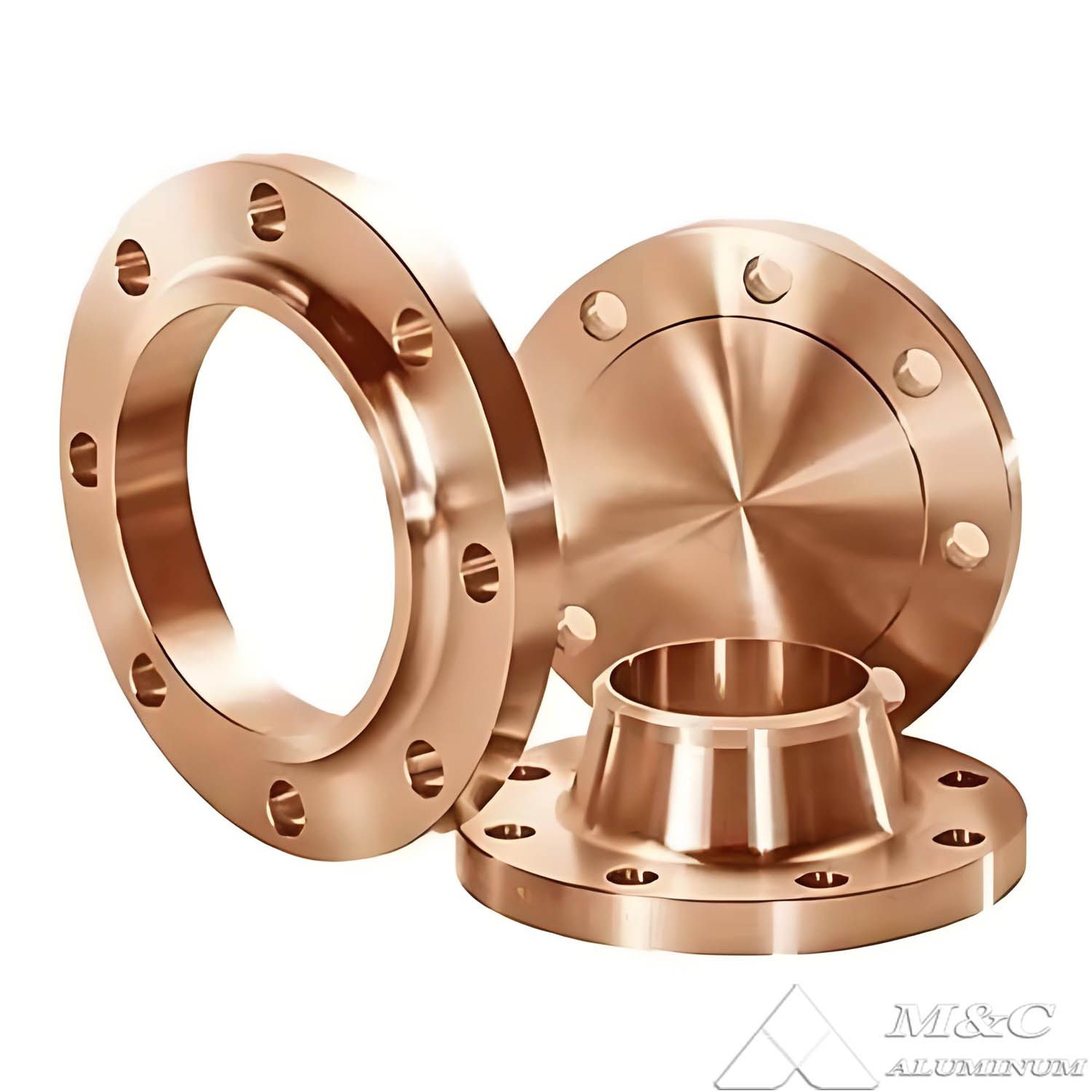
90/10 Copper-Nickel Alloy Flange
| Element (%) | DIN 86019 2.1972 | EEMUA 144 UNS 7060X | BS 2871 CN 102 | ASTM B466 C70600 | JIS H 3300 C7060 | MIL-T-16420K C70600 |
| Ni | 9.0–11.0 | 10.0–11.0 | 10.0–11.0 | 9.0–11.0 | 9.0–11.0 | 9.0–11.0 |
| Fe | 1.5–1.8 | 1.5–2.0 | 1.0–2.0 | 1.0–1.8 | 1.0–1.8 | 1.0–1.8 |
| Mn | 0.5–1.0 | 0.5–1.0 | 0.5–1.0 | Max. 1.0 | 0.2–1.0 | Max. 1.0 |
| C | Max. 0.05 | Max. 0.05 | Max. 0.05 | Max. 0.05 | - | Max. 0.05 |
| Pb | Max. 0.03 | Max. 0.01 | Max. 0.01 | Max. 0.02 | Max. 0.05 | Max. 0.02 |
| S | Max. 0.015 | Max. 0.02 | Max. 0.05 | Max. 0.02 | - | Max. 0.02 |
| P | Max. 0.02 | Max. 0.02 | - | Max. 0.02 | - | Max. 0.02 |
| Zn | Max. 0.15 | Max. 0.02 | - | Max. 0.50 | Max.0.50 | Max.0.50 |
| Zr | Max.0.03 | - | - | - | - | - |
| Other | Max.0.03 | Max.0.03 | Max.0.03 | - | - | - |
| Cu | Balance | Balance | Balance | Balance | Cu+Ni +Fe+Mn Min.99.5 | Min.86.5 |
| Element (%) | DIN 17664 2.0882 | EEMUA 144 UNS 7060X | ASTM 466 C71500 | JIS H 3300 C7150 | NES 780 | MIL-T-16420K C71500 |
| Ni | 30.0-32.0 | 30.0-32.0 | 29.0-33.0 | 29.0-33.0 | 30.0-32.0 | 29.0-33.0 |
| Fe | 0.4-1.0 | 0.4-1.0 | 0.4-1.0 | 0.4-1.0 | 0.6-1.0 | 0.4-1.0 |
| Mn | 0.5-1.5 | 0.5-1.5 | Max.1.0 | 0.2-1.0 | 0.5-1.5 | Max.1.0 |
| C | Max.0.05 | Max.0.05 | Max.0.05 | - | Max.0.06 | Max.0.05 |
| Pb | Max.0.03 | Max.0.01 | Max.0.02 | Max.0.05 | Max.0.01 | Max.0.02 |
| S | Max.0.02 | Max.0.08 | Max.0.02 | - | Max.0.02 | Max.0.02 |
| P | Max.0.02 | - | Max.0.02 | - | Max.0.01 | Max.0.02 |
| Zn | Max.0.5 | Max.0.5 | Max.0.5 | Max.0.5 | ||
| Cu | Max.0.30 | Max.0.30 | Max.0.50 | Max.0.30 | Max.0.05 | |
| Other | Balance | Balance | Balance | CuNi+Fe+Mn Min.99.5 | Min.66.5 | Min.65.0 |
1. Excellent Seawater Corrosion Resistance
Copper nickel alloy can form a stable and dense protective film in seawater, effectively reducing corrosion caused by seawater, salt spray, and microorganisms. Compared with ordinary carbon steel and stainless steel, copper nickel flanges offer a longer service life in marine environments and help reduce later maintenance and replacement costs.
2. Good Erosion-Corrosion Resistance
In seawater circulation pipelines, cooling water systems, and high-velocity flowing media environments, pipe fittings are often exposed to fluid erosion. Copper nickel flanges provide good resistance to erosion-corrosion and can meet seawater transportation requirements under certain flow velocities while maintaining stable structural performance.
3. Good Machinability and Weldability
Copper nickel alloy has good plasticity and high toughness, making it suitable for forging, machining, welding, and other manufacturing processes. After being processed into flanges, the products feature a smooth surface, high dimensional accuracy, and convenient compatibility with copper nickel pipes, valves, and equipment interfaces.
4. Strong Resistance to Biofouling
Copper nickel alloy has a certain inhibitory effect on the attachment of marine organisms. It can reduce scaling and biological blockage on the inner wall of pipelines, improve system operating efficiency, and is especially suitable for seawater cooling, seawater fire-fighting, and seawater transportation systems.
| Specification | ASTM B151 UNS C70600, CuNi10Fe1.6Mn, 7060X |
| Dimensions / Standards | DIN 86037, DIN 86033, DIN 2633, DIN 2632, DIN 86036, EEMUA 145, EEMUA 234, ANSI/ASME B16.5, ASME B16.47 Series A and Series B, B16.48, BS 4504, BS 10, EN 1092, etc. |
| Standards | EEMUA flanges, DIN flanges, JIS flanges, ANSI flanges, ASME flanges, BS flanges, EN flanges |
| Size Range | 1/2 inch to 24 inches |
| Class / Pressure Rating | 150#, 300#, 600#, 900#, 1500#, 2500#, PN6, PN10, PN16, PN25, PN40, PN64, etc. |
| Flange Face Types | Flat Face (FF), Raised Face (RF) |
| Material Grades | Copper Nickel Alloy 90/10 (C70600), Copper Nickel Alloy 70/30 (C71500), UNS C71640 |
| Manufacturing Process | Forging / Machining |
| Surface Treatment | Pickling, polishing, or anti-oxidation treatment |
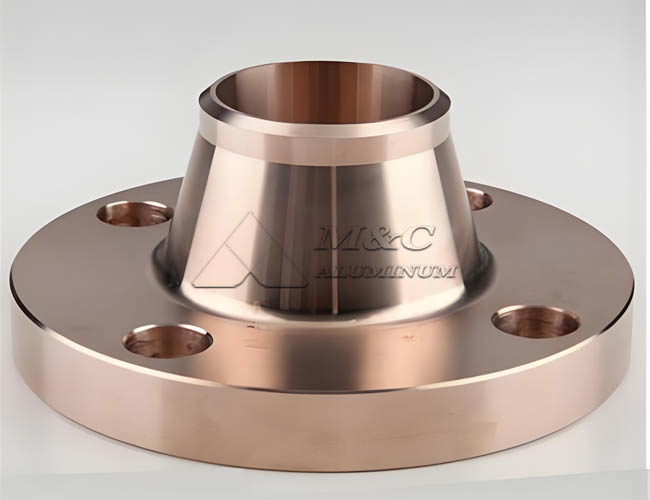
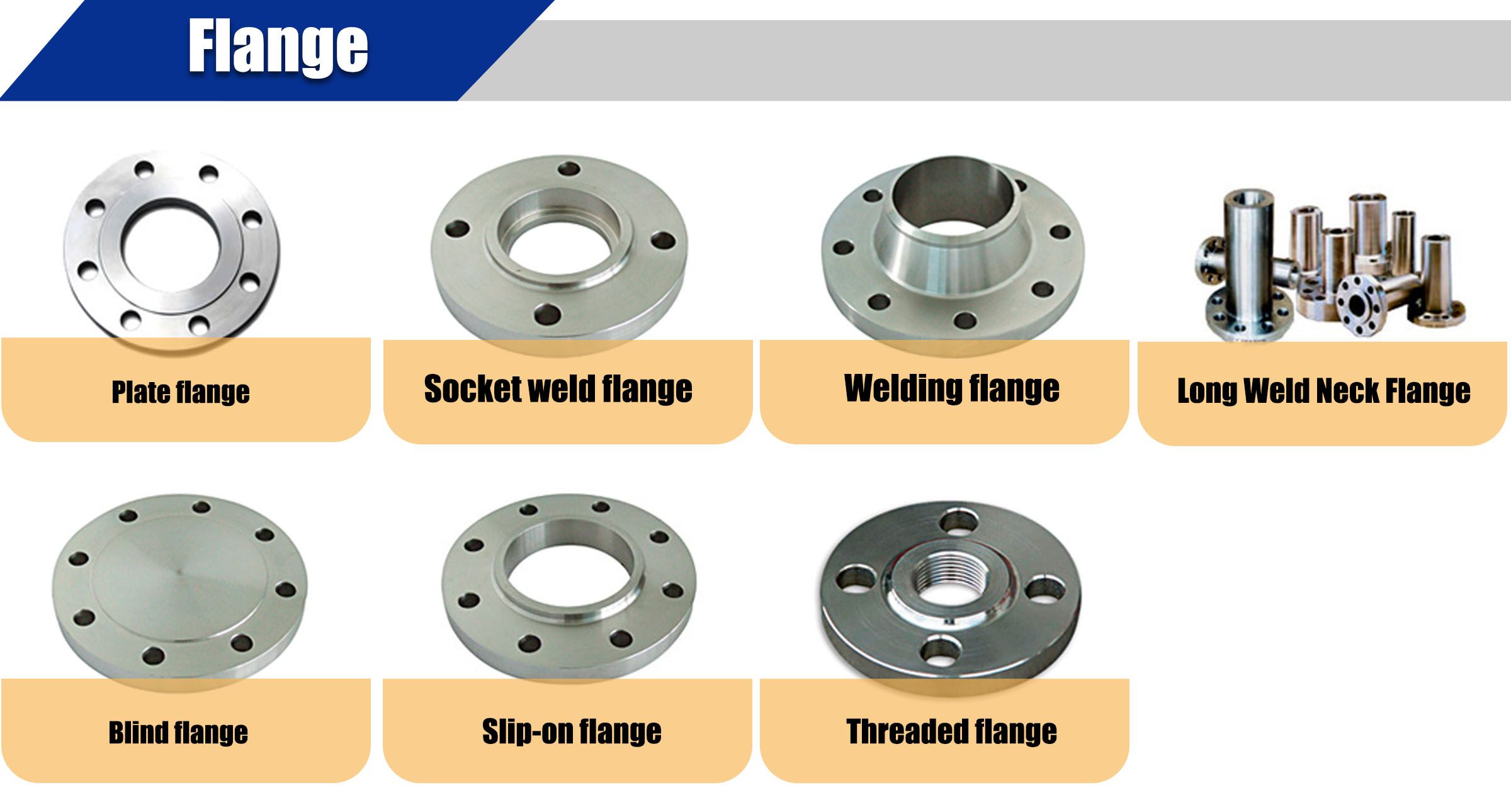
1. Weld Neck Flange (WN)
The weld neck flange features a long tapered hub structure, allowing uniform stress distribution at the weld. It offers the strongest pressure resistance and is suitable for high-pressure, high-temperature, and high-velocity main pipelines. It is commonly used in deep-sea platforms and main pipelines of large chemical plants.
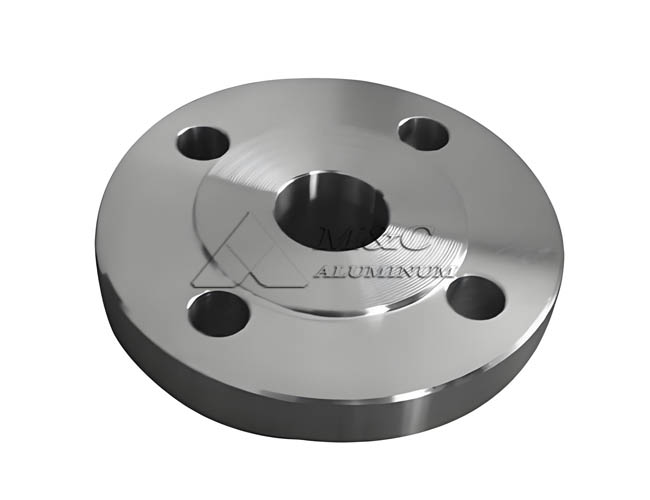
2. Plate Flange / Plate Slip-On Flange (PL)
The plate flange has a simple structure and high cost-effectiveness. It is suitable for conventional medium- and low-pressure pipelines, easy to weld, and widely used in ship auxiliary cooling pipelines and seawater circulation branch lines in industrial plants.
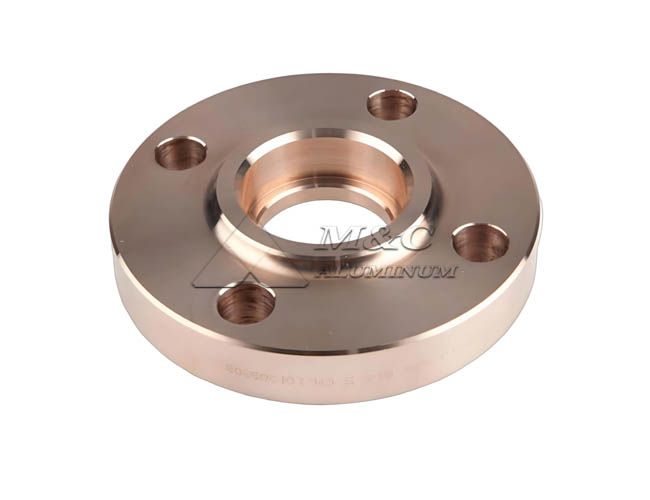
3. Slip-On Flange with Neck (SO)
The slip-on flange with neck is positioned between a plate flange and a weld neck flange in terms of performance. It has better rigidity than a plate flange, is easy to install, and is suitable for general medium-pressure corrosive pipelines, balancing cost and performance.
4. Socket Weld Flange (SW)
The pipe is inserted into the flange socket and then welded. It provides excellent sealing performance and is suitable for small-diameter high-pressure pipelines. It has no fluid dead zones, helping to prevent impurity accumulation and corrosion.
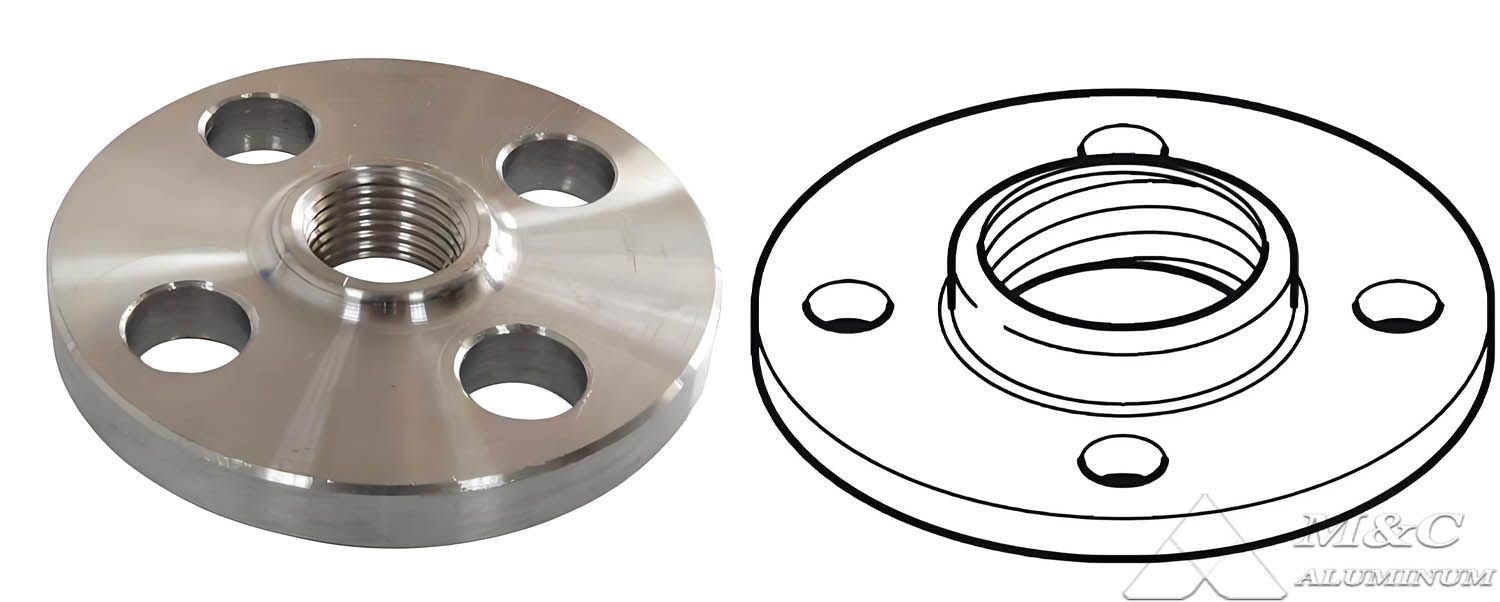
5. Threaded Flange (TH)
Threaded flanges are connected directly to the pipe by threads without welding. They are suitable for flammable, explosive, or no-hot-work construction environments and offer flexible assembly and disassembly.
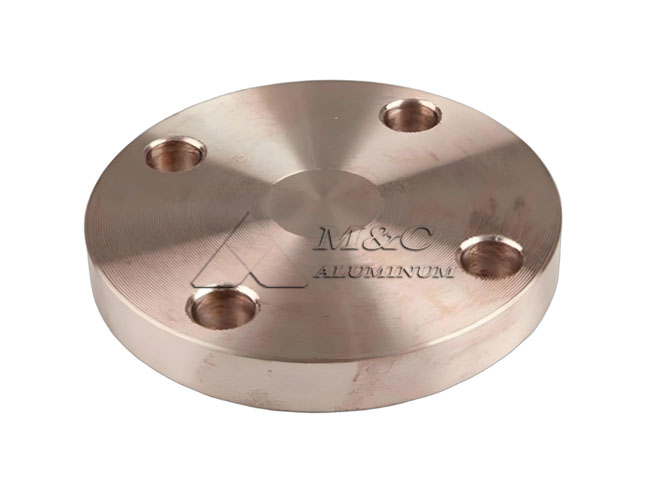
6. Blind Flange (BL)
Blind flanges are used for sealing pipe ends and isolating pipeline sections. They offer strong pressure-bearing capacity and reliable sealing performance, and are commonly used for pipeline pressure testing and sealing spare pipe openings.
Flat Face
Raised Face
Ring Type Joint Face
Lap Joint Face
Large Raised Face
Small Raised Face
Large Tongue and Groove Face
Small Tongue and Groove Face
1. Long Service Life
Copper nickel flanges perform stably in seawater and humid corrosive environments. They are not prone to severe rusting or pitting corrosion and can significantly extend the overall service life of pipeline systems.
2. Reliable Sealing Performance
The products are precision machined, with smooth and flat sealing surfaces and strictly controlled dimensional tolerances. When used with suitable gaskets and fasteners, they can achieve excellent sealing performance and reduce the risk of leakage.
3. Convenient Installation and Maintenance
Flange connections are detachable, making later maintenance, inspection, and replacement easier. Compared with fully welded piping systems, copper nickel flange connections can improve construction and maintenance efficiency.
4. Good Overall Economy
Although the initial purchase cost of copper nickel materials is higher than that of ordinary steel, copper nickel flanges provide outstanding corrosion resistance, lower maintenance costs, reduced downtime losses, and a longer service cycle. Therefore, they offer high overall economic value in seawater systems and highly corrosive environments.
5. Wide Application Range
Copper nickel flanges are suitable not only for shipbuilding and offshore engineering, but also for chemical, energy, environmental protection, water treatment, heat exchange equipment, and other industries. They can meet connection requirements under various complex operating conditions.
Copper nickel flanges are typically connected with copper nickel pipes of the same material. Depending on working pressure, site construction conditions, and the service medium, the main mature connection methods include threaded assembly, flange compression sealing, and fusion welding. These methods are suitable for different specifications and application scenarios. The operating methods are as follows:
Threaded Connection
This method is suitable for flanges with internal threads. The flange can be directly tightened onto a copper nickel pipe with corresponding threads. The operation is simple and does not require welding.
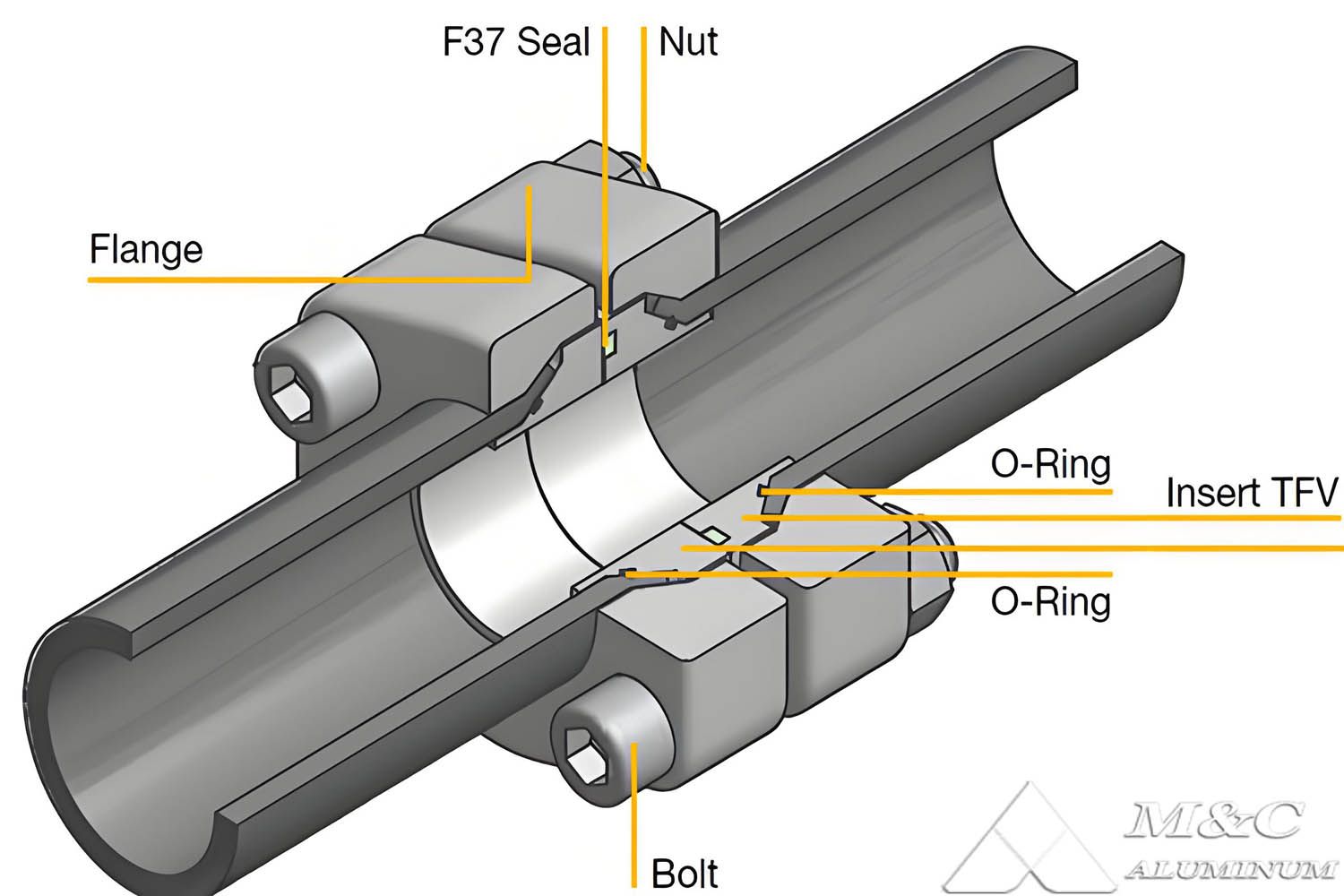
Bolted Fastening / Loose Flange Connection
This method is suitable for loose flanges. The flange and pipe end are tightened with bolts. An O-ring or gasket must be installed between the flange sealing faces to ensure sealing and prevent leakage. The number and size of bolt holes should match the pipe diameter and pressure rating.
Welded Connection
This method is suitable for weld neck flanges or socket weld flanges. Depending on site conditions, gas shielded arc welding such as TIG/MIG, oxy-acetylene welding, brazing, or soldering can be used for permanent connection. This connection method provides high strength and reliable sealing.
Copper nickel flanges are widely used in the following industries:
Shipbuilding and Offshore Engineering:Seawater cooling systems and ballast water systems.
Seawater Desalination Projects:Water transmission and circulation systems.
Oil and Gas:Offshore platform piping systems.
Power Industry:Condensers and heat exchange systems.
Chemical Industry:Transportation of corrosive media.
Port and Wharf Facilities:Wharf seawater transportation, spray dust suppression, and dedicated fire-fighting piping systems.
Copper nickel flanges mainly follow three major international standard systems according to different application scenarios and regional specifications: ASME, DIN, and EEMUA. These standards differ significantly in dimensions, tolerances, pressure ratings, and material requirements, making them suitable for different engineering needs.
ASME B16.5 is one of the most widely used flange standards internationally, especially in the oil, gas, and offshore engineering industries.
Main Types:
Weld Neck Flange
Slip-On Flange
Socket Weld Flange
Threaded Flange
Blind Flange
Technical Parameters:
Pressure Rating: Class 150 / Class 300 commonly used
Wall Thickness: Sch 5 / 10 / 40 / 80
Standard: ASME B16.5
Material Grades:
ASTM B151 UNS C70600, CuNi 90/10
ASTM B151 UNS C71500, CuNi 70/30
Features
The ASME standard system is mature and widely accepted. It offers strong universality and is suitable for most global industrial projects, with high compatibility and interchangeability.
DIN standards are widely used in the European market and have strict requirements for dimensions, tolerances, and manufacturing accuracy.
Main Standards:
DIN 2632 / 2633 — Copper nickel weld neck flanges
DIN 86033 — CuNi slip-on flanges
DIN 86036 — CuNi composite slip-on flanges
DIN 86037 — Copper nickel weld neck flanges
Technical Parameters:
Pressure Rating: PN10 / PN16, approximately equal to 10 bar / 16 bar
Material Grade: CuNi10Fe1.6Mn, corresponding to C70600
Features:
Rigorous standard system and strong dimensional consistency
Suitable for shipbuilding and European engineering projects
Emphasis on high-precision machining and interchangeability
The EEMUA 145 standard is mainly used for offshore engineering and seawater systems. It is a specification specially developed for copper nickel alloy materials.
Material Grade:
UNS C7060X series, CuNi 90/10 variant
Main Types:
Composite Weld Neck Flange
Weld Neck Flange
Composite Slip-On Flange
Slip-On Flange
Features:
Designed specifically for seawater corrosive environments
Emphasizes corrosion resistance and structural reliability
Widely used in offshore platforms and seawater cooling systems
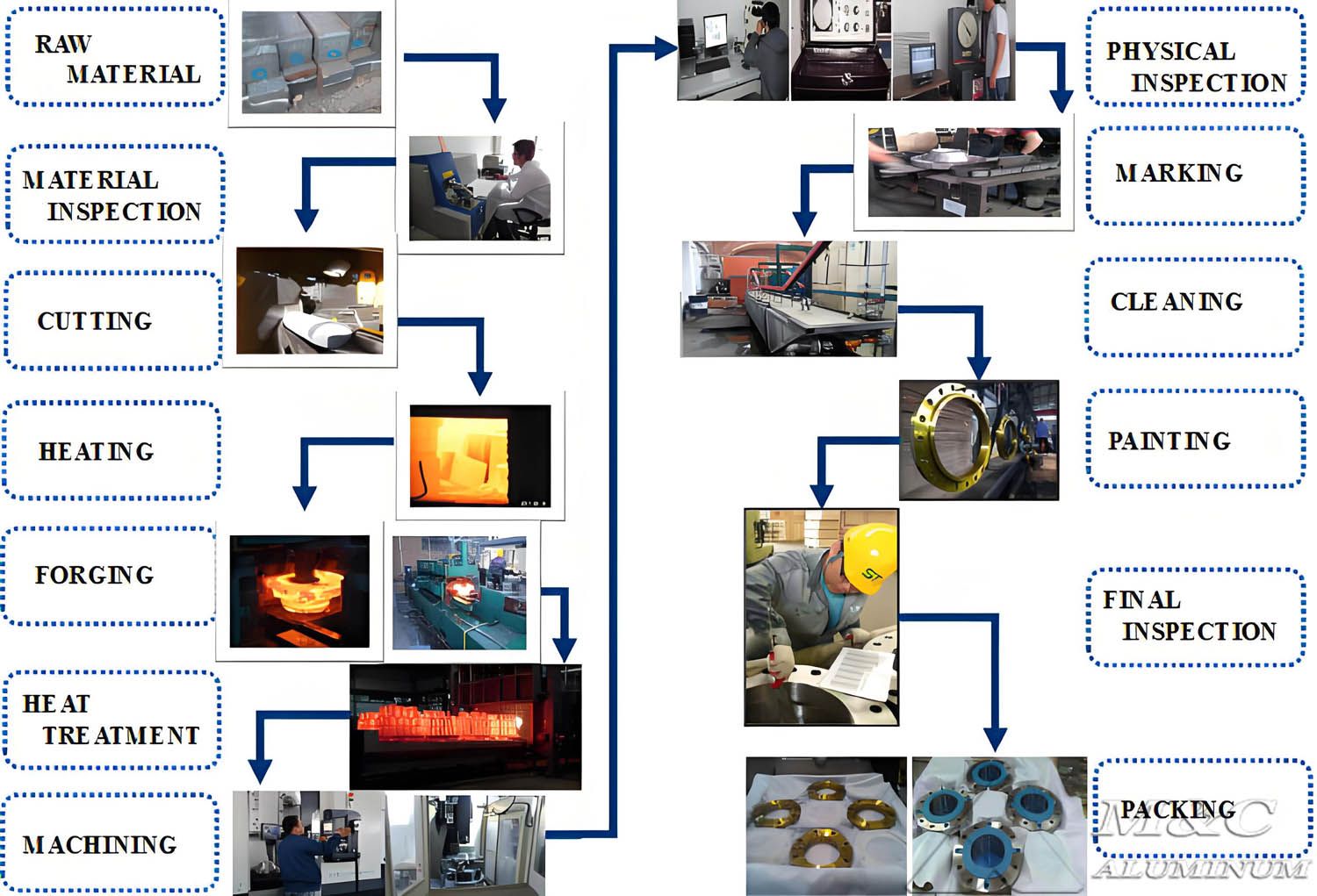
To ensure uniform metallographic structure, no internal pores or sand holes, and precise dimensions for every copper nickel flange, a precision integrated forging production process is adopted throughout the manufacturing process:
1. Raw Material Selection
Original high-purity copper nickel alloy bars are used, with strict control of impurity content to ensure corrosion resistance from the source.
2. Hot Forging
Closed-die forging technology is adopted. High-pressure forging allows continuous distribution of metal fibers, improving the overall strength and impact resistance of the flange.
3. Heat Treatment
Solution annealing is performed to eliminate forging stress and prevent deformation or cracking during later use.
4. Precision Machining
Integrated CNC lathe machining is used. The flatness of the flange sealing surface and the concentricity of bolt holes meet required standards, ensuring sealing without misalignment.
5. Non-Destructive Testing
Each piece is inspected by ultrasonic testing and penetrant testing to detect internal cracks and surface defects.
6. Surface Treatment
Pickling and passivation treatment are applied to improve surface corrosion resistance. The appearance is clean and free of oxide scale. A complete material test report is provided before shipment.
Packaging Method: Wooden case, moisture-proof packaging, or customized export packaging
Marking Method: Inkjet marking or steel stamping, including material, specification, and standard
Delivery Time: Generally 15–35 days, depending on specifications and quantity
MC's team assists customers in preparing CAD drawings for customized copper nickel flanges. Flanges are available in sizes ranging from 20.00 mm / 0.5 inch to 610.00 mm / 24 inches.
Skype