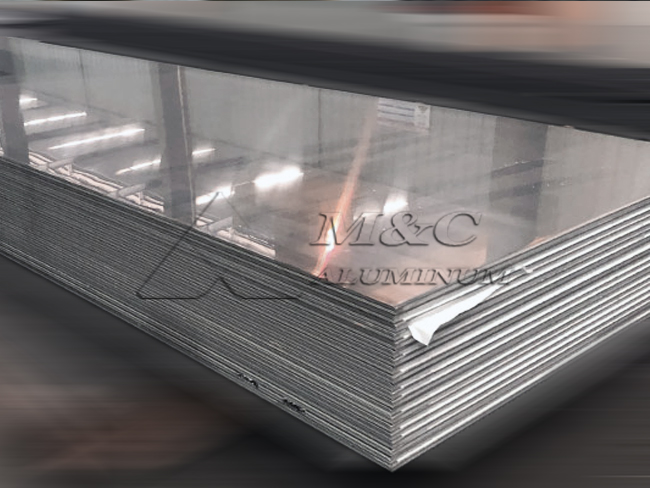
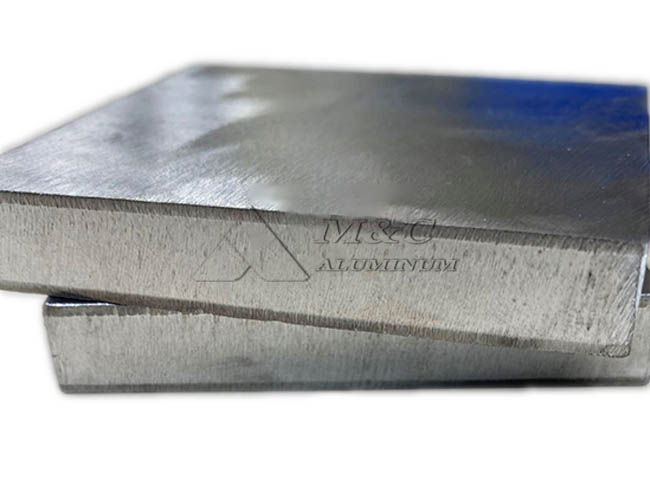
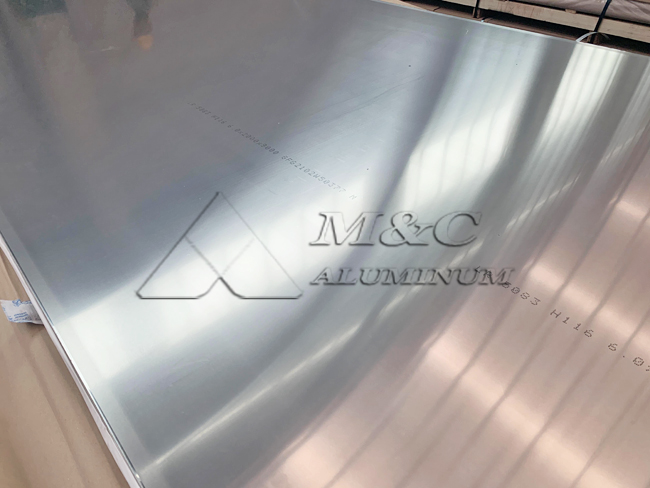
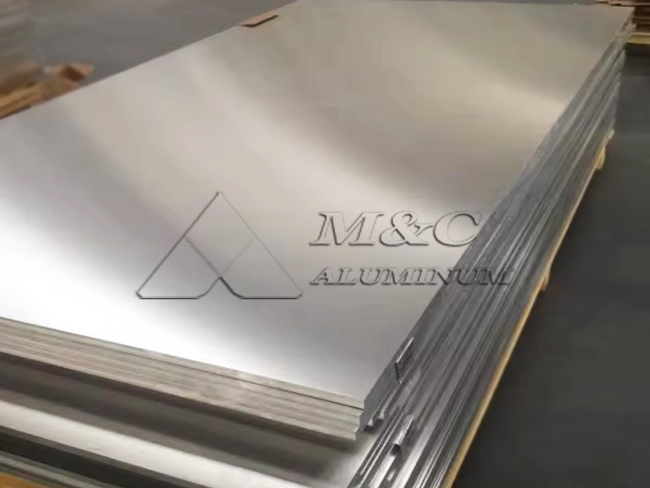
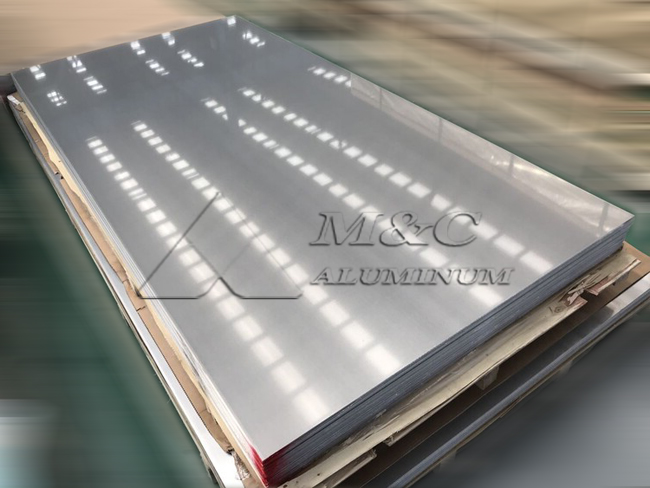
The primary material requirements for a ship's superstructure-including the wheelhouse, engine casing, accommodation quarters, and bulwarks-center on lightweight construction to lower the center of gravity, robust resistance to marine corrosion, ease of welding and cold-forming, and a balance between strength and toughness. Aluminum plates, with a density approximately one-third that of steel, can significantly enhance a vessel's stability and fuel efficiency, while also offering the advantage of being rust-free and requiring minimal maintenance.
Among the aluminum alloys used in ship superstructures, the most common grades include 5083, 5086, and 6061, each offering unique properties suitable for different structural components.
1. 5083 Marine Aluminum Alloy: The Preferred Choice for Marine Environments
5083 aluminum alloy belongs to the Al-Mg series and is one of the strongest and most corrosion-resistant non-heat-treatable aluminum alloys. It is currently the most widely used marine aluminum alloy.
Key advantages include:
Excellent seawater corrosion resistance
5083 marine aluminum plate provides outstanding resistance to pitting corrosion and stress corrosion cracking in marine environments, outperforming many other metallic materials.Excellent weldability
It can be welded using MIG or TIG welding processes, producing high-strength weld joints with minimal performance loss in the heat-affected zone.Moderate strength
The tensile strength typically ranges from 270–350 MPa, which is sufficient for many non-primary structural components of ship superstructures.
2. 5086 Marine Aluminum Alloy: Balance Between Strength and Formability
5086 aluminum alloy also belongs to the Al-Mg alloy series. Compared with 5083, it has slightly lower magnesium content, providing better cold-forming capability while maintaining good corrosion resistance.
For superstructure components with complex shapes that require bending or stamping, 5086 marine aluminum is an ideal choice.
3. 6061 Marine Aluminum Alloy: A Reliable Choice for Structural Support
6061 belongs to the Al-Mg-Si series of heat-treatable, precipitation-strengthened alloys. Upon undergoing T6 heat treatment, it exhibits enhanced strength and is frequently utilized for structural components requiring high load-bearing capacity-such as frameworks, beams, columns, and door and window frames-within marine superstructures. It possesses excellent processing characteristics and is amenable to various forming processes, including extrusion and drawing.
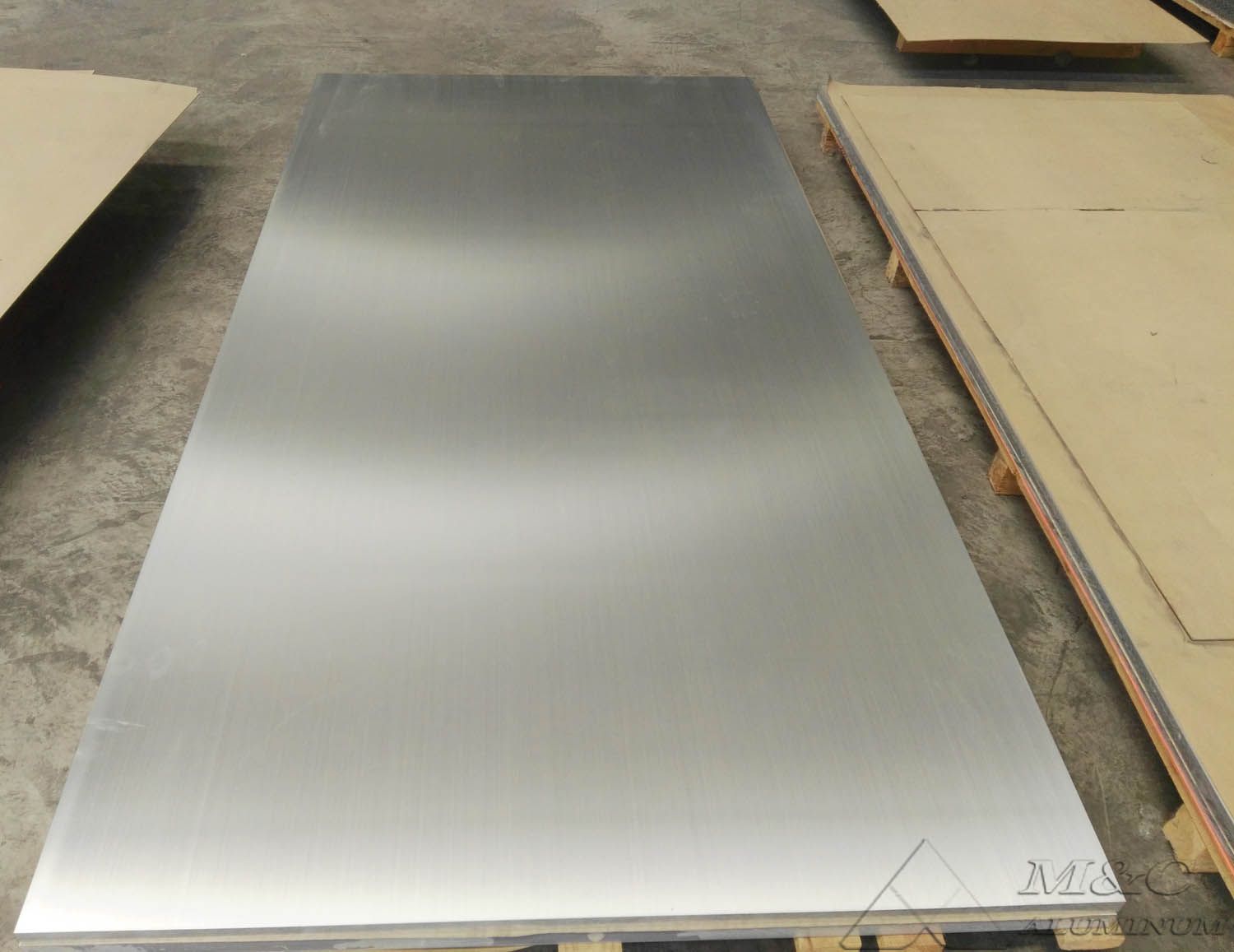
Marine Grade Aluminum Plate Specifications
| Alloy | 5083 / 5086 / 5052 / 6061 / etc |
| Temper | O / H111 / H116 / H321 / T6 |
| Thickness | 3 mm – 50 mm |
| Width | 1000 – 2500 mm |
| Length | 3000 – 12000 mm |
| Surface | Mill finish |
| Welding Process | MIG / TIG |
| Certification | CCS, DNV, LR, ABS |
| Applications | Hull plates, decks, superstructure panels, interior partitions, door and window frames |
| MOQ | 1–3 tons |
Five Key Advantages of Marine Aluminum Plates in Ship Superstructures
1. Lightweight
Aluminum has a density only one-third that of steel. Reducing the weight of the superstructure lowers the ship's center of gravity, improves anti-capsizing capability, and enhances navigation safety.
2. Excellent Corrosion Resistance
5xxx series marine aluminum alloys contain a high magnesium content, forming a stable oxide protective layer that provides excellent corrosion resistance in marine environments and extends service life.
3. Excellent Weldability
Aluminum alloys can be welded using MIG and TIG welding, producing high-quality weld seams while maintaining good mechanical properties.
4. Low Maintenance Cost
Compared with steel structures, aluminum structures offer superior corrosion resistance and generally do not require complex anti-corrosion treatments, reducing maintenance frequency and overall operating costs.
5. Safety Performance
Aluminum is non-magnetic, which makes it particularly important for demagnetized vessels. Although aluminum has higher thermal conductivity than steel, proper fireproof design ensures that safety performance is not compromised.
How to Choose the Right Marine Aluminum Plate
| Alloy | Series | Key Properties | Suitable Superstructure Parts | Recommended Temper | Welding Wire |
| 5083 | Al-Mg | Excellent seawater corrosion resistance, medium strength, good weldability | Outer plates, decks, large bulkheads | H116 / H321 / O | 5356 |
| 6061 | Al-Mg-Si | Heat-treatable, high strength | Frames, columns, beams, structural parts above waterline | T6 / T651 | 4043 |
| 5086 | Al-Mg | Softer than 5083, better formability | Curved plates, small superstructure components | H32 / H111 | 5356 |
Certifications and Standards
For global shipbuilding trade, the quality of aluminum plates depends not only on alloy composition but also on classification society certifications.
Qualified marine aluminum plates usually comply with approvals from major classification societies, including:
DNV (Det Norske Veritas)
LR (Lloyd's Register)
ABS (American Bureau of Shipping)
CCS (China Classification Society)
BV (Bureau Veritas)
Certified aluminum plates signify that they have met rigorous marine engineering standards across tests for tensile strength, yield strength, elongation, and intergranular corrosion resistance.
FAQ
1. What are the common welding methods used for marine-grade aluminum plates?
The primary methods employed are Tungsten Inert Gas (TIG) welding and Metal Inert Gas (MIG) welding.
2. What are the typical thicknesses of aluminum plates used in the shipbuilding industry?
The thickness of marine-grade aluminum plates varies depending on the type of vessel and specific structural requirements.
Typical thickness ranges include:
Superstructure plating: 3 mm to 10 mm
Hull plating: 6 mm to 20 mm
Structural components: 10 mm to 50 mm
Larger vessels and offshore structures may require thicker plates.
3. What are the common temper designations for marine-grade aluminum plates?
Marine-grade aluminum plates are typically supplied in specific tempers designed expressly for shipbuilding applications. The most common tempers include: H116, H321, H111, T6, and others.
4. Which aluminum alloys are used in the shipbuilding industry?
The most widely used aluminum alloys in the shipbuilding industry are the 5xxx series and 6xxx series marine-grade alloys. These include alloys such as 5083, 5052, 5754, 5456, 5086, 6061, 6082, and 6063.
Original Source: https://www.marinealum.com/a/marine-aluminum-plate-for-ship-superstructure.html
Tag: Marine aluminum alloy 5083 marine aluminum plate 5086 marine aluminum 6061 T6 marine aluminum 5xxx marine aluminum alloy aluminum plate for shipbuilding marine grade aluminum plate aluminum plate for marine structures marine aluminum manufacturer