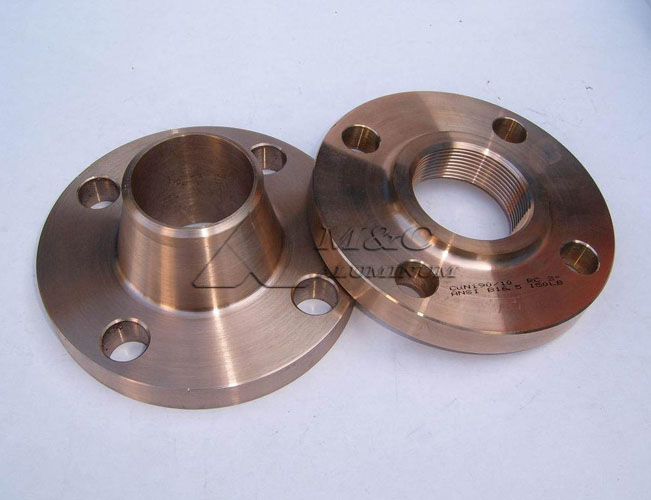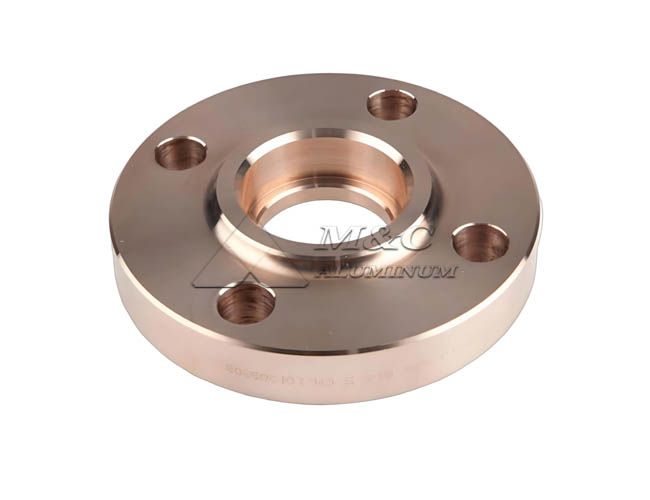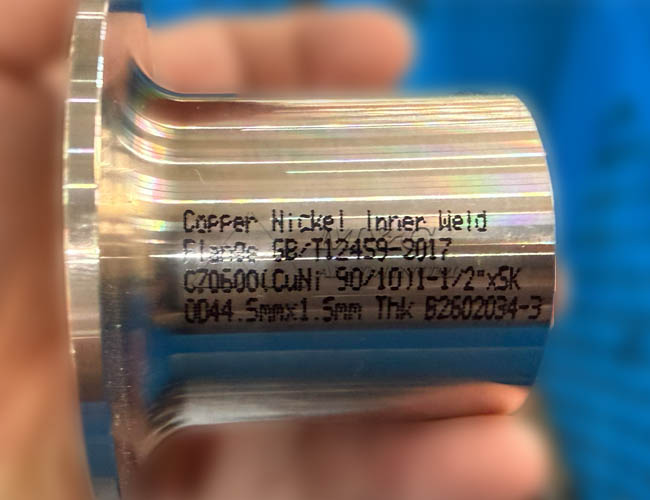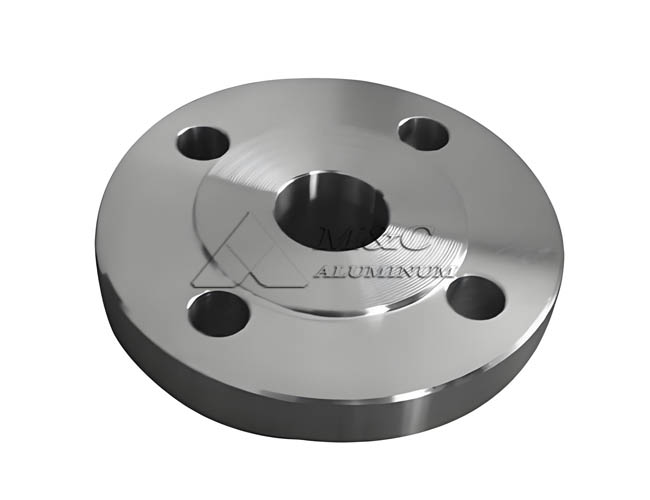
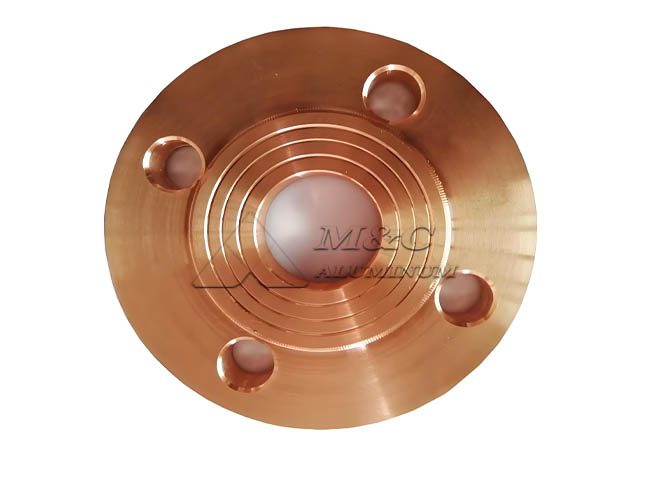
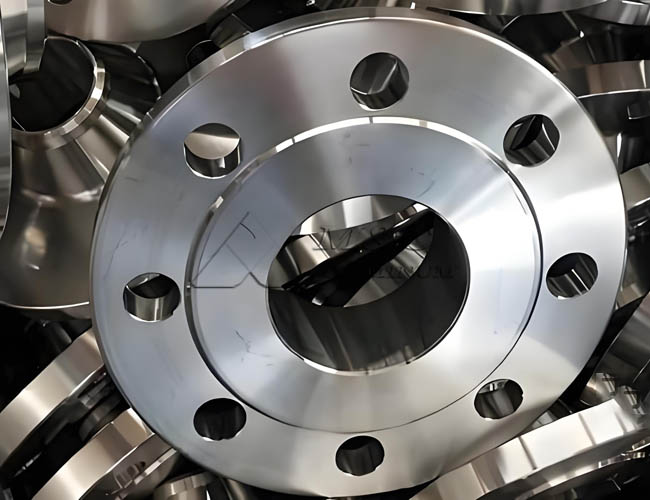


Copper-Nickel Slip-On Flange Product Introduction
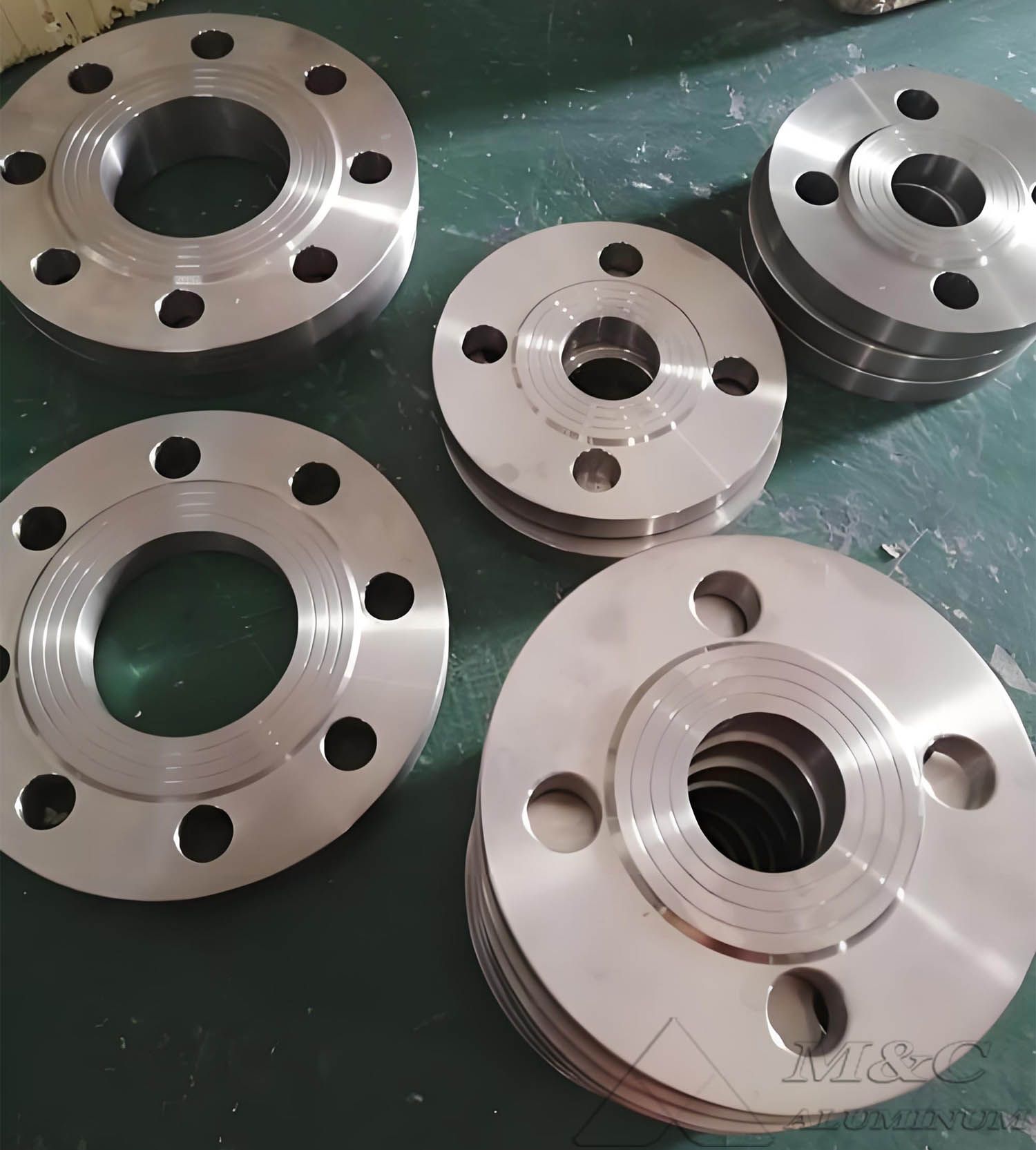
A copper-nickel slip-on flange is a pipe flange made from copper-nickel alloy and designed with a slip-on connection structure. Its inner diameter is slightly larger than the outer diameter of the matching pipe, allowing the flange to be easily slipped over the pipe end during installation. It is then securely connected to the pipe by fillet welds on the inner and outer sides of the flange.
This design combines convenient installation with reliable connection performance, making copper-nickel slip-on flanges an indispensable connecting component in marine piping systems and offshore engineering projects.
Copper-nickel slip-on flanges are manufactured from CuNi 90/10 or CuNi 70/30 alloys. Their design and manufacture comply with standards such as DIN 86033, EEMUA 145, EEMUA 234, and ASME B16.5.
Copper-Nickel Alloy Materials
90/10 Copper-Nickel Alloy — CuNi 90/10
CuNi 90/10 contains approximately 10% nickel. Typical grades include BFe10-1-1 and C70600.
This alloy provides excellent corrosion resistance in seawater environments, with a corrosion rate that can be lower than 0.025 mm/year. It also offers good cost-effectiveness and weldability, making it one of the most commonly used materials in marine piping systems.
70/30 Copper-Nickel Alloy — CuNi 70/30
CuNi 70/30 contains approximately 30% nickel. Typical grades include C71500 and DEF STAN 02-879 Grade 1.
The higher nickel content gives this alloy superior corrosion resistance, especially in high-velocity seawater. Its resistance to erosion-corrosion and pitting corrosion is significantly better than that of CuNi 90/10, making it suitable for more demanding service environments.
Product Structural Design
Copper-nickel slip-on flanges adopt an integral forged slip-on structure without welded joints. The design is well suited to on-site pipeline construction requirements. The main structural advantages are as follows:
1. Slip-On Through-Bore Design
The inner diameter of the flange is precisely matched with the outer diameter of the corresponding copper-nickel pipe. The pipe can be directly slipped into the flange axially without the need for highly precise end alignment.
This reduces the difficulty of on-site pipe assembly and greatly shortens installation time.
2. Single-Side Fillet Welding Process
Only one fillet weld is required around the pipe end on the outer side of the flange for sealing and fixing. No internal backing weld is required, which avoids welding difficulties in narrow pipe spaces.
This process results in minimal welding deformation and helps preserve the original corrosion-resistant layer of the copper-nickel alloy.
3. Large Sealing Surface
The flange adopts a standard raised face — RF sealing surface. The flatness tolerance can be controlled within 0.05 mm, making it compatible with rubber gaskets, spiral wound gaskets, and other sealing accessories.
It provides stable sealing performance and minimizes the risk of leakage under high-pressure media.
4. Uniform Bolt Hole Layout
The bolt holes are accurately and symmetrically positioned, ensuring uniform stress distribution. When the pipeline operates under pressure, the flange face is less likely to experience stress deviation.
This effectively prevents gasket extrusion failure and allows the flange to be used in pipeline systems with pressure ratings such as PN10, PN16, and PN20.
Product Specifications
| Material grades | C70600, C71500, etc. |
| Standards | EEMUA flanges, DIN flanges, JIS flanges, ANSI flanges, ASME flanges, BS flanges, EN flanges |
| Size range | 1/2 inch to 24 inches |
| Pressure ratings | PN6, PN10, PN16, PN25, or Class 150, Class 300 according to American standards |
| Connection types | Slip-on type, loose flange type, lap joint type, etc. |
| Sealing face types | Flat face, raised face, etc. |
| Manufacturing standards | Available according to Chinese standards, marine standards, German standards, American standards, Japanese standards, or customer drawings |
Specification range | Available in various nominal diameters to meet the requirements of different piping systems |
Advantages of Copper-Nickel Slip-On Flanges
Excellent seawater corrosion resistance: Resistant to pitting and intergranular corrosion even after long-term immersion
Strong resistance to biofouling: Reduces marine organism attachment and improves system efficiency
Long service life: Stable performance in marine environments
Low maintenance cost: Reduces replacement frequency and downtime losses
Good weldability: Suitable for multiple welding processes, such as TIG and MIG
Wide application range: Suitable for shipbuilding, offshore engineering, energy, chemical, and other industries
Reliable connection: Forms a stable sealing connection when used with gaskets and bolts
Flexible installation: The slip-on structure makes bolt hole alignment easier and improves installation efficiency
How to Install a Copper-Nickel Alloy Pipe Slip-On Flange?
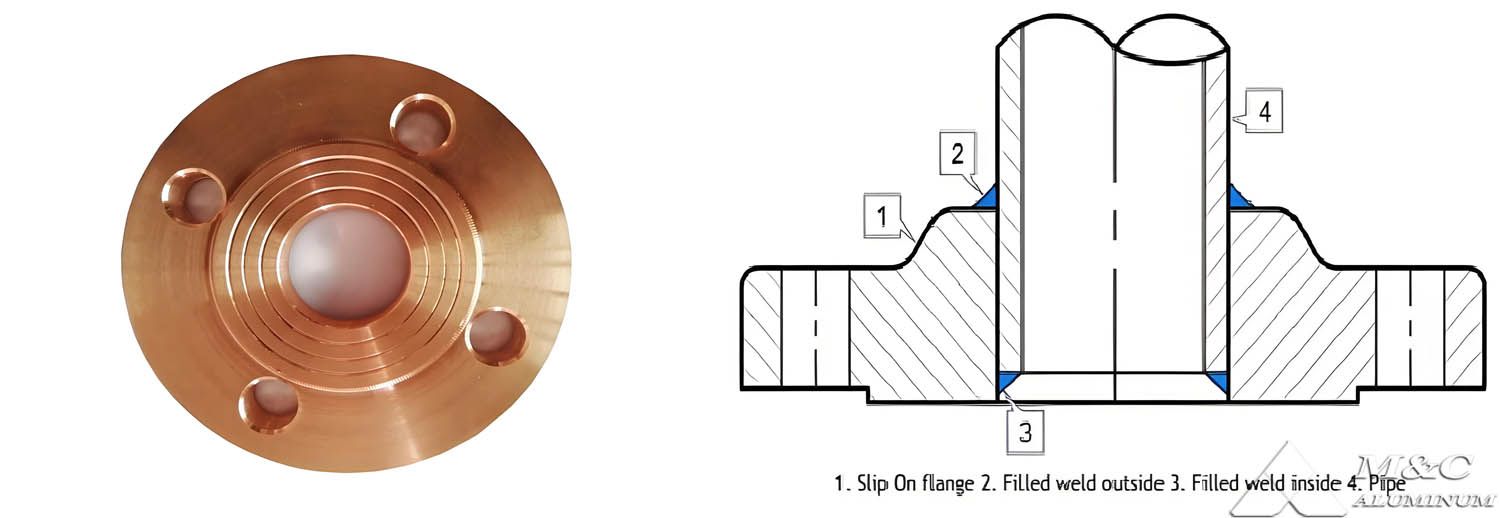
Select a copper-nickel pipe with a size matching the copper-nickel slip-on flange.
Carefully insert the copper-nickel pipe into the copper-nickel slip-on flange.
Perform fillet welding at the top and bottom of the copper-nickel slip-on flange and pipe.
Use bolts to assemble the CuNi slip-on flange with other components.
Product Standards and Specifications
The production and inspection of copper-nickel slip-on flanges strictly follow international standard systems.
| Standard System | Standard No. | Pressure Rating |
| American Standard | ANSI/ASME B16.5 | Class 150–2500 |
| German Standard | DIN 86037-3 | PN10, PN16, PN40 |
| European Standard | EN 1092-1 | PN6–PN100 |
| Chinese Standard | GB/T 9112–9123, HG/T 20592 | 0.25 MPa–10 MPa |
| Naval Standard | MIL-F-20042 | 150 lb Navy |
In terms of size range, copper-nickel slip-on flanges generally cover a wide range from DN10 to DN4000, or 1/2 inch to 160 inches, meeting the needs of various applications from small instrument pipelines to large seawater main pipelines.
Applications of Slip-On Flanges
Chemical Industry
Used in piping systems handling corrosive media, such as chlorinated compounds, organic acids, and other aggressive fluids.
Oil and Gas Industry
Suitable for offshore platforms, pipeline transmission systems, tank farms, and other corrosive environments.
Power Industry
Used in condensate systems and circulating water systems in hydropower stations and nuclear power plants.
Shipbuilding Industry
Applied in seawater systems, fuel systems, refrigeration systems, and other internal and external piping systems on ships.
Offshore Engineering
Used for pipe connections in offshore platforms, submersibles, and marine scientific research facilities.
What Is the Difference Between Copper-Nickel Slip-On Flanges and Weld Neck Flanges?
| Item | Copper-Nickel Slip-On Flange | Copper-Nickel Weld Neck Flange |
| Pressure rating | Recommended for low-pressure applications | Best suited for high-pressure applications |
| Connection method | The flange is welded to the copper-nickel pipe using fillet welds | The flange is butt-welded to the copper-nickel pipe |
| Temperature resistance | Not recommended for applications above 750°F, approximately 399°C | Suitable for the full temperature range corresponding to the flange pressure rating |
| Structure | A nearly flat "ring," with or without a small raised face | Designed with a tapered hub, available in long or short types |
| Manufacturing cost | Lower installation cost, but fillet welding may increase costs | Higher installation cost |
| Service life | Shorter service life | Longer service life |
How to Choose the Right Copper-Nickel Slip-On Flange?
When selecting a copper-nickel slip-on flange, the following factors should be considered:
1. Medium Type
Determine whether the medium is seawater, brine, cooling water, or another corrosive fluid.
2. Pressure Rating
The flange pressure rating should match the design pressure of the piping system.
3. Temperature Conditions
Confirm that the flange material and gasket are suitable for the operating temperature range.
4. Matching Pipe Materials
The flange should match copper-nickel pipes, copper-nickel stub ends, lap joints, or other related fittings.
5. Standard Requirements
Select the appropriate Chinese standard, marine standard, or international standard according to the project design documents.
6. Installation Environment
For narrow installation spaces or systems requiring frequent disassembly and maintenance, a slip-on structure is more suitable.
FAQ
Q1: Are copper-nickel slip-on flanges suitable for freshwater environments?
Yes, they can be used in freshwater environments. However, their main advantages are reflected in seawater and high-salinity environments, so they may be less cost-effective for freshwater applications.
Q2: How should I choose between CuNi 90/10 and CuNi 70/30?
CuNi 90/10: Suitable for conventional seawater systems and offers high cost-effectiveness.
CuNi 70/30: Suitable for high-flow-rate, highly corrosive, or critical systems.
Q3: Are copper-nickel slip-on flanges prone to galvanic corrosion?
If they come into direct contact with carbon steel, galvanic corrosion may occur. It is recommended to use insulating gaskets or connect them with matching materials.
Q4: What is the approximate service life?
In standard seawater environments, the service life can reach 10 to 30 years, depending on flow velocity and water quality conditions.