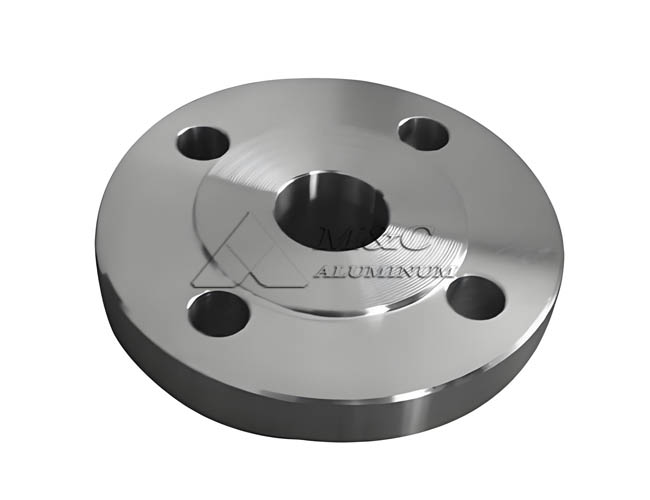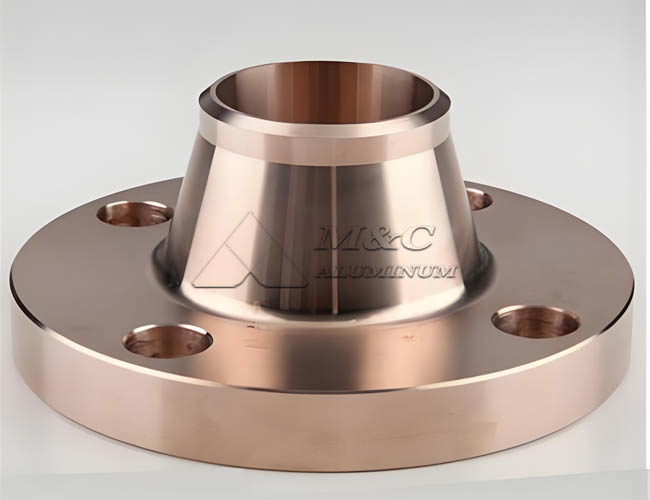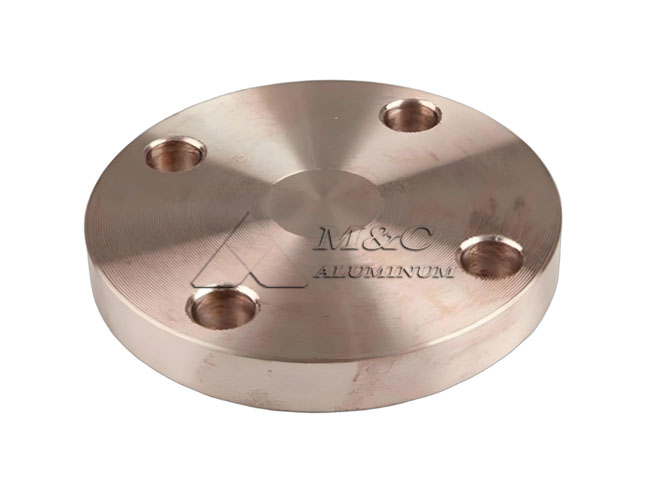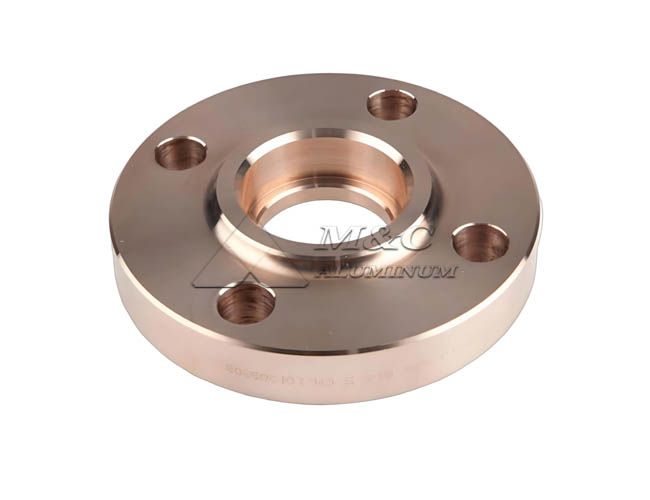
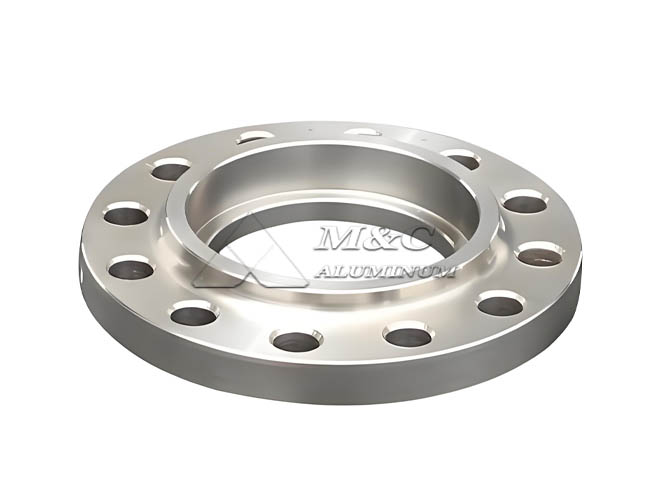


Copper-Nickel Socket Weld Flange Introduction
A copper-nickel socket weld flange is a piping connector made from copper-nickel alloy and connected to the pipe by socket welding. It generally consists of a flange body, socket bore, welding shoulder, bolt holes, and sealing face. During installation, the pipe end is inserted into the socket bore of the flange, and a fillet weld is applied at the joint between the pipe end and the flange, forming a strong and reliable connection between the pipe and the flange.
Compared with slip-on flanges, socket weld flanges have an internal shoulder in the bore, which improves fatigue strength by approximately 50%. They are an ideal choice for small-diameter high-pressure pipelines.
Under working conditions involving long-term contact with seawater, salt spray, humid air, and certain corrosive media, copper-nickel socket weld flanges can maintain stable mechanical performance and excellent corrosion resistance. They are important connection components commonly used in seawater piping systems.
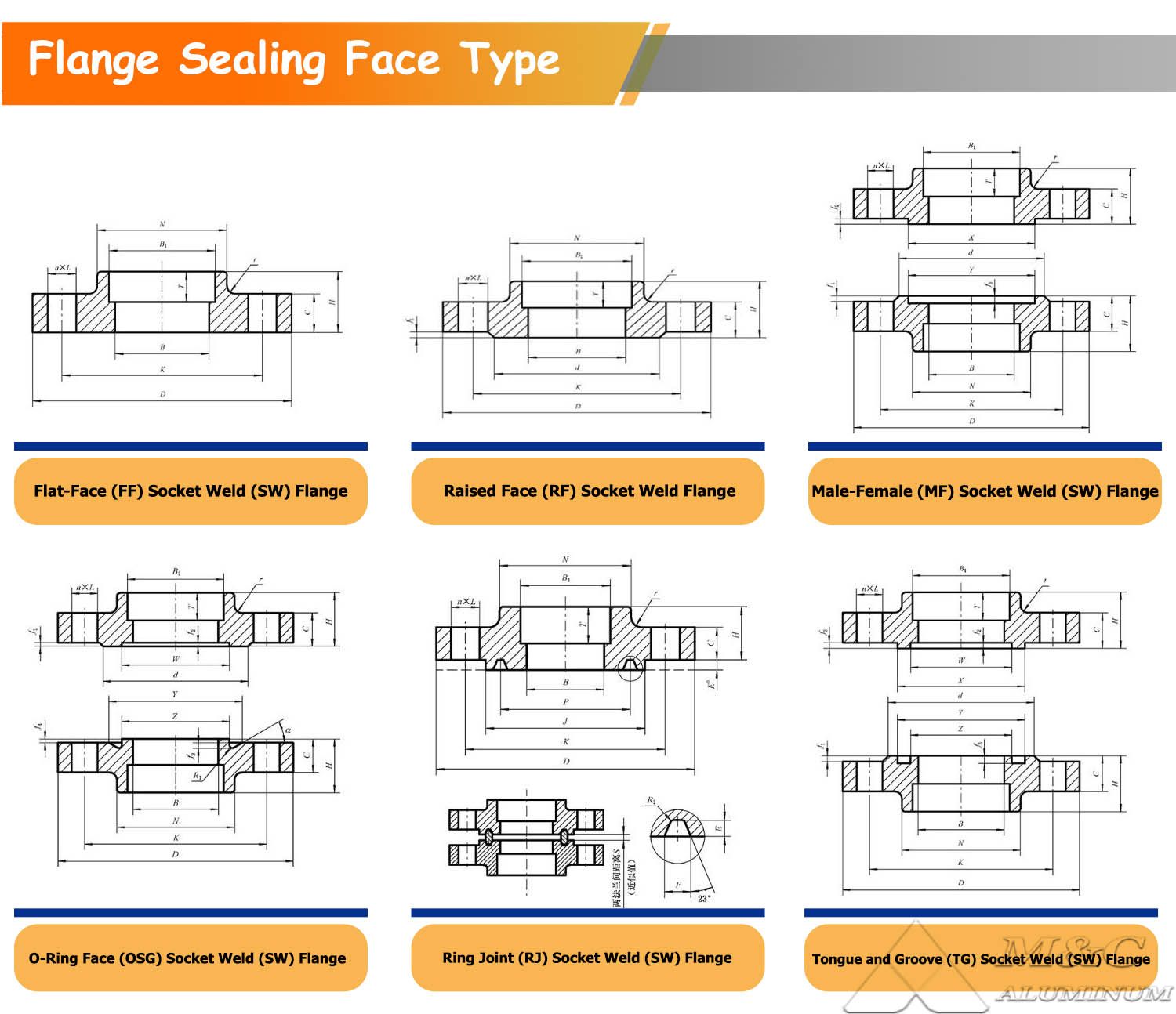
Our company provides two material options: C70600 / CuNi 90/10 and C71500 / CuNi 70/30. The size range is from 1/2" to 4", and the pressure ratings range from Class 150 to Class 300. Copper-nickel socket weld flanges are available in Raised Face (SW-RF) and Flat Face (SW-FF) types, and the products comply with ANSI B16.5 standards.
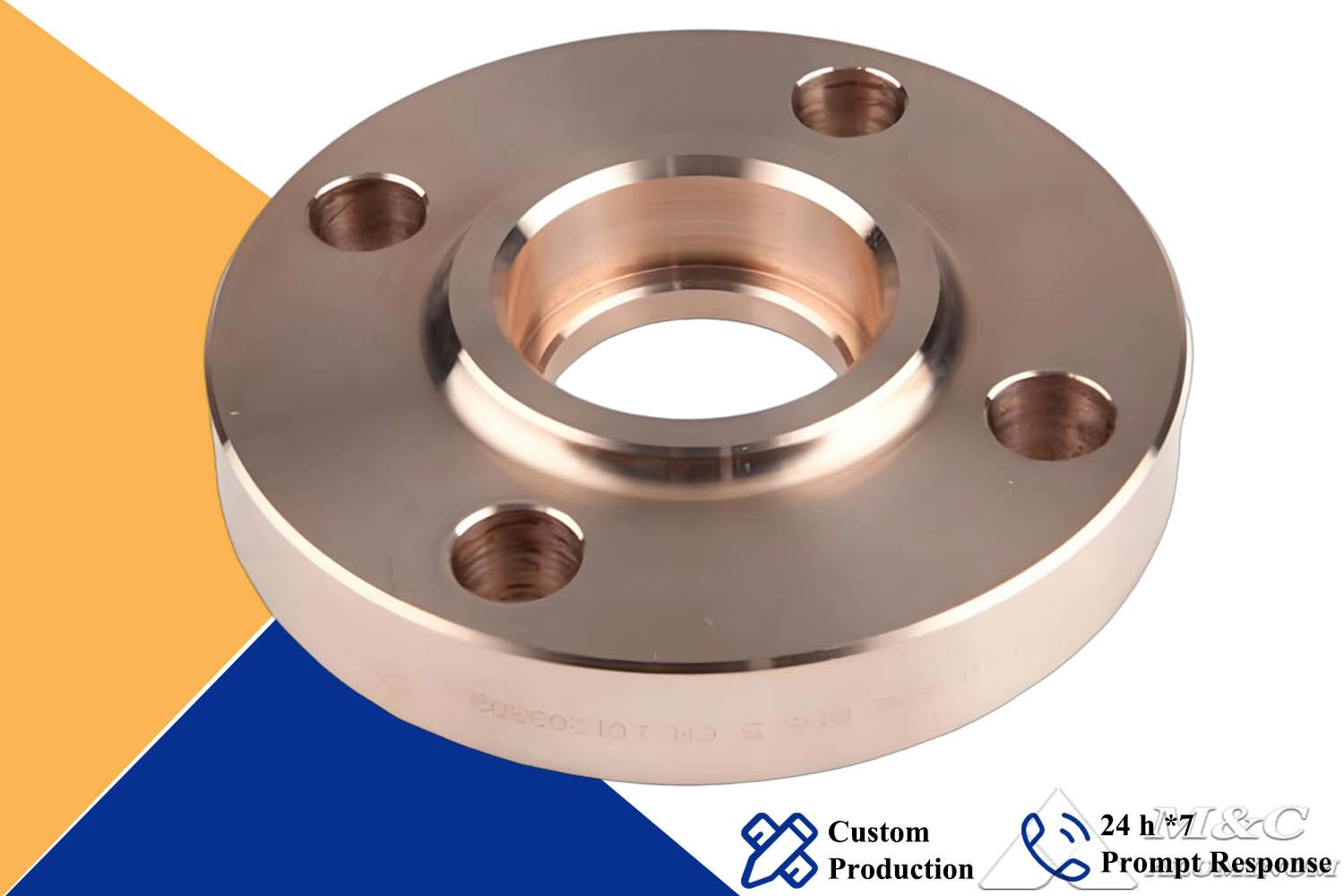
What Is the Function of a Copper-Nickel Socket Weld Flange?
The core function of a copper-nickel socket weld flange is to connect small-diameter high-pressure pipelines. Its functions include:
Socket Welding Connection
The pipe is inserted into the flange socket and then welded, forming a permanent high-strength connection suitable for high-pressure and high-temperature working conditions.
Pipeline Closure and Branch Connection
It can be used as a component for pipeline terminals, equipment interfaces, or branch connections.
Corrosion-Resistant Barrier
Copper-nickel material provides long-term protection in corrosive environments such as seawater, helping prevent rust, corrosion, and leakage at the joint.
Installation Positioning
The socket shoulder design provides built-in positioning, ensuring accurate pipe insertion depth and convenient installation.
Core Product Advantages
Compact structure, saving installation space
High-strength socket weld connection with excellent reliability
Excellent seawater corrosion resistance
Suitable for high-pressure small-diameter systems
High installation efficiency
Long service life and low maintenance cost
Specifications of Socket Weld Flanges
| Item | Specification |
| Grade | Copper-Nickel Alloy 90/10 — C70600; Copper-Nickel Alloy 70/30 — C71500 |
| Material Specification | ASTM B151 UNS C70600, CuNi10Fe1.6Mn, 7060X |
| Standard | ASME B16.5 |
| Size | 1/2" to 24" |
| Class / Pressure | Class 150, Class 300 |
| Flange Face Type | Flat Face — FF, Raised Face — RF |
How Is a Copper-Nickel Socket Weld Flange Connected to a Piping System?
Select copper-nickel alloy pipes and socket weld flanges with standard-compliant dimensions.
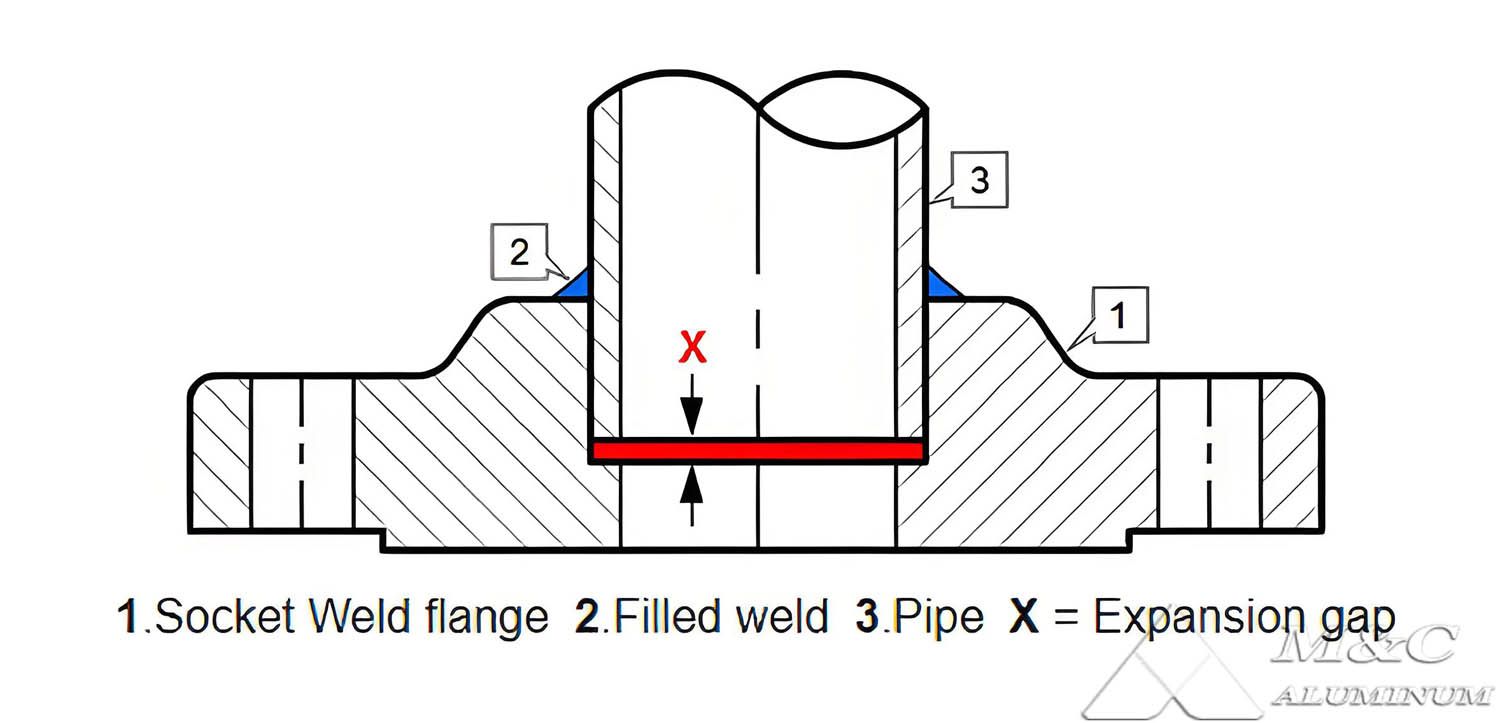
Insert one end of the copper-nickel alloy pipe into the copper-nickel socket weld flange.
Push the copper-nickel alloy pipe inward until it contacts the shoulder of the copper-nickel socket weld flange.
Then pull it back approximately 1.6 mm to leave a proper expansion gap between the CuNi pipe end and the CuNi socket weld flange.
Apply a fillet weld around the top of the CuNi pipe and the CuNi socket weld flange.
Connect the copper-nickel socket weld flange to the complete assembly through the bolt holes.
By completing these steps, the CuNi socket weld flange ensures seamless fluid flow.
What Is the Difference Between a Copper-Nickel Socket Weld Flange and a Weld Neck Flange?
| Comparison Item | Socket Weld Flange | Weld Neck Flange |
| Structural Features | The bore has a socket shoulder. The pipe is inserted into the socket and then welded. | It has a long tapered hub. The hub end is beveled and butt welded to the pipe. |
| Applicable Pipe Size | Small-diameter pipelines, typically DN≤40 or NPS 1/2" to 4". | Wide application range, usually used for large-diameter pipelines of DN≥50. |
| Applicable Working Conditions | Small- and medium-diameter, medium- and low-pressure systems, usually ≤ Class 600, such as instrument lines and vent lines. | Critical pipelines under high temperature, high pressure, severe temperature/pressure fluctuations, and high reliability requirements. |
| Installation Features | The pipe is inserted and automatically aligned. No precise bevel preparation is required, making installation convenient. Weld inspection is limited, as radiographic testing is not easy to perform. | Precise bevel alignment is required, and installation requirements are higher. Weld quality can be fully inspected by non-destructive testing. |
| Cost | Relatively lower. | Relatively higher. |
Common Sealing Face Types
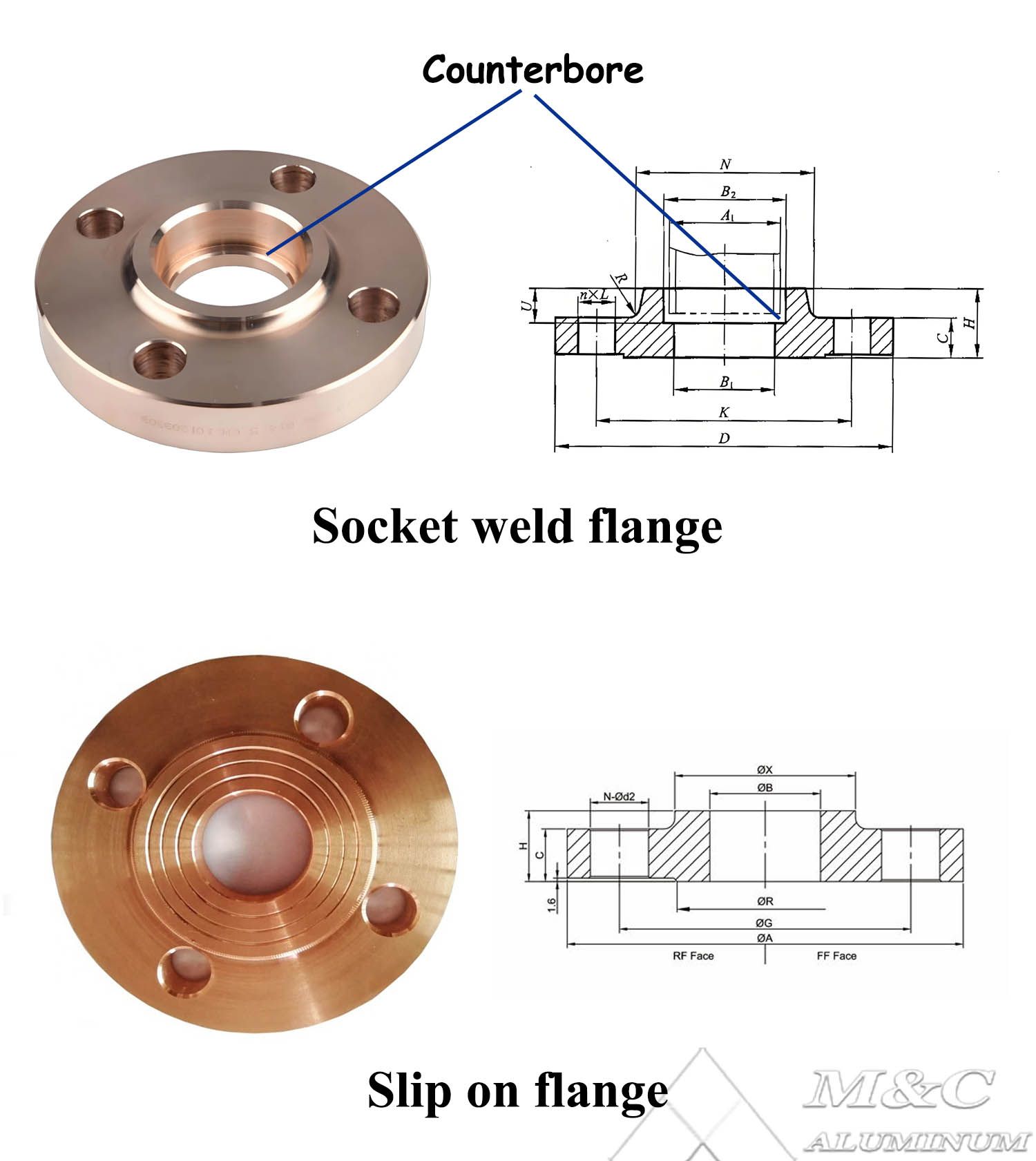
What Is the Difference Between a Socket Weld Flange and a Slip-On Flange?
Copper-nickel socket weld flanges and copper-nickel slip-on flanges have similar designs and structures.
In addition, both CuNi socket weld flanges and slip-on flanges are connected to copper-nickel alloy pipes by fillet welding.
However, a copper-nickel socket weld flange has a recessed area, also known as a counterbore or "shoulder," while a copper-nickel slip-on flange does not.
Industry Standards
Our copper-nickel socket weld flanges strictly comply with the following international and national standards:
| Standard System | Main Standards |
| ASME | ASME B16.5 Flange Standard, ASME B16.47 Steel Flange Standard |
| ANSI | ANSI B16.5, ANSI B16.47 |
| PED | EU Pressure Equipment Directive requirements for pressure vessel flanges |
| GB | GB/T 9112.1~9112.3 Chinese Flange Standards |
| JIS | JIS B2220 Japanese Flange Standard |
Application Scenarios
1. Shipbuilding and Ship Repair
Used in seawater cooling systems, ballast water systems, fire-fighting pipelines, bilge water systems, fuel auxiliary pipelines, and more.
2. Offshore Engineering Equipment
Applied in offshore platforms, offshore drilling equipment, offshore wind power equipment, and related facilities.
3. Seawater Desalination Projects
Used for pipeline connections involving high-salinity media.
4. Power Plant Cooling Water Systems
Applied in circulating cooling water systems of coastal power plants, nuclear power plants, and thermal power plants.
5. Chemical and Energy Systems
Suitable for conveying systems containing chloride-ion corrosive media.
6. Heat Exchangers and Condensers
Used in heat exchanger tube bundles, condensers, and related equipment.
Why Choose Us?
100% Genuine Material
We provide material test certificates according to EN 10204 3.1 with each shipment. Direct-reading spectrometers are used for batch-by-batch inspection to ensure that the copper, nickel, iron, and manganese element ratios fully meet the required standards.
Strict Geometric Tolerances
We conduct full inspection of the unique socket weld dimensions, especially socket depth and inner diameter tolerance, preventing on-site problems such as insertion failure or excessive welding gaps caused by tolerance issues.
Careful Packaging Protection
The flange sealing faces and socket areas are specially protected against dust and impact damage, ensuring that the products remain intact after long-distance sea or land transportation.