

Product Overview
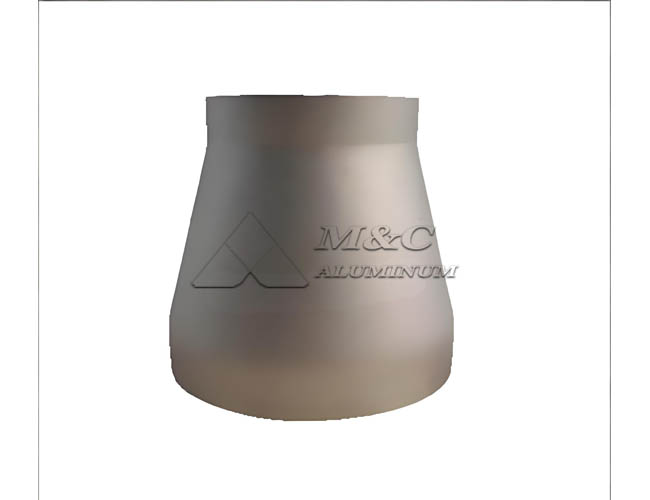
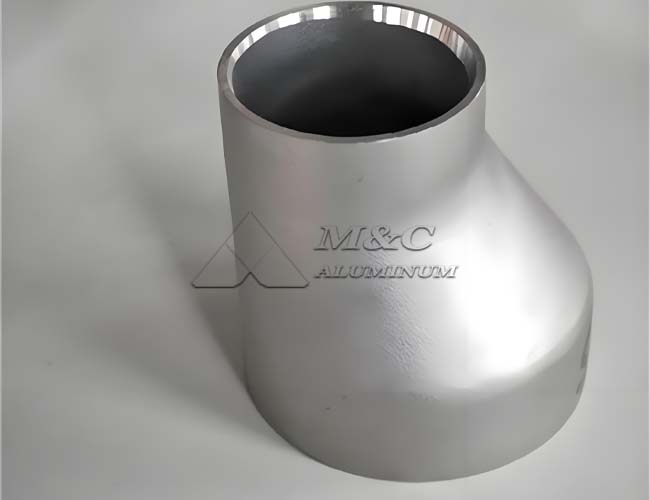
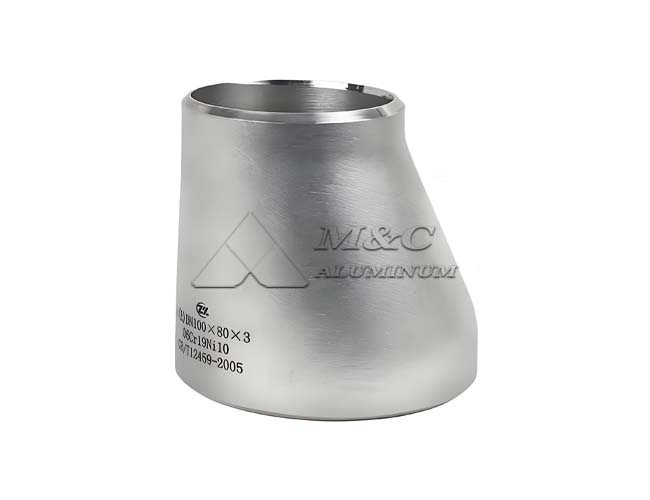
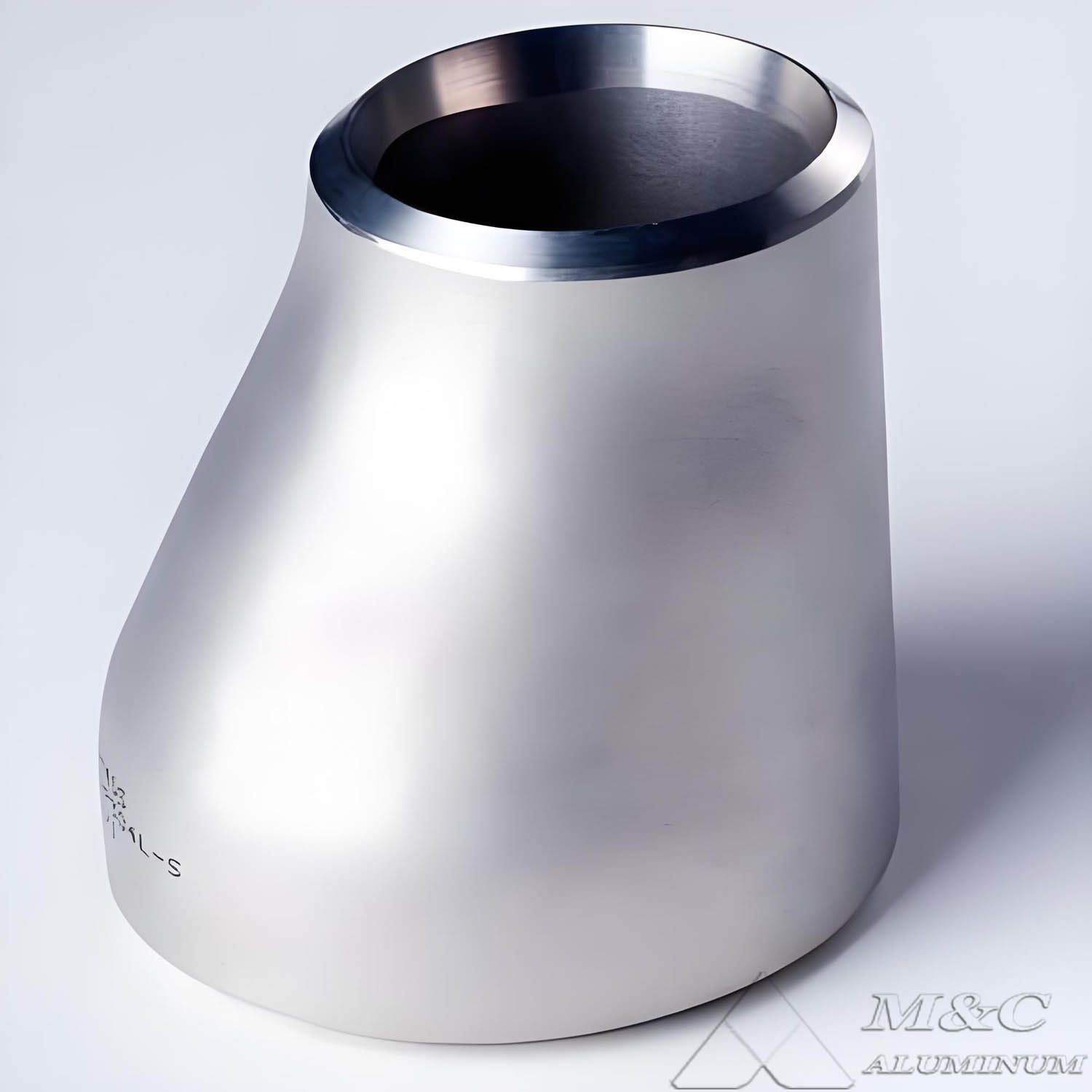
Reducers, commonly known as pipe reducers, are divided into two main types: concentric reducers and eccentric reducers. Compared with concentric reducers, the design of an eccentric reducer is more refined and functional. Its key feature is that the centers of the two ends are not on the same axis, while one side of the fitting remains flat, either flat-bottom or flat-top.
Eccentric reducers are commonly manufactured from Copper Nickel 90/10 alloy, which consists of approximately 90% copper and 10% nickel.
Copper nickel eccentric reducers are usually produced by reducing press forming or expanding press forming. For conventional sizes, cold pressing is often used. For thick-wall or large-size products, hot pressing or forging is required to ensure a dense and reliable internal material structure.
In horizontal piping systems, if a concentric reducer is used, gas may accumulate at the diameter transition area, causing air locking, or solid impurities may settle. By keeping one side level, an eccentric reducer can effectively prevent these problems, ensuring fluid cleanliness and stable system operation.
The product is manufactured in strict accordance with international and domestic standards, such as ASTM B466, ASME B16.9, EEMUA 146, and GB/T standards. Butt welding is the main connection method, providing a permanent and leak-free pipeline joint, especially suitable for high-pressure applications such as Class 200/300 systems and high-temperature working conditions.
Technical Parameters
| Item | Parameter |
| Product Name | Copper Nickel 90/10 Eccentric Reducer / CuNi 90/10 Eccentric Reducer |
| Material Grade | C70600 |
| Alloy Composition | Cu 90% / Ni 10% |
| Standards | ASTM B466, ASTM B111, ASME B16.9, EN 12449, DIN Standards |
| Manufacturing Method | Seamless, Welded |
| Size Range | 1/2"–48" / DN15–DN1200 |
| Wall Thickness | SCH10, SCH20, SCH40, SCH80, SCH160, XXS, or Customized |
| Type | Eccentric Reducer |
| Connection Method | Butt Weld |
| Surface Treatment | Pickling, Passivation, Sandblasting, Polishing |
| Working Pressure | Determined by wall thickness and applicable standards |
| Working Temperature | -196°C to 300°C |
Key Product Features
1. Suitable for Harsh Marine Environments
Copper Nickel 90/10 eccentric reducers are especially suitable for seawater cooling systems, ship pipelines, offshore platforms, desalination plants, and coastal power plants. Even under complex working conditions involving high salinity, high humidity, salt spray, and flowing seawater, they maintain stable and reliable performance.
2. Long Service Life and Low Overall Cost
Although the initial purchase cost of copper nickel alloy fittings is higher than that of ordinary steel pipe fittings, their excellent corrosion resistance, low maintenance frequency, and long replacement cycle can significantly reduce the total life-cycle cost of the piping system.
3. Excellent Operating Stability
The eccentric design effectively improves the transition of fluid flow, reducing cavitation, vortex formation, liquid accumulation, and gas pockets. This helps improve the operating efficiency and safety of pumps, heat exchangers, condensers, and other equipment.
4. Clean Appearance and Premium Quality
Copper nickel material has a distinctive metallic luster. Finished products have a smooth, uniform, and refined surface, offering excellent visual identification and industrial aesthetics. They are well suited for high-standard engineering projects.
5. High Degree of Customization
Products can be manufactured according to customer requirements, including different diameters, wall thicknesses, lengths, end bevels, surface treatments, and inspection requirements. Custom production can meet the needs of classification societies, engineering projects, and special operating conditions.
Applications of Copper Nickel Eccentric Reducers
1.Shipbuilding
Seawater cooling systems
Ballast water pipelines
Firefighting systems
2.Offshore Engineering
Offshore drilling platforms
Seawater pipelines for FPSO units
Offshore module piping systems
3.Power Plants and Desalination
Condenser piping systems in coastal power plants
Water transmission pipelines for desalination equipment
Seawater intake and discharge systems
4.Petrochemical Industry
Pipelines for sulfur-containing media
Pipelines for weak acidic media
Corrosive fluid transmission systems
FAQ
1. What is the difference between a Copper Nickel 90/10 eccentric reducer and a concentric reducer?
The centerlines of an eccentric reducer are not aligned, which helps prevent liquid or gas accumulation in horizontal pipelines. It is suitable for pump inlets, drainage systems, and similar applications.
A concentric reducer has aligned centerlines and is more suitable for vertical pipelines or symmetrical fluid transmission.
2. Is a CuNi 90/10 eccentric reducer suitable for seawater systems?
Yes. CuNi 90/10 is designed for seawater environments and offers excellent resistance to seawater corrosion, erosion corrosion, and marine biofouling. It is an ideal material for ships, offshore platforms, and desalination systems.
3. Can the reducer be customized according to drawings?
Yes. Outer diameter, wall thickness, eccentric direction, length, and special dimensions can be customized according to customer drawings or technical requirements. Non-standard product processing is also available.
4. Which international standards can the product comply with?
Common standards include ASME B16.9, ASTM B366 for copper nickel and nickel alloy fittings, ASTM B466, ASTM B111, and related EN, DIN, and JIS standards. Production can also be carried out according to specific project specifications.
5. Is third-party inspection supported?
Yes. We can provide EN 10204 3.1/3.2 material certificates and accept inspection services from international classification societies or third-party inspection organizations, including ABS, BV, DNV, LR, CCS, NK, and KR.