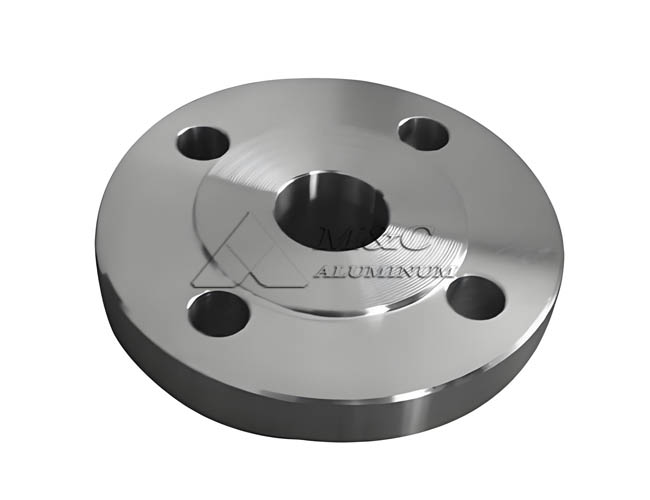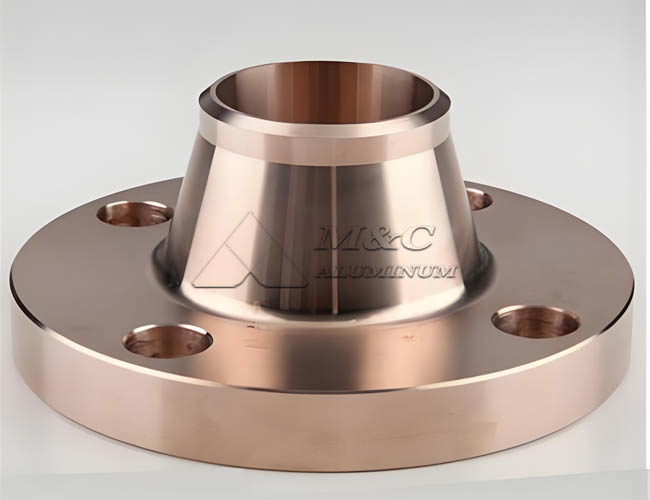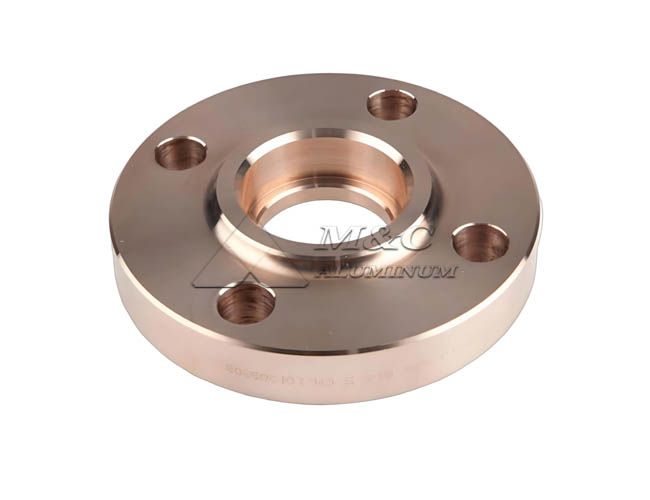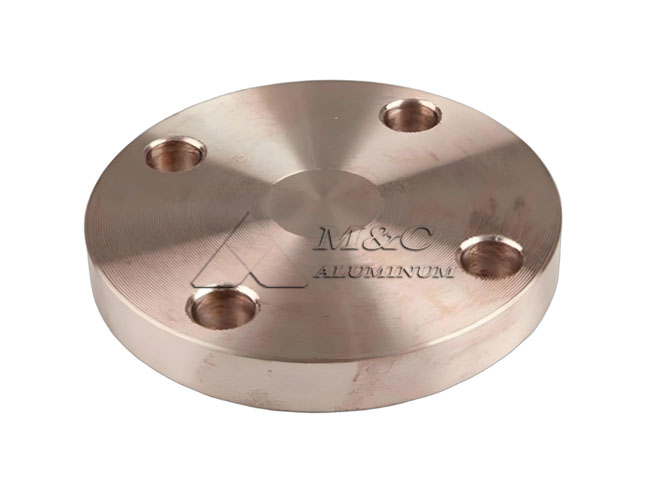
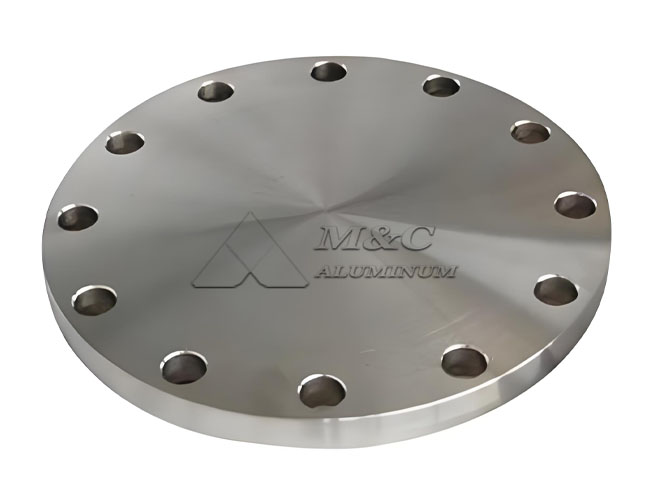


A blind flange is a solid plate flange without a center bore, with bolt holes distributed around the outer edge. These flanges are used to seal the end of a pipeline, either for permanent shut-off of the medium or for temporary closure during maintenance.
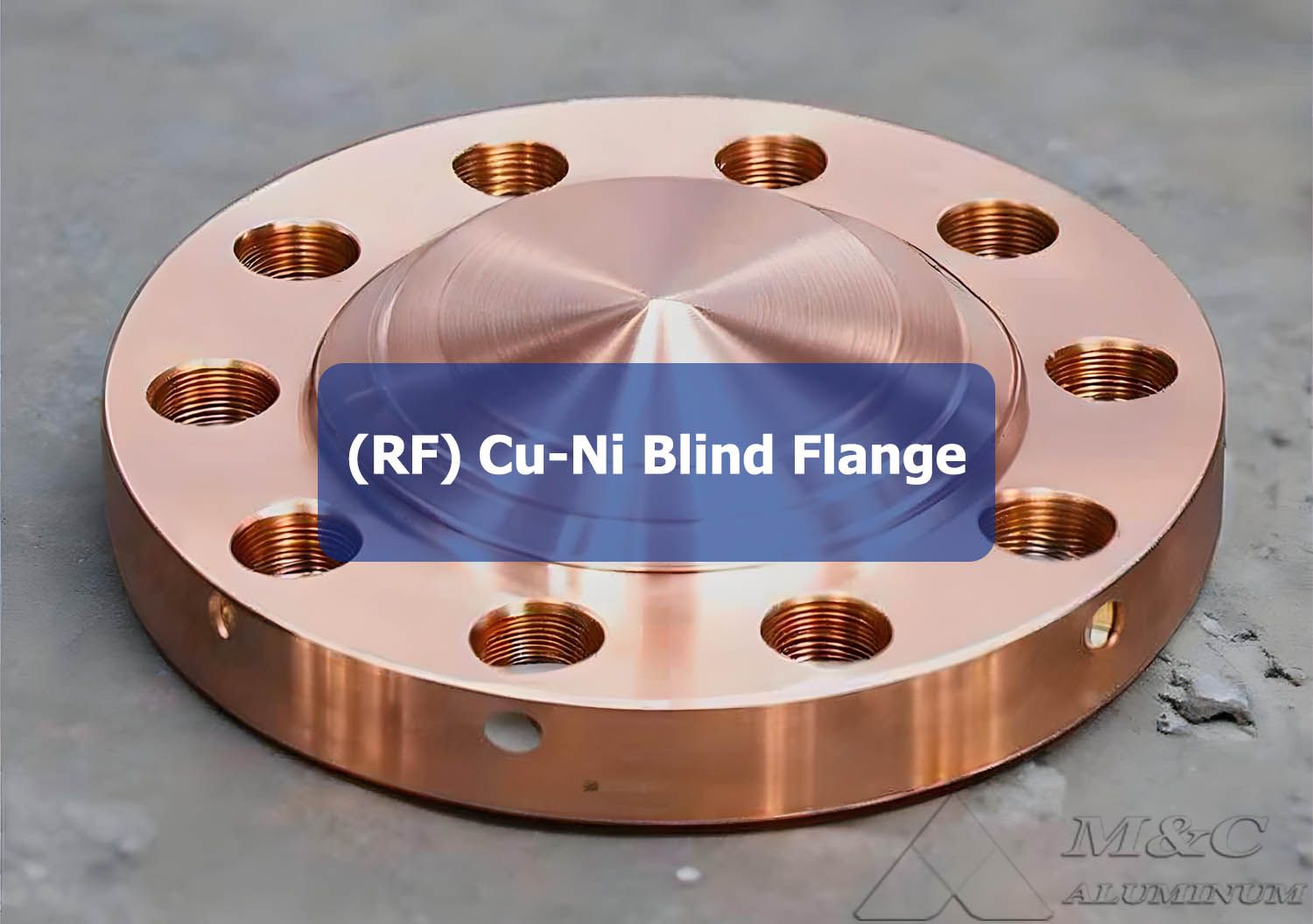
Copper-nickel blind flanges are usually manufactured from C70600 or C71500 materials, offering excellent corrosion resistance and durability.
Among them, 90/10 copper-nickel alloy is the most widely used in offshore engineering due to its excellent biofouling resistance and seawater erosion resistance.
Characteristics of Copper-Nickel Alloy
1. Excellent Seawater Corrosion Resistance
Copper-nickel alloy can quickly form a stable protective film in seawater, effectively resisting pitting corrosion and crevice corrosion.
2. Strong Biofouling Resistance
Especially C70600 / CuNi 90/10, which can significantly reduce marine organism attachment and lower maintenance costs.
3. Good Mechanical Strength
Copper-nickel alloy can maintain structural stability in medium- and high-pressure piping systems.
4. Excellent Welding and Machining Performance
It is convenient for on-site installation, maintenance, and system modification.
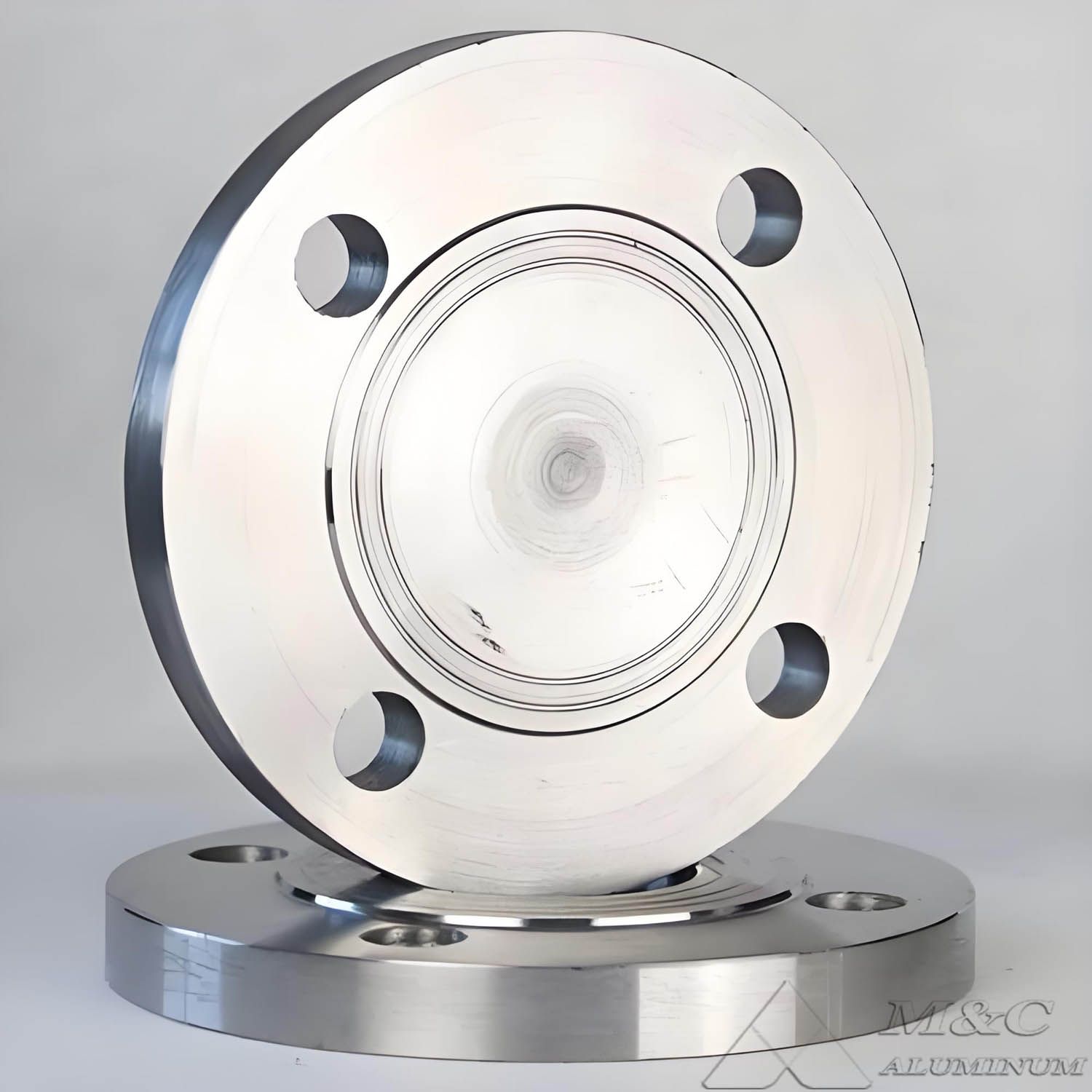
Specifications of Copper-Nickel Blind Flanges
| Item | Specification |
| Material | C70600, C71500 |
| Material Specification | ASTM B151 UNS C70600, CuNi10Fe1.6Mn, 7060X |
| Dimensions | ASME B16.5 |
| Standards | EEMUA Flange, DIN Flange, JIS Flange, ANSI Flange, ASME Flange, BS Flange, EN Flange |
| Size Range | 1/2" to 24" |
| Class / Pressure | Class 150#, 300#, 600# / PN10, PN16, PN25, PN40 |
| Flange Face Type | Flat Face — FF, Raised Face — RF |
How Does a Copper-Nickel Blind Flange Seal?
A copper-nickel blind flange is fastened to a mating flange with bolts, forming a reliable sealing end face in the piping system.
The working process is as follows:
Align the blind flange with the pipe flange.
Create tight contact through the sealing gasket.
Achieve sealing by evenly pre-tightening the bolts.
Complete pipeline closure or maintenance isolation.
This structure allows local closure or future expansion without damaging the main system.
Product Performance Advantages
1. Corrosion Resistance
Copper-nickel alloy can quickly form a stable protective film in seawater, effectively resisting pitting corrosion and crevice corrosion.
2. Reliable Sealing Performance
The blind flange has an integral solid structure without a center bore. When used with a suitable gasket and properly tightened bolts, it can achieve excellent isolation and sealing performance.
3. Wide Application Environment
It can be used in various piping systems carrying seawater, freshwater, steam, oil products, and certain chemical media. It is especially suitable for shipbuilding and offshore engineering fields.
4. Good Machinability
Copper-nickel material has good machinability and can meet the processing requirements of various sizes, pressure ratings, and non-standard structures.
5. High Overall Cost Performance
Although the initial purchase cost of copper-nickel material is relatively high, its corrosion resistance, low maintenance requirements, and long service life can effectively reduce later replacement costs and shutdown maintenance costs.
What Is an ASME B16.5 Blind Flange?
The blind flanges produced by our company comply with the ASME B16.5 specification.
Blind Flange Sealing Face Types
FF — Flat Face
RF — Raised Face
MFM — Male and Female Face
TG — Tongue and Groove Face
RJ — Ring Joint Face
Special sealing faces can be machined according to requirements.
In actual selection, factors such as pipeline pressure, temperature, medium characteristics, connection standard, and mating flange type should be comprehensively considered to ensure installation compatibility and reliable sealing.
Product Manufacturing Standards
Products can be designed and manufactured according to the following standards, and can also be customized according to customer drawings:
US Standards: ASME B16.5, ASME B16.47, ASTM B171, ASTM B151
German Standards: DIN 86019
European Standards: EEMUA 144
Chinese National Standards: GB/T 12459, GB/T 9124
Application Fields of Blind Flanges
1. Shipbuilding and Offshore Engineering
Seawater cooling systems
Bilge drainage pipelines
Pipeline closure on offshore platforms
2. Seawater Desalination Systems
Used for pipeline sealing and equipment isolation in high-salinity environments.
3. Chemical Industry
Suitable for piping systems carrying chloride-containing media or corrosive liquids.
4. Power and Energy Systems
Used for end closure of seawater circulating cooling pipeline networks.

What Is the Difference Between Raised Face and Flat Face Copper-Nickel Blind Flanges?
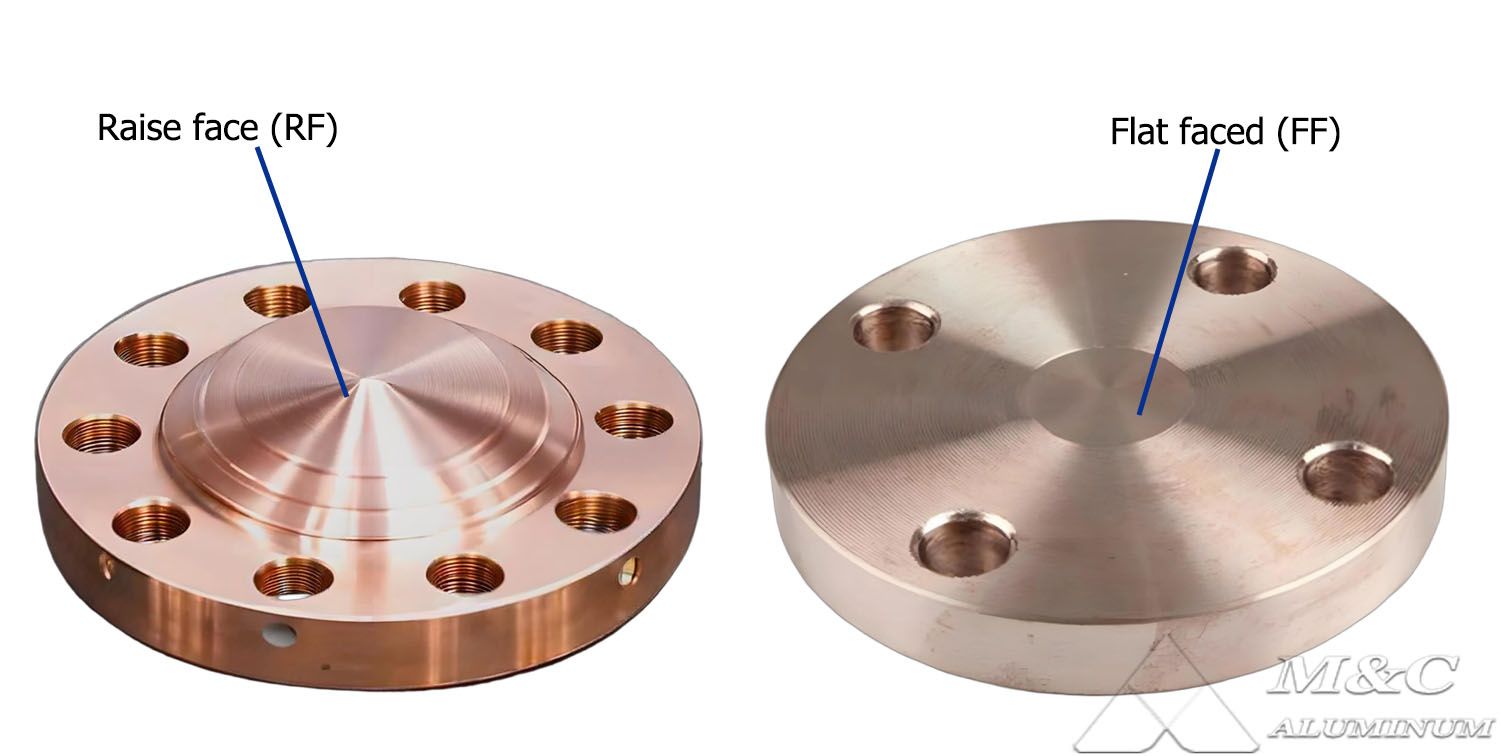
A Flat Face — FF copper-nickel flange has no raised ridge or protrusion on its surface. When this type of flange is used, the gasket is in full contact with the entire surface of the copper-nickel blind flange.
A Raised Face — RF copper-nickel blind flange refers to a blind flange whose sealing surface is slightly raised above the bolt hole area. This design allows the use of various gasket types.
Generally speaking, the sealing performance of an RF CuNi blind flange is better than that of an FF copper-nickel blind flange.
How to Choose a Copper-Nickel Blind Flange?
When selecting a copper-nickel blind flange, the following factors should be considered:
Select the material grade: CuNi 90/10 or CuNi 70/30
Confirm the class or pressure rating
Choose the flange face type: Flat Face — FF or Raised Face — RF
Confirm the size range, usually from 1/2" to 24"
Confirm the applicable standard, such as ASME B16.5
When using a sealing gasket, clearly define the working temperature and medium characteristics.