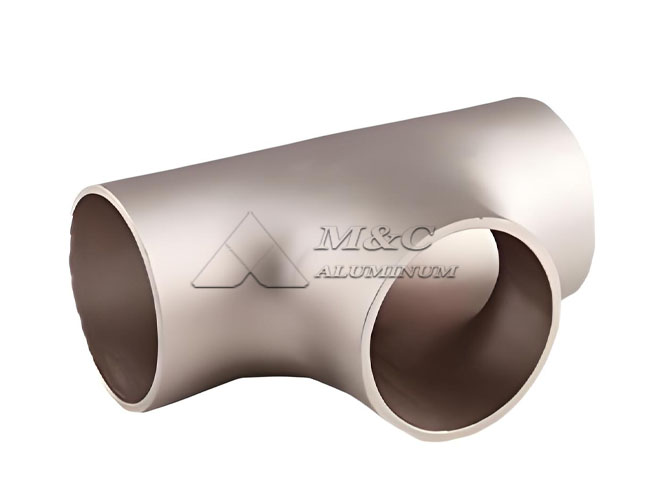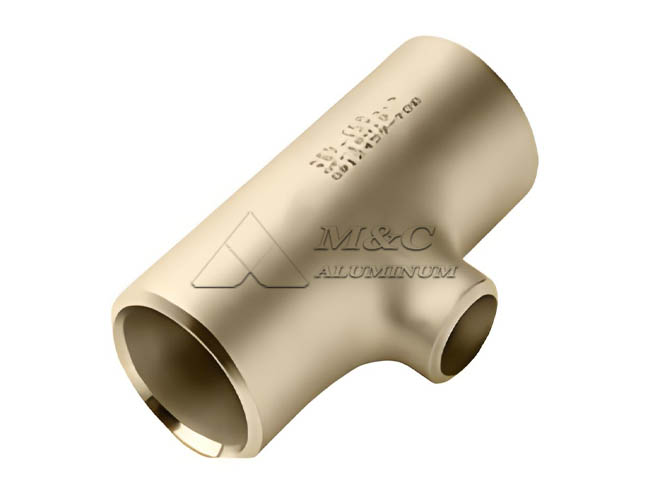
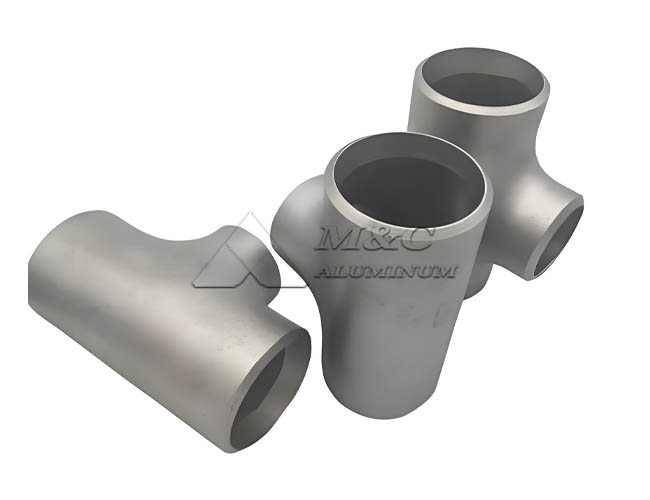


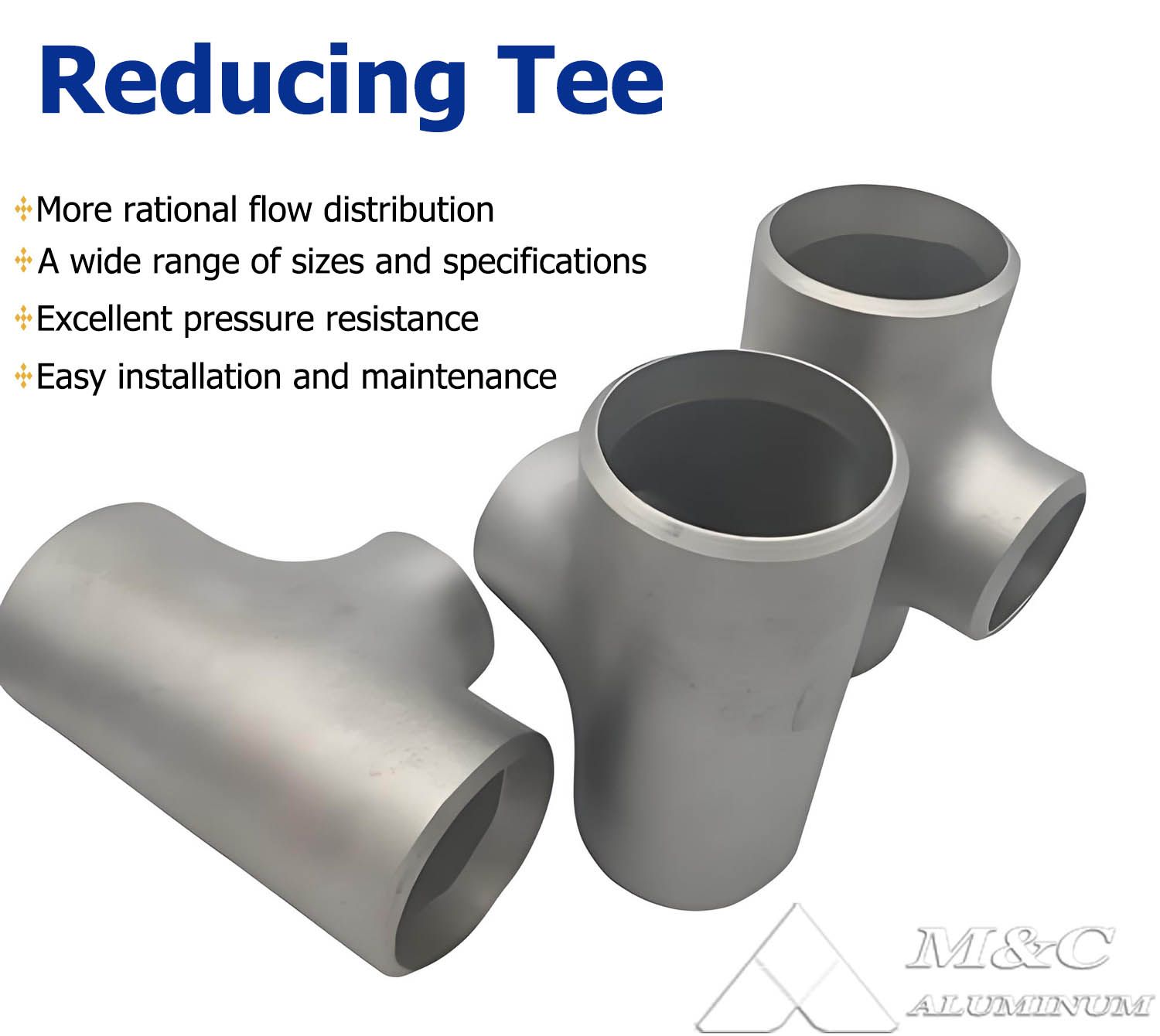
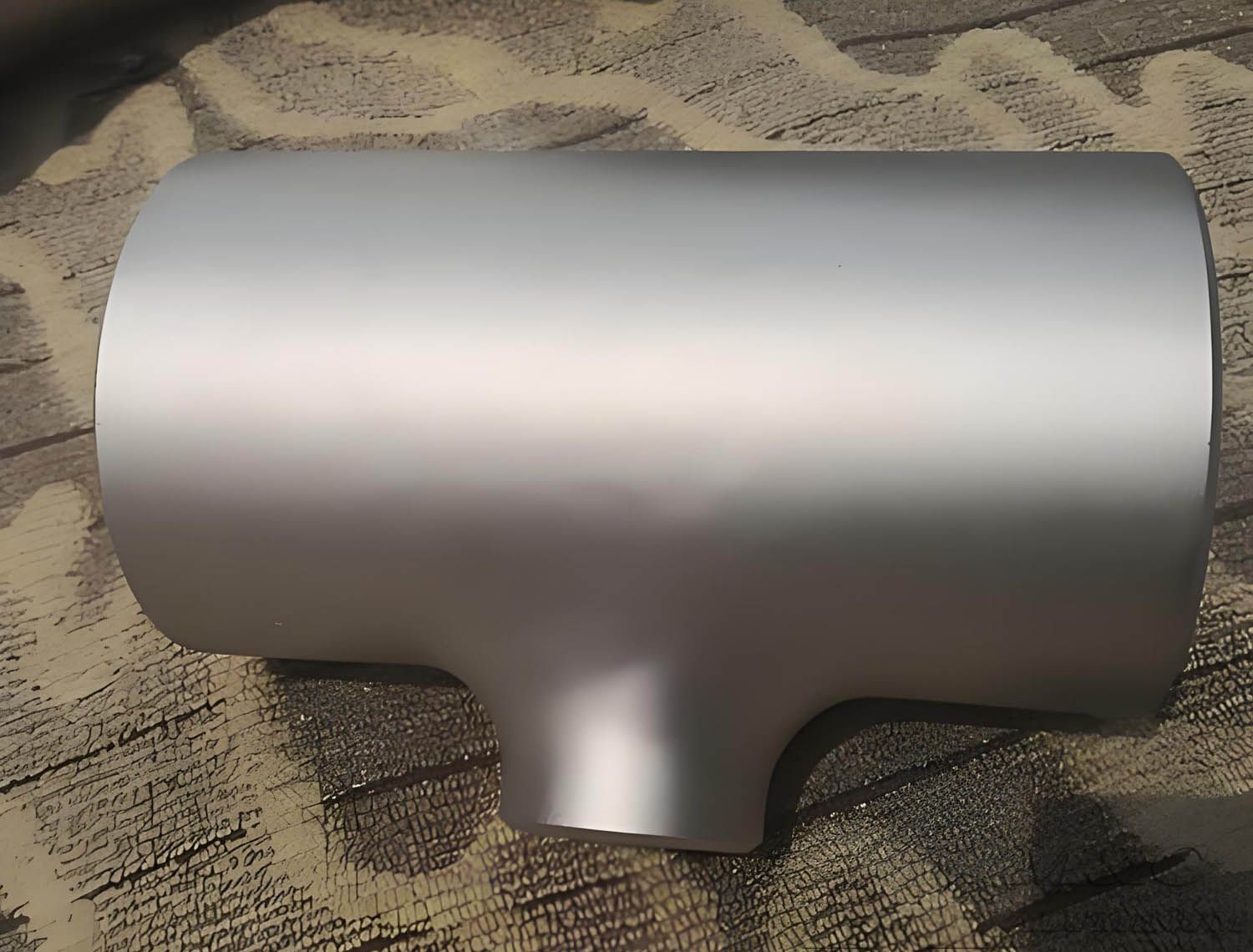
A Copper Nickel Reducing Tee is a copper nickel alloy pipe fitting used in piping systems for flow diversion, flow convergence, and transition connections between pipes of different diameters. Unlike a copper nickel equal tee, the main pipe and branch pipe of a reducing tee do not have completely identical diameters. In most cases, the two ends of the main pipe have the same diameter, while the branch outlet is smaller than the main pipe. Special reducing structures can also be manufactured according to project design requirements. Therefore, it is also known as a copper nickel unequal tee.
This type of fitting not only provides branch connection for piping direction changes, but also meets the transition requirements between different flow rates and different pipe sizes.
Copper nickel reducing tees are commonly manufactured from 90/10 copper nickel(CuNi 90/10, UNS C70600). This material offers excellent seawater corrosion resistance, strong erosion-corrosion resistance, and good weldability, making it an ideal pipe fitting choice for seawater transfer systems and highly corrosive operating conditions.
Structural Features of 90/10 Copper Nickel Reducing Tee
A copper nickel reducing tee generally consists of a main run, a branch outlet, and a transition connection area. Its key feature is the combination of tee branching and diameter reduction, allowing flow distribution and pipe size transition to be completed within one fitting.
1. Reduced Branch Outlet for Flow Control
Most copper nickel reducing tees have equal diameters at both ends of the main run, while the branch outlet is smaller. This structure is suitable for drawing a smaller-flow branch line from the main pipeline, such as cooling water branches, equipment water supply branches, fire-fighting branch lines, and other auxiliary piping systems.
2. Smooth Diameter Transition to Reduce Local Impact
High-quality reducing tees are designed with a smooth transition at the intersection of the main pipe and branch pipe. This helps reduce the impact caused by sudden changes in flow direction and cross-sectional area, minimizing turbulence, vibration, and pressure loss.
3. Uniform Wall Thickness and Stable Pressure Resistance
During the forming process of copper nickel reducing tees, strict control is required over the branch stretching area, shoulder transition area, and end wall thickness to avoid local thinning. A tee with uniform wall thickness provides better pressure resistance and improves operational safety.
4. Suitable for Complex Piping Network Design
In shipbuilding, offshore platforms, and industrial circulating water systems, piping networks often include multi-level branches and pipes of different sizes. Copper nickel reducing tees can reduce the combined use of reducers and tees, making the piping layout more compact and installation more convenient.
Product Technical Parameters
| Item | Parameter |
| Product Name | Copper Nickel Reducing Tee |
| Material | C70600(CuNi 90/10) |
| Product Type | Butt Weld Reducing Tee |
| Manufacturing Standards | ASME B16.9, MSS SP-75, DIN, EN, GB |
| Material Standards | ASTM B466, ASTM B122 |
| Size Range | DN15–DN1200(1/2"–48") |
| Wall Thickness | SCH10, SCH20, SCH40, SCH80, SCH160, XXS |
| Connection Method | Butt Weld |
| End Types | Plain End, Bevel End, Socket End, Special End |
| Manufacturing Methods | Seamless Forming, Welded Forming, Extrusion Forming |
| Production Processes | Hot Press Forming, Cold Working, Machining |
| Surface Treatment | Pickling, Sandblasting, Polishing |
| Inspection Items | PMI, UT, RT, PT, Hydrostatic Test, Dimensional Inspection |
| Application Fields | Marine, Offshore, Power Plant, Desalination, Chemical Industry, etc. |
Core Performance Features of Copper Nickel Reducing Tee
1.Seawater Corrosion Resistance:
Copper nickel alloy can naturally form a dense and stable protective film in seawater environments. This film effectively resists chloride ion corrosion and provides excellent resistance to pitting corrosion, crevice corrosion, and marine atmospheric corrosion.
2.Strong Erosion Resistance:
Due to diameter change and flow diversion, reducing tees are prone to local flow velocity changes and vortex formation. With excellent erosion-corrosion resistance, copper nickel alloy can effectively withstand wear and damage caused by high-speed media impact.
3.Biofouling Resistance:
Copper ions have natural antibacterial and anti-fouling properties. They help reduce the adhesion of shellfish, algae, and microorganisms on the inner pipe wall, keeping the pipeline unobstructed and reducing cleaning frequency.
4.Excellent Weldability:
Copper nickel reducing tees can be connected by butt welding, socket welding, and other welding methods. With suitable welding consumables and proper welding procedures, the weld joint can achieve high strength, reliable sealing, and stable corrosion resistance without significant deterioration after welding.
5.Long Service Life:
With combined advantages of corrosion resistance, erosion resistance, and anti-fouling performance, copper nickel reducing tees provide a much longer service life than ordinary steel fittings in marine and saline media applications, reducing replacement frequency.
6.High Life-Cycle Cost Efficiency:
Although the initial investment may be slightly higher, copper nickel reducing tees offer low failure rates, reduced maintenance, and long service life. As a result, long-term operating costs are significantly reduced, especially for marine and industrial projects with strict requirements for safety and reliability.
Manufacturing Process and Connection Methods
High-quality copper nickel reducing tees are generally formed by forging or cold extrusion processes, rather than casting. Forging and cold extrusion can refine the grain structure, eliminate internal pores and looseness defects, and significantly improve product density and mechanical strength.
Some technical references mention cold extrusion forming processes that use axial pressure together with fixed internal and external dies. This method can effectively reduce the risk of wrinkling and tearing during production.
Production Process Flow
Raw Material Inspection
↓
Copper Nickel Pipe Cutting
↓
Hot Pressing or Cold Forming
↓
Heat Treatment
↓
Machining
↓
Dimensional Correction
↓
Non-Destructive Testing(UT/RT/PT)
↓
Hydrostatic Test
↓
Pickling and Passivation
↓
Packing and Delivery
Connection Methods
Copper nickel reducing tees are available with different connection methods to suit various working conditions:
Butt Weld Connection:
Suitable for high-pressure and large-diameter piping systems. A full-penetration weld provides a connection with strength comparable to the main pipe. It is the mainstream choice for shipbuilding and offshore engineering.
Socket Weld Connection:
Suitable for small-diameter pipes, usually below 2 inches, and high-pressure piping systems. It offers easy alignment and a longer sealing path.
Threaded Connection:
Suitable for low-pressure, small-diameter temporary or detachable pipelines.
Copper nickel alloy has good weldability. With appropriate welding consumables and standardized welding procedures, it can form welded joints with high strength, reliable sealing, and stable corrosion resistance.
Why Choose Us?
As a professional manufacturer and exporter of copper nickel pipe fittings, we always adhere to high manufacturing standards and strict quality management, providing reliable piping connection solutions for global customers.
Our advantages include:
High-Quality Raw Materials:We use C70600 and C71500 copper nickel alloys that comply with ASTM standards, ensuring stable corrosion resistance and mechanical properties.
Advanced Production Equipment:We have mature hot forming, machining, and welding processes to ensure accurate dimensions and reliable product performance.
Complete Quality Management System:We strictly implement international standards and can provide material certificates, non-destructive testing reports, and third-party inspection certificates.
Wide Product Range:We supply various sizes, wall thicknesses, and standards, and support OEM, ODM, and customized production according to drawings.
Global Supply Capability:Our products are widely exported to Europe, the Middle East, Southeast Asia, Australia, South America, and other regions. We can respond quickly to international project requirements.
Professional Technical Support:We provide product selection advice, technical consultation, and after-sales service to help customers optimize piping system design and reduce overall operating costs.