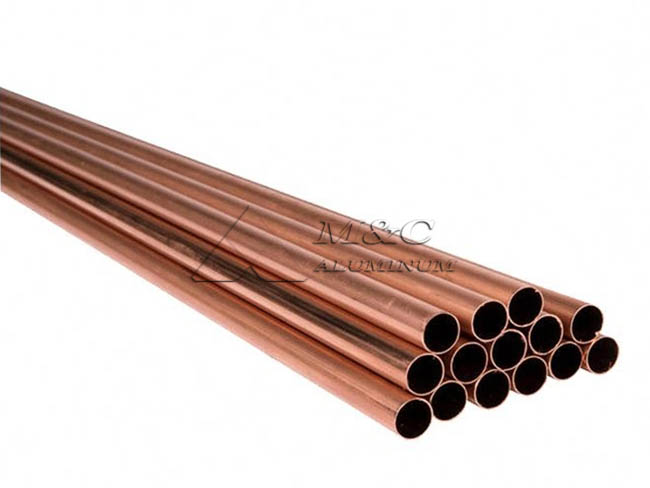
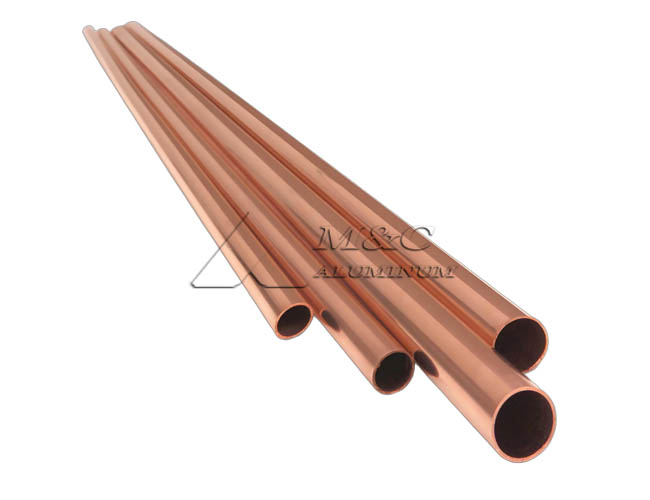
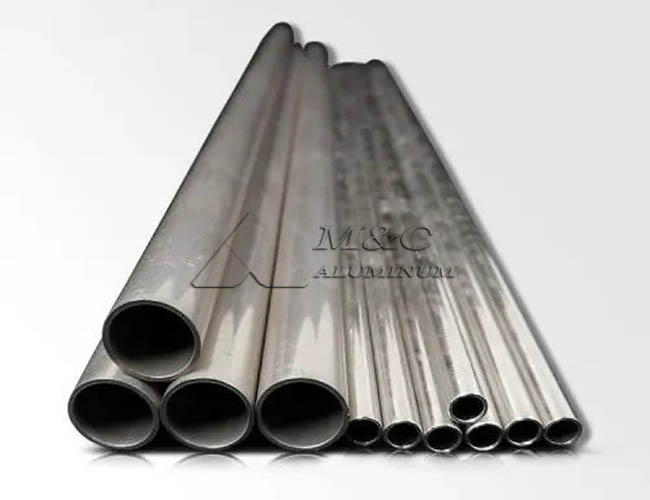
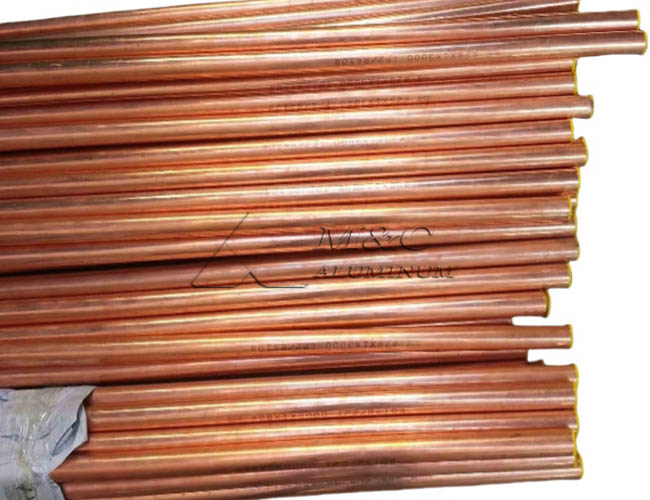
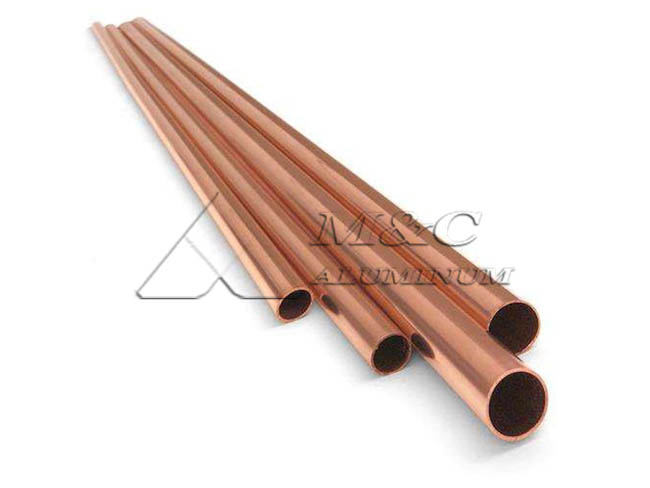
In the shipbuilding industry, copper-nickel alloy seamless pipes have become indispensable components in marine condensers, heat exchangers, and seawater systems due to their excellent seawater corrosion resistance and mechanical properties. Among them, C70600 (90/10) and C71500 (70/30) are the two most widely used copper-nickel alloy grades.
This article provides a systematic comparison of these two copper-nickel alloy pipes, covering material properties, performance differences, applications, and selection guidelines.
Grade Traceability: 90/10 and 70/30
Both C70600 and C71500 belong to the copper-nickel-iron-manganese alloy family, commonly referred to as cupronickel or "white copper."
The grade designations reflect the difference in nickel content:
C70600: Commonly known as 90/10 copper-nickel alloy, containing approximately 90% copper and 10% nickel. Its corresponding Chinese GB grade is BFe10-1-1, often abbreviated as B10.
C71500: Commonly known as 70/30 copper-nickel alloy, containing approximately 70% copper and 30% nickel. Its corresponding Chinese GB grade is BFe30-1-1, often abbreviated as B30.
In shipbuilding and offshore engineering, C70600 and C71500 are the two most widely used copper-nickel alloy grades. Over the past several decades, thousands of tons of these alloys have been installed in a wide range of marine engineering applications, including shipbuilding, offshore platforms, power generation, and seawater desalination.
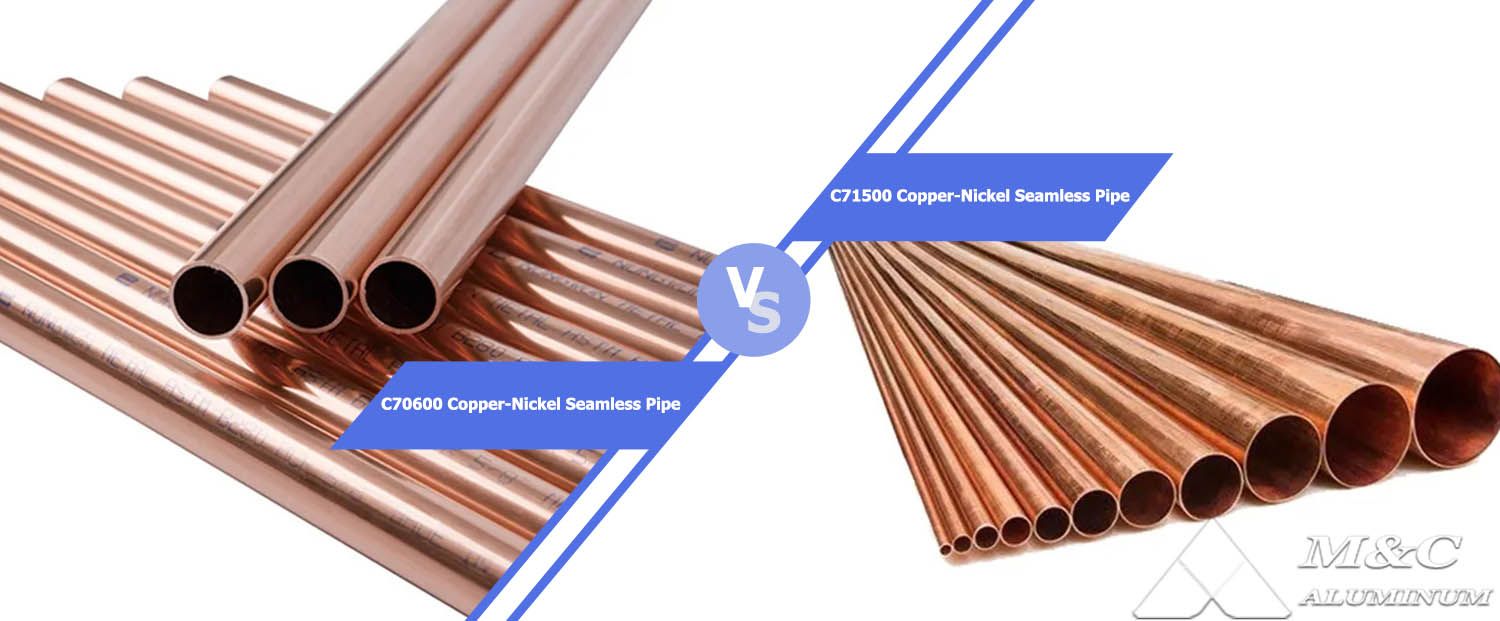
Marine Copper-Nickel Seamless Pipe: C70600 vs. C71500
1. Chemical Composition
| Element (%) | C70600 (90/10) | C71500 (70/30) |
| Cu | Balance, approximately 88–91% | Balance, approximately 67.0–70.0% |
| Ni + Co | 9.0–11.0% | 29.0–33.0% |
| Fe | 1.0–1.8% | 0.4–1.0% |
| Mn | 0.5–1.0% | 0.4–1.2% |
| Pb | ≤0.05% | ≤0.02% |
Key Differences
Nickel content:C71500 contains approximately three times as much nickel as C70600. This directly affects its corrosion resistance and mechanical strength.
Iron content:C70600 generally contains more iron than C71500. The added iron partially compensates for the lower nickel content and helps improve the stability of the protective oxide film formed on the alloy surface.
2. Mechanical Properties
| Property | C70600 (Annealed, O Temper) | C71500 (Annealed, O Temper) |
| Tensile Strength | 275–345 MPa | 370–450 MPa |
| Yield Strength, 0.2% Offset | 100–125 MPa | 130–180 MPa |
| Elongation After Fracture | ≥30% | ≥25% |
| Thermal Conductivity | Higher | Slightly lower |
| Density | 8.94 g/cm³ | 8.94 g/cm³ |
C71500 generally has higher strength than C70600. Under the same design pressure, C71500 may allow the use of a slightly thinner wall thickness, subject to applicable design codes and corrosion allowances.
However, C71500 has somewhat lower thermal conductivity. Therefore, when used in heat exchanger applications, its impact on the overall heat-transfer coefficient should be considered.
Both alloys have excellent ductility and offer good performance in cold bending, flaring, and other forming operations.
3. Welding and Fabrication: Similarities and Differences
3.1 Welding Materials
Both alloys require suitable copper-nickel welding consumables, such as ERCuNi filler wire in accordance with AWS A5.7. Ordinary copper filler metals should not be used as substitutes.
Shielding protection is essential during welding to prevent oxidation. Welds in marine piping systems typically require non-destructive testing, such as:
Liquid penetrant testing (PT);
Radiographic testing (RT);
Additional inspection methods as required by the project specification or classification society.
3.2 Cold Forming
Both C70600 and C71500 can be used for pipe bending, flaring, expanding, and similar fabrication processes.
Because C71500 has higher strength, it requires greater forming force during bending. It also tends to exhibit slightly more springback than C70600.
3.3 Material Cost
C71500 contains nearly three times as much nickel as C70600. As nickel is a major cost-driving alloying element, the raw-material cost of C71500 is significantly higher.
Although C71500 requires a higher initial investment, it generally offers a greater corrosion margin and may provide a longer service life in demanding marine environments.
4. Corrosion Resistance
C70600 exhibits excellent corrosion resistance in clean seawater, effectively resisting stress corrosion cracking and high-temperature dezincification; it is widely used in heat exchangers utilizing seawater in power plants, desalination facilities, and petrochemical plants. In clean seawater, C70600 can withstand flow velocities of 2.2–2.5 m/s, with a corrosion rate of approximately ≤0.02 mm/year.
Due to its higher nickel content, C71500 offers superior resistance to impingement corrosion caused by high-velocity seawater and possesses greater strength. It is suitable for flow velocities up to 5 m/s and has a corrosion rate of ≤0.01 mm/year. C71500 also outperforms C70600 in terms of resistance to sand erosion.
Furthermore, both alloys demonstrate excellent resistance to biofouling (preventing the attachment of marine organisms); the slow release of copper ions effectively inhibits the adhesion of marine life such as barnacles, ensuring high reliability in applications such as seawater desalination, water supply systems, and fire protection systems.
5. Thermal Conductivity
Thermal conductivity is one of the most significant performance differences between C70600 and C71500.
The thermal conductivity of C70600 is approximately twice that of C71500.
| Physical Property | C70600 | C71500 |
| Density, g/cm³ | 8.94 | 8.90–8.94 |
| Thermal Conductivity, W/(m·K) | 46–48 | 25–28 |
| Electrical Conductivity, %IACS | Approximately 14–16 | Approximately 8–10 |
| Coefficient of Linear Expansion, μm/m·°C | 17.2 | 16.5–17.0 |
C70600 has approximately 80% higher thermal conductivity than C71500, resulting in a clear advantage in heat-transfer efficiency.
For this reason, C70600 is often preferred for condensers, heat exchangers, and other applications requiring efficient heat transfer.
C71500, with its lower thermal conductivity but superior corrosion and erosion resistance, is better suited for more severe operating environments where durability and reliability are the primary considerations.
6. Non-magnetic Properties
Both C70600 and C71500 are non-magnetic alloys suitable for electromagnetically sensitive environments. However, there is a key distinction regarding their magnetic characteristics:
C71500 is inherently non-magnetic. While C70600 is also non-magnetic under standard conditions, achieving extremely low magnetic permeability—required for applications where magnetism is a critical concern, such as minesweepers—necessitates rapid cooling following the final solution heat treatment. In naval applications, C70600 is typically used for surface vessels, whereas C71500—owing to its superior strength and more stable low-magnetic profile—is more commonly employed in submarines.
7. Cost: C70600 Offers Outstanding Cost-Effectiveness
Nickel is the most expensive alloying element in copper-nickel alloys. C70600 contains approximately 10% nickel, while C71500 contains about 30%-a threefold difference in nickel content.
The price of C70600 is approximately 40% that of C71500.
The cost of C71500 is approximately 2.5 times that of C70600.
C70600 is currently the primary material used in seawater piping systems; thanks to its excellent overall performance and highly competitive cost, it stands out as the "best value" choice for the majority of standard seawater applications. In contrast, the application of C71500 is somewhat limited due to its high cost.
8. Typical Applications
8.1 Typical Applications of C70600
C70600 copper-nickel seamless pipes are commonly used in:
Seawater condensers and heat exchangers with flow velocities below 3 m/s;
Standard seawater piping systems;
Marine seawater cooling systems;
Seawater treatment systems on offshore platforms;
Shipboard auxiliary seawater piping;
General seawater intake and discharge lines.
8.2 Typical Applications of C71500
C71500 copper-nickel seamless pipes are typically used in:
High-velocity seawater piping systems with flow velocities above 3 m/s;
High-temperature seawater systems;
Marine fire-fighting systems;
High-pressure water injection systems on offshore platforms;
Pump discharge lines and high-turbulence piping sections;
Applications requiring enhanced corrosion and erosion resistance.
How to Choose Between C70600 and C71500?
This is one of the most important considerations in marine vessel design and material procurement.
The following factors can help determine which grade is more suitable.
1. Consider Seawater Flow Velocity
If the seawater flow velocity is low or remains within a reasonable design range, C70600 can meet the requirements of many marine applications.
If flow velocity is high and erosion-corrosion is a significant concern, C71500 should be considered as the preferred option.
2. Consider Operating Temperature
As seawater temperature increases, corrosion conditions may become more complex and aggressive.
For high-temperature seawater systems, the material should be evaluated according to the specific operating conditions, relevant material standards, corrosion allowances, and design requirements.
3. Consider Project Budget
Provided that the design requirements are met, C70600 generally offers a more favorable cost advantage.
If long-term reliability is the priority and material cost is not the primary constraint, C71500 may be a better investment.
4. Consider the Importance of the Equipment
For critical seawater systems—such as the main cooling systems of large vessels, offshore platforms, desalination facilities, or naval vessels—the selection process should take into account reliability, maintenance intervals, downtime costs, and required service life.
5. Refer to design standards
The final material selection shall be based on the applicable design codes, classification society requirements, and the technical specifications for the piping system.
Original Source: https://www.marinealum.com/a/what-are-the-differences-between-marine-copper-nickel-seamless-pipes-c70600-and-c71500.html
Tag: C70600 Copper-Nickel Seamless Pipe C71500 Copper-Nickel Seamless Pipe Marine Copper-Nickel Pipe Marine Copper-Nickel Seamless Pipe C70600 vs C71500 90/10 Copper-Nickel Pipe 70/30 Copper-Nickel Pipe Copper-Nickel Alloy Seamless Pipe Seawater Piping