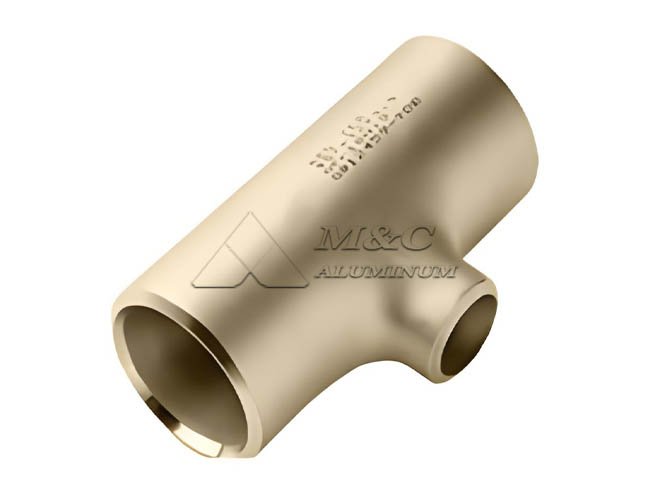
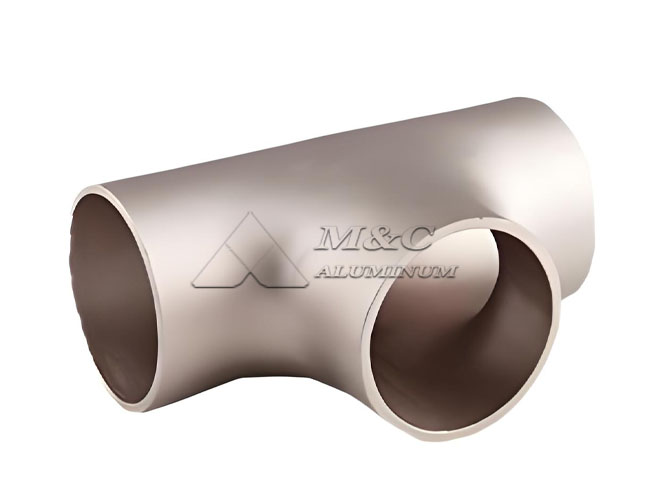
In marine seawater piping systems, a tee may appear to be a minor component, but it is a critical junction for flow diversion, convergence, and bypass operations. Once this connection point suffers from corrosion perforation, erosion thinning, or marine biofouling blockage, the reliability of the entire piping system can be compromised. C70600 copper-nickel tees are specialized pipe fittings developed specifically to withstand these demanding operating conditions.
Product Overview
A C70600 copper-nickel tee is a pipe fitting manufactured from 90/10 copper-nickel alloy. The alloy is copper-based and contains approximately 10% nickel, together with controlled additions of iron, manganese, and other elements. It combines excellent seawater corrosion resistance, moderate mechanical strength, and good fabrication properties, making it highly suitable for marine seawater piping and offshore fluid handling systems.
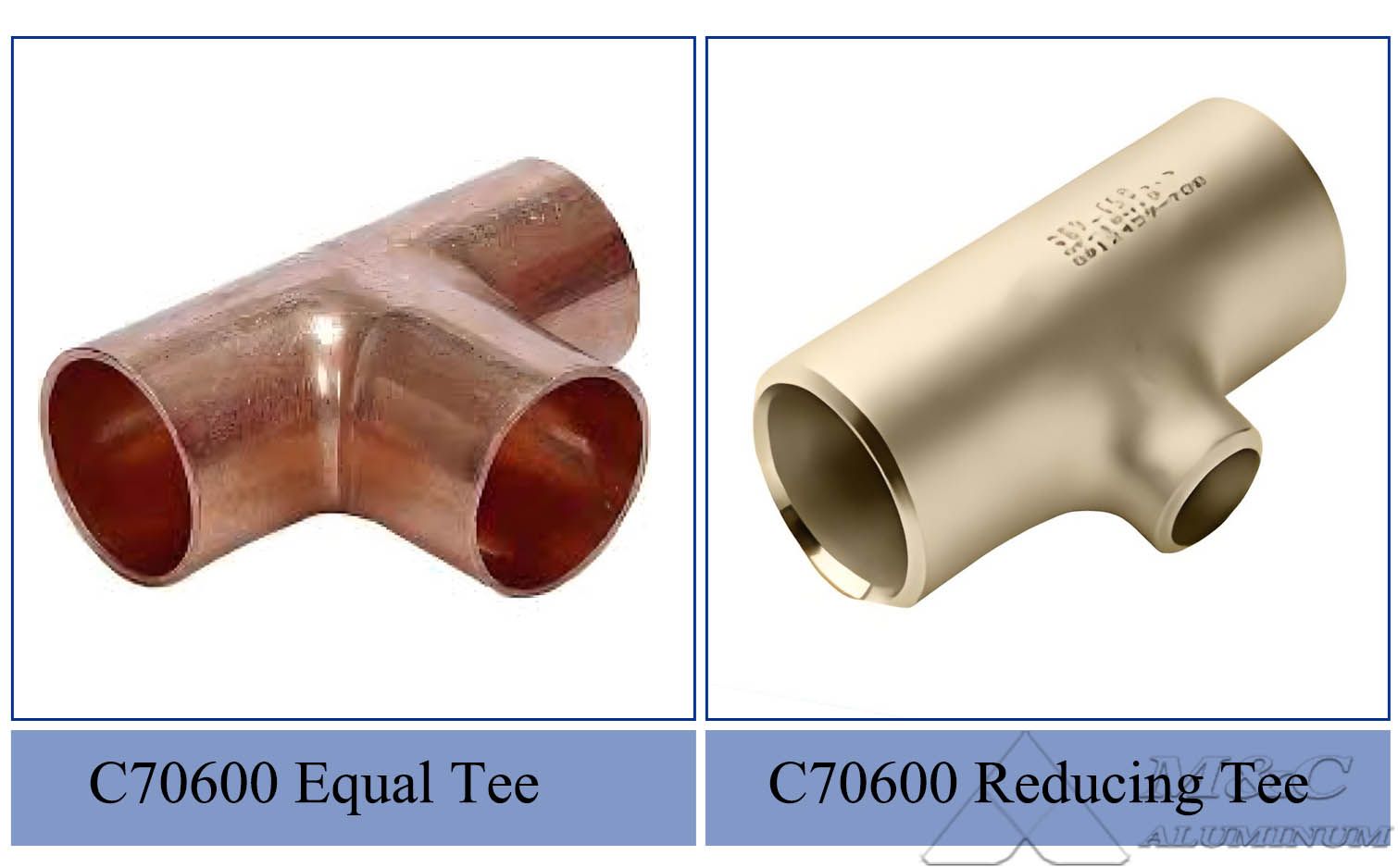
Depending on the connection method, C70600 copper-nickel tees are available as butt-weld tees, socket-weld tees, and flanged tees. Based on their geometry, they may be supplied as equal tees or reducing tees. According to the manufacturing process, they can be produced as seamless extruded tees, welded tees, or forged tees.
These products are commonly manufactured in accordance with ASTM B466 for seamless copper-nickel fittings, ASTM B467 for welded copper-nickel fittings, or applicable classification society-approved standards. Nominal sizes generally range from DN15 to DN300 and above, while pressure ratings can be selected to meet common marine seawater piping design requirements.
Compared with ordinary carbon steel tees or stainless steel tees, the key value of C70600 copper-nickel tees is not simply their strength. Their major advantage lies in addressing three major challenges in seawater service at the same time: corrosion, erosion, and marine biofouling. These are also the most demanding performance requirements for fittings used in shipboard seawater piping systems.
Key Specifications
| Parameter | Specification |
| Material | C70600 Copper-Nickel Alloy (90/10 Cu-Ni) |
| Standards | ASTM B466 / ASME SB466, MIL-T-16420 / EEMUA 144 |
| Chemical Composition | Approx. 10% nickel, 1.0%–1.8% iron, 0.5%–1.0% manganese |
| Fitting Type | T-type tee |
| Connection Type | Flanged, butt-welded, or welded connections available |
| Pressure Rating | 1.0 MPa to 2.5 MPa, customizable |
| Outside Diameter | DN15–DN600, customizable |
| Wall Thickness | Schedule 40, Schedule 80, and other options |
| Temperature Range | -20°C to +300°C |
| Applicable Media | Seawater, freshwater, steam, oil-water mixtures, chemical liquids, etc. |
| Certifications | ASTM, CCS, ABS, LR, DNV, and others |
Key Advantages of C70600 Copper-Nickel Tees for Shipbuilding
1. Excellent Seawater Corrosion Resistance
When exposed to seawater, C70600 naturally forms a dense and protective oxide film that resists chloride attack. It offers strong resistance to uniform corrosion, pitting corrosion, and crevice corrosion.
Unlike carbon steel, which depends heavily on protective coatings, or 316L stainless steel, which can be vulnerable to pitting in stagnant seawater, C70600 can provide stable, long-term service under properly controlled flow conditions. It also performs well in splash zones and intermittently immersed environments.
2. Natural Resistance to Marine Biofouling
Copper-nickel alloys slowly release trace amounts of copper ions, which help inhibit the settlement and growth of barnacles, mussels, algae, and other marine organisms. This reduces the risk of pipeline blockage and minimizes the need for toxic biocidal chemicals.
As a result, C70600 copper-nickel fittings are widely preferred for seawater cooling lines, where reduced biofouling helps lower maintenance requirements, cleaning frequency, and vessel downtime.
3. Strong Erosion-Corrosion Resistance
The iron content in C70600 significantly improves its resistance to erosion-corrosion. Tees are particularly vulnerable because changes in flow direction can create localized turbulence and high-velocity impact zones.
Forged C70600 tees can withstand continuous seawater flow within classification society-recommended velocity limits, making them widely used in seawater cooling circuits for main engines, auxiliary engines, and other machinery systems.
4. Stable Mechanical Properties and Good Weldability
C70600 offers good ductility, suitable toughness, and reliable resistance to vibration fatigue, reducing the risk of brittle failure in demanding marine environments. It also has excellent weldability.
When proper welding procedures and matching filler materials are used, welded joints can retain good corrosion resistance. This helps avoid premature failure caused by preferential corrosion at weld seams.
5. Lower Life-Cycle Cost
Although the initial purchase cost of C70600 copper-nickel tees may be higher than that of carbon steel fittings, their long-term economic value is significant. In seawater service, their service life can exceed 20 years under suitable operating conditions.
Unlike coated steel piping systems that require frequent coating repairs and replacement, copper-nickel systems require less maintenance. This can reduce dry-docking expenses, replacement costs, labor costs, and vessel downtime losses, while improving the overall reliability of ocean-going vessels.
6. Compliance with Major Classification Society Requirements
C70600 copper-nickel tees can be manufactured to meet the requirements of leading classification societies, including CCS, DNV, ABS, LR, and BV. Products can be supplied in accordance with ASTM B466, ASTM B467, and relevant marine piping standards, together with material certificates, inspection reports, and non-destructive testing documentation where required.
They are suitable for both new vessel construction and marine piping retrofit projects.
Main Applications
C70600 copper-nickel tees are widely used in marine, offshore, and industrial fluid handling systems, including:
Marine Engineering: Seawater cooling piping, fire-fighting piping, ballast water treatment systems, and sanitary and fresh water piping.
Offshore Engineering: Seawater desalination units for offshore drilling platforms and systems for Floating Production, Storage, and Offloading (FPSO) vessels.
Industrial Sector: Condenser systems for coastal power plants and high-pressure water transmission networks for seawater desalination plants (RO/MSF).
How to Extend the Service Life of C70600 Copper-Nickel Tees
Selecting the right material is only the first step. Proper installation, operation, and maintenance are equally important for maximizing the service life of C70600 copper-nickel tees.
First, seawater flow velocity should be maintained within the specified design range. Prolonged operation at excessive flow velocities should be avoided. Sudden internal geometry changes, sharp turns, and improper pipe reductions should also be minimized, as they may create localized high-velocity zones and accelerate erosion.
Second, avoid prolonged stagnant seawater conditions, sediment accumulation, and continuous abrasion caused by suspended solid particles. For vessels or systems that are laid up or temporarily out of service, inspection and preservation procedures should be established in accordance with the relevant equipment and piping maintenance requirements.
Third, welding procedures and cleaning methods suitable for copper-nickel alloys should be used. Incompatible materials and contaminants must be prevented from entering the piping system. During installation, avoid contamination from carbon steel tools, surface damage, and improper direct connections between dissimilar metals.
Finally, fittings and welded joints should be inspected regularly according to operating conditions. Particular attention should be given to leakage, localized wall thinning, abnormal deposits, and visible signs of corrosion. For critical seawater piping systems, thickness measurement and non-destructive testing can be carried out based on risk assessments and maintenance schedules to identify potential issues at an early stage.
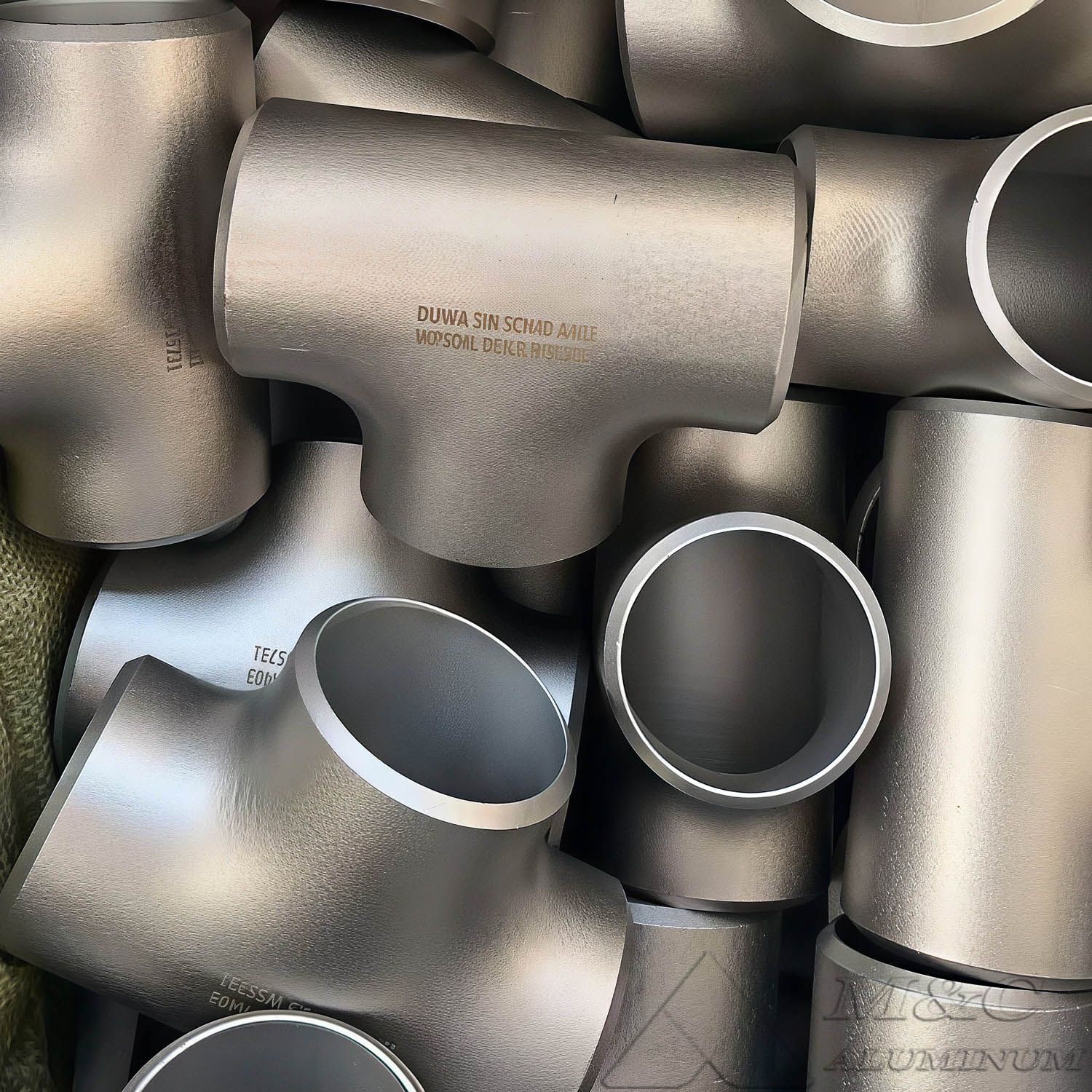
Comparison: C70600 Copper-Nickel Tees vs. Other Pipe Fittings
Carbon Steel Tees
Carbon steel tees have a low initial purchase cost, but poor seawater corrosion resistance. They rely heavily on coatings and require frequent maintenance. As a result, their total cost of ownership can be high in marine environments.
316L Stainless Steel Tees
316L stainless steel performs well in freshwater and many general industrial applications. However, in stagnant or low-flow seawater, it can be susceptible to pitting and crevice corrosion. Marine organisms may also accumulate on the internal surface.
Brass Tees
Brass fittings are susceptible to dezincification corrosion in high-velocity seawater environments. Therefore, they are generally not recommended for seawater main pipelines.
C71500 70/30 Copper-Nickel Tees
C71500 copper-nickel alloy provides stronger corrosion and erosion resistance than C70600, especially in highly aggressive or high-velocity seawater conditions. However, it is more expensive. C70600 remains the mainstream choice for many marine seawater systems because it offers an excellent balance between performance and cost.
Conclusion
C70600 90/10 copper-nickel tees are an ideal solution for shipbuilding seawater piping systems where corrosion resistance, erosion resistance, anti-biofouling performance, weldability, and long-term reliability are essential.
Original Source: https://www.marinealum.com/a/why-does-the-shipbuilding-industry-use-c70600-copper-nickel-tees.html
Tag: C70600 Copper Nickel Alloy Tee 90/10 Copper Nickel Tee C70600 Pipe Fittings Copper Nickel Pipe Fittings for Shipbuilding Marine Seawater Piping Fittings Marine Copper Nickel Tee Copper Nickel Fittings