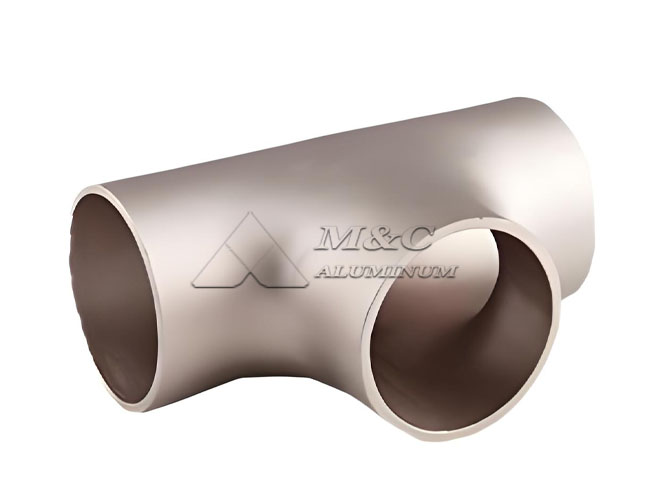
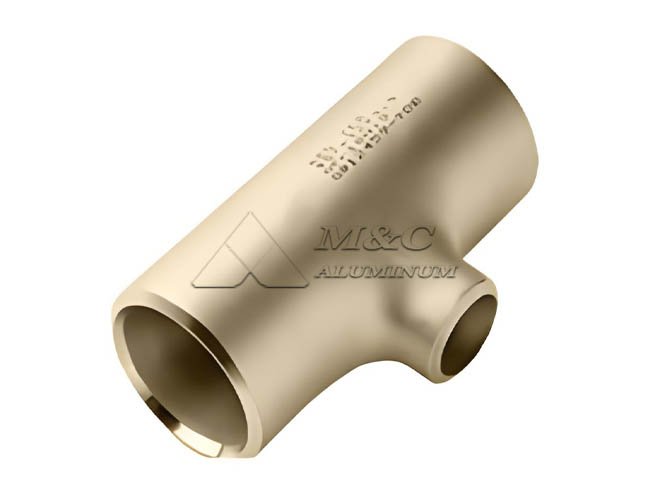
In modern ships, offshore platforms, seawater desalination plants, and marine engineering equipment, piping systems are required to transport seawater, cooling water, and other industrial media over long periods. Due to high salinity, constant humidity, and complex operating conditions in marine environments, piping connectors must not only provide reliable mechanical properties but also offer excellent seawater corrosion resistance and stable sealing performance.
A C70600 copper-nickel tee is a pipe connection fitting manufactured from 90/10 copper-nickel alloy. It is generally used to connect a main pipe and a branch pipe for fluid distribution, fluid convergence, or piping layout changes.
C70600 copper-nickel alloy is copper-based, with a nickel content typically ranging from 9.0% to 11.0%, together with appropriate amounts of iron and manganese. These elements help improve corrosion resistance and erosion-corrosion resistance in seawater environments. C70600 fittings are therefore widely used in marine seawater piping systems and heat-exchange systems.
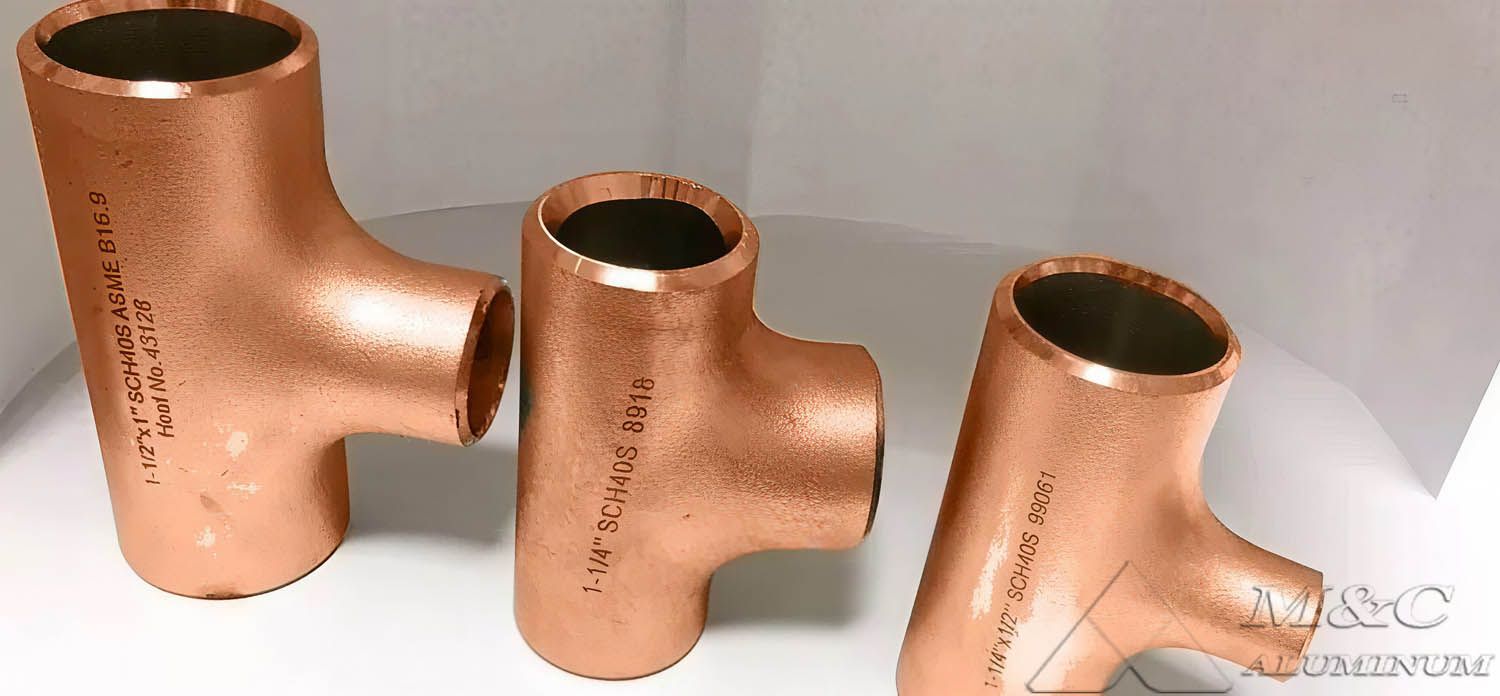
Material Properties of C70600 Copper-Nickel Tees
Excellent Resistance to Seawater Erosion-Corrosion
In natural seawater flowing at high velocities, up to approximately 3–4 m/s, the material surface can rapidly form a dense and strongly adherent protective oxide film.
Excellent Resistance to Marine Biofouling
C70600 effectively inhibits the growth of marine organisms inside piping systems, reducing the risk of reduced flow area or pipe blockage caused by biofouling.
Excellent Fabrication and Welding Performance
The alloy is highly suitable for manufacturing complex fittings, including equal tees, reducing tees, and lateral tees. Its welded joints provide stable and reliable performance.
Reliable Mechanical Strength
Compared with conventional brass, C70600 offers significantly improved tensile and yield strength, with tensile strength of approximately 400 MPa while retaining good ductility. This enables the fitting to maintain structural integrity under high-pressure and low-temperature conditions.
Excellent Thermal Stability
Within a temperature range of approximately 0–300°C, C70600 shows minimal changes in performance. It is therefore suitable for offshore platforms, submersibles, nuclear-powered vessels, and other applications with demanding temperature requirements.
Structure and Design of C70600 Copper-Nickel Tees
1. Tee Configurations
Tees are among the most common flow-dividing components in piping systems. Their design must balance fluid dynamic efficiency and structural strength. C70600 copper-nickel tees are commonly available in the following configurations:
Symmetrical Tee: Three ends are distributed symmetrically, allowing fluid to flow in different directions as required.
Asymmetrical Tee: One end serves as the main flow passage, while the other two serve as branch flow passages; suitable for specific piping layouts.
Female / Male Threaded Tee: Internal or external threads can be selected according to the connection method to ensure sealing performance and installation convenience.
2. Material Surface Treatment Processes
To further improve performance, C70600 tees may undergo the following surface treatments:
Oxidation Treatment: Forms a dense oxide film on the surface to further improve corrosion resistance.
Electropolishing: Reduces surface roughness, minimizes potential corrosion sites, and improves surface smoothness.
Silver Plating / Zinc Plating: For certain applications, metallic coatings may be applied to improve antibacterial and electrical conductivity properties.
Common Pressure Rating Designations
Piping standards vary by country, industry, and project. The pressure capability of copper-nickel tees is commonly specified using one of the following methods.
1. PN Pressure Rating
In metric piping systems and European standards, nominal pressure ratings are commonly expressed as PN, for example:
PN10
PN16
PN25
PN40
PN64
PN generally indicates a pressure class at a specified reference temperature. It does not mean that every size of fitting can continuously withstand the same pressure under all temperature conditions.
In actual use, material temperature derating, wall thickness, and project specifications must also be considered.
For marine seawater systems, PN16 and PN25 are relatively common design classes. However, final selection must be based on the ship piping design drawings and classification society requirements.
2. Class Pressure Rating
In ASME, ANSI, and North American standard systems, flanges and certain pipe fittings are commonly specified by Class rating, such as:
Class 150
Class 300
Class 600
Class 900
It should be noted that Class 150, Class 300, and similar ratings do not equal a fixed actual working pressure of 150 psi or 300 psi. The allowable pressure depends on the material group, design temperature, and referenced standard.
If the tee uses a flanged connection, the flange standard, facing type, bolting material, gasket type, and pressure-temperature rating must all be confirmed as compatible.
3. Matching by Pipe Wall Thickness or Schedule
For butt-weld tees, especially in ASME piping systems, fittings generally need to match the pipe wall thickness or schedule, for example:
SCH 5S
SCH 10S
SCH 40S
SCH 80S
STD
XS
Custom wall thickness
The wall thickness of the tee should generally meet or exceed the design requirements of both the connecting main pipe and branch pipe.
For reducing tees, the size, wall thickness, and pressure requirements of the run ends and branch end should be checked separately.
4. Compliance with Classification Society Design Pressure and Marine Standards
For marine C70600 copper-nickel tees, many projects are designed and accepted in accordance with classification society rules, shipyard standards, or owner technical specifications, including:
CCS — China Classification Society
DNV — Det Norske Veritas
ABS — American Bureau of Shipping
LR — Lloyd's Register
BV — Bureau Veritas
RINA — Italian Naval Register
KR — Korean Register
NK — ClassNK / Nippon Kaiji Kyokai
Classification society requirements generally address more than pressure rating. They may also cover material certificates, manufacturing processes, welding procedure qualifications, dimensional tolerances, non-destructive testing, pressure testing, marking, and traceability.
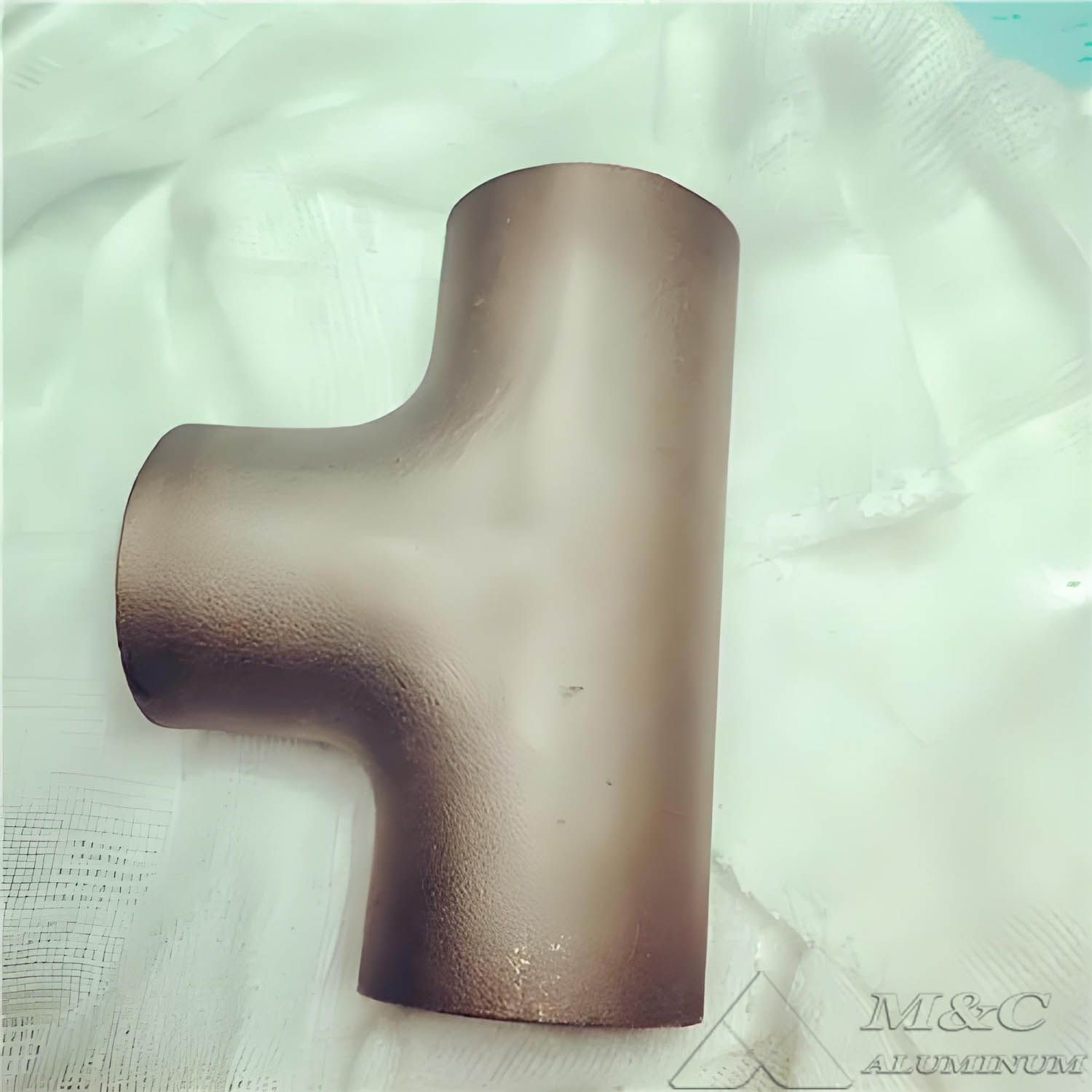
Pressure Rating Classification and Typical Applications
(Based on ASME B16.22 / ISO 8762-2 Reference)
Pressure Class | Rated Pressure | Applicable Temperature Range | Main Applications |
| Class 150 | 2.4 MPa | -20 to 300°C | Small vessels, marine instruments, drainage systems |
| Class 300 | 4.8 MPa | -20 to 300°C | Large commercial vessels, offshore platforms, cooling systems |
| Class 600 | 9.8 MPa | -20 to 250°C | Submersibles, nuclear submarines, high-pressure water pump systems |
| Class 900 | 14.8 MPa | -20 to 200°C | Naval vessels and deep-sea mining equipment |
Factors Affecting the Pressure Capacity of C70600 Tees
1. Pipe Wall Thickness / Schedule Number
For C70600 copper-nickel pipes, common schedule classes include Sch 10, Sch 40, and Sch 80. For the same NPS size, a greater wall thickness provides higher pressure capacity.
Some low-cost C70600 tees may have insufficient wall thickness. Although they may be nominally marked as Class 150, their actual wall thickness may not meet the requirement. Such fittings are prone to cracking under water hammer impact and are a common failure point in marine applications.
2. Medium Temperature: The Key Factor in Pressure Derating
C70600 is commonly supplied in an annealed condition for marine applications, typically O61 annealed temper. As temperature increases, its yield strength decreases, and temperature derating must be applied.
A pressure rating at ambient temperature must not be directly used for high-temperature seawater or hot-water circuits.
3. Seawater Flow Velocity: Indirect Impact on Pressure Service Life
This is one of the major differences between copper-nickel fittings and carbon steel fittings.
For C70600, the recommended continuous seawater velocity is generally ≤2.5–3.0 m/s. When flow velocity exceeds 3.5 m/s, erosion-corrosion and cavitation corrosion may occur.
Even if the operating pressure remains within the nominal pressure class, long-term wall thinning caused by corrosion can reduce the pressure-bearing capacity of the fitting prematurely.
For locations with higher flow velocities, such as pump outlets and nozzle branches, projects commonly upgrade to C71500 (70/30 copper-nickel) tees.
4. Tee Configuration: Equal Tee vs. Reducing Tee
The small branch area of a reducing tee is a stress concentration zone. Its pressure rating should be calculated according to the wall thickness on the branch side and should not be determined solely based on the wall thickness of the main pipe.
This is an important consideration that can easily be overlooked during marine piping design.
Original Source: https://www.marinealum.com/a/marine-c70600-copper-nickel-tee-pressure-rating-standards.html
Tag: C70600 Copper-Nickel Alloy Tee 90/10 Copper-Nickel Tee C70600 Pipe Fittings Copper-Nickel Equal Tee Copper-Nickel Reducing Tee Marine Copper-Nickel Alloy Pipe Fittings Marine Seawater Piping Fittings Marine Copper-Nickel Tee Copper-Nickel Pipe Fit