Product Overview
ASTM B466 is a standard covering seamless copper-nickel alloy pipe and tube, commonly used to specify the material, manufacturing, and performance requirements for seamless copper-nickel piping products. C70600 is a widely used 90/10 copper-nickel alloy grade. Its typical composition is copper-based with approximately 10% nickel, along with small additions of iron, manganese, and other elements to enhance corrosion resistance in seawater and complex corrosive environments.
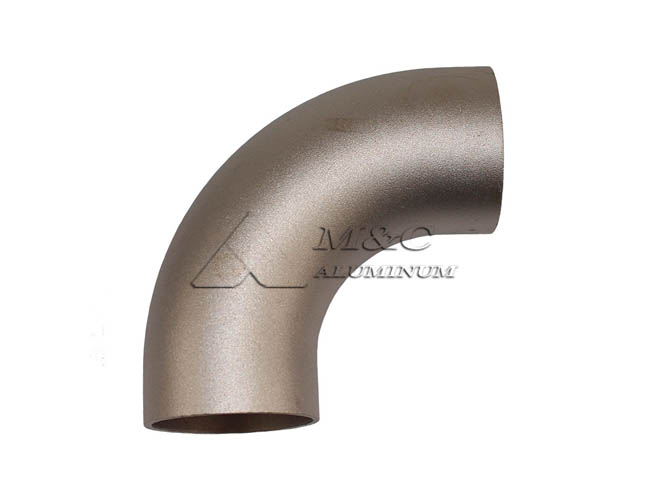
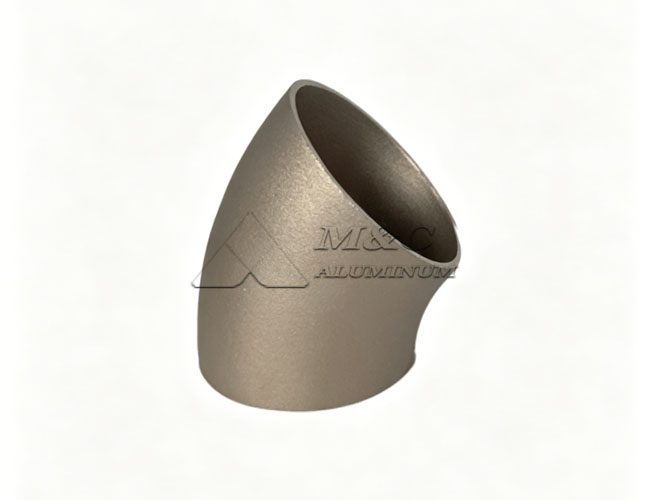
The ASTM B466 C70600 seamless 90° LR elbow is manufactured from C70600 copper-nickel seamless pipe through processes such as hot pushing, cold bending, die forming, sizing, heat treatment, and surface finishing.
Seamless Structure
The elbow is formed from a single piece of seamless pipe by hot pushing or cold forming. It features continuous and uniform wall thickness without longitudinal welds. Its pressure-bearing capability is consistent with the pipe body, reducing potential weak points in the piping system.
90° Elbow and Long Radius Design
The “90°” designation indicates the change in pipeline direction. “Long Radius” (LR) means that the elbow centerline radius is generally 1.5 times the nominal pipe diameter:
R = 1.5D
Where:
R = elbow centerline radius
D = nominal pipe diameter, NPS
Compared with short radius elbows, long radius elbows have a larger bending radius, allowing fluid to change direction more smoothly. This reduces localized flow resistance and pressure loss, making them especially suitable for seawater circulation, cooling water transfer, and industrial piping systems requiring stable flow conditions.
Pressure Rating of ASTM B466 C70600 Seamless 90° Elbows
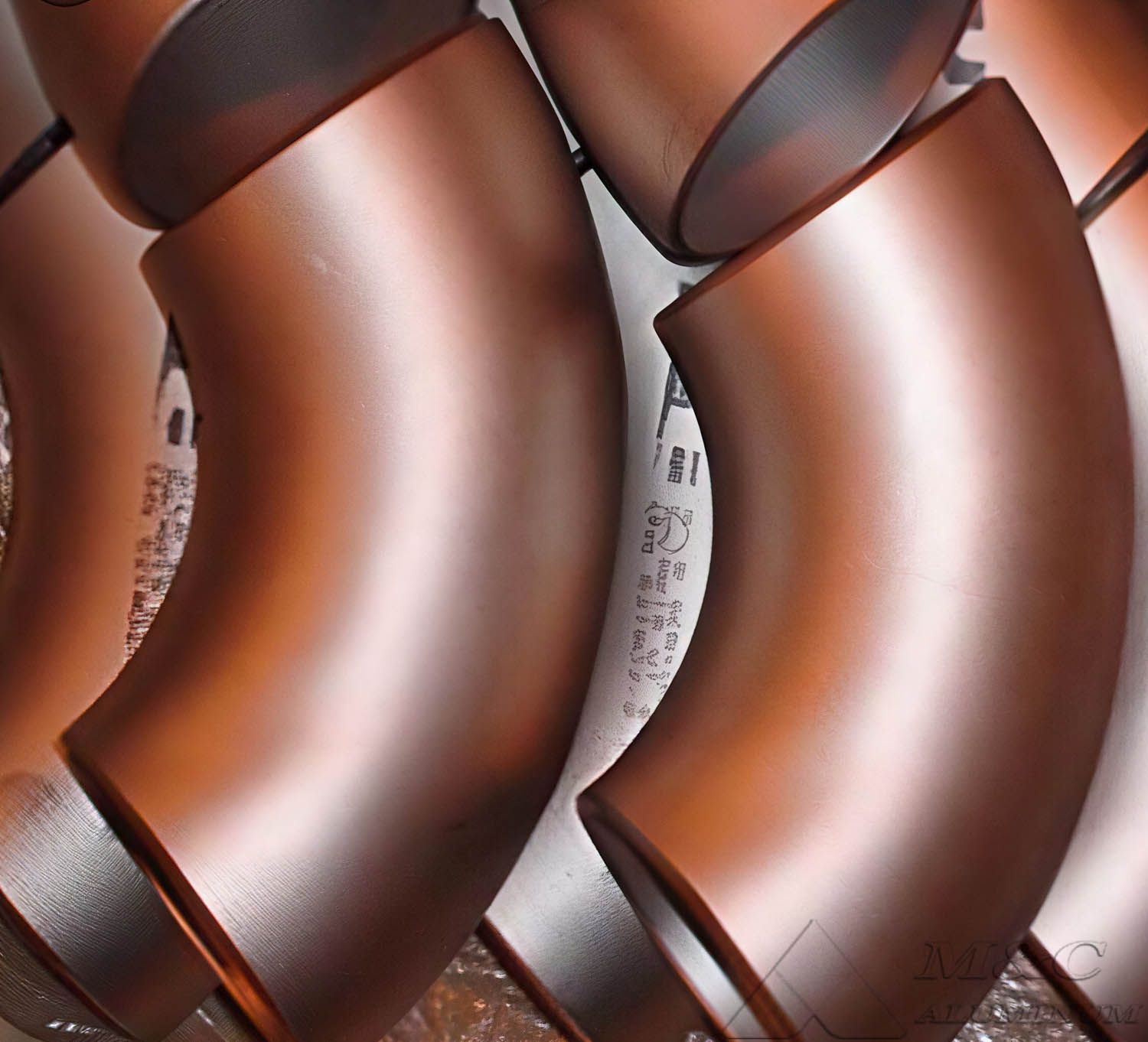
Pressure rating is one of the most important technical parameters when selecting copper-nickel alloy elbows. For C70600 seamless 90° long radius elbows, pressure capability is not determined by ASTM B466 alone. It depends on the actual elbow size, wall thickness, material mechanical properties, operating temperature, and applicable fitting design standards.
1. Common Wall Thickness Series and Pressure Classification Systems
According to internationally used piping and fitting specifications, C70600 seamless 90° long radius elbows are commonly supplied under the following pressure and wall-thickness classification systems.
(1) ASME/ANSI Schedule Wall Thickness System
SCH 10 / SCH 10S
Suitable for low-pressure seawater cooling, ballast water, large ventilation, and drainage pipelines. This option provides a balance between lightweight construction and cost efficiency.
SCH 40 / STD (Standard Wall Thickness)
A commonly used medium-pressure wall thickness for marine vessels and offshore platforms. It is widely applied in main seawater cooling systems, fire-fighting mains, and low- to medium-pressure sections of desalination systems.
SCH 80 / XS (Extra Strong Wall Thickness)
Suitable for high-pressure seawater pump outlet lines, high-pressure seawater reverse osmosis (SWRO) systems before energy recovery units, and high-pulsation service conditions. It offers enhanced resistance to bursting pressure and water hammer.
(2) Marine and European Nominal Pressure Systems: PN / Class
According to EEMUA 146, DIN marine standards, and other related specifications, commonly used pressure ratings include:
10 bar, PN10
14 bar, Class 150 service conditions
16 bar, PN16
20 bar, PN20
25 to 40 bar
Under the same nominal pressure rating, the required minimum wall thickness increases with pipe diameter, such as from 1/2 inch to 24 inches, based on hoop stress calculations. This ensures consistent pressure safety across the full pipe size range.
2. Design Pressure Basis and Temperature Derating
Based on ASME B16.9 and MSS SP-43, the following table shows the pressure-temperature rating reference for C70600 at different temperatures:
Temperature °F (°C) | Class 150 (psi) | Class 300 (psi) |
| -20 to 150°F (-29 to 66°C) | 300 | 750 |
| 200°F (93°C) | 265 | 670 |
| 250°F (121°C) | 225 | 560 |
| 300°F (149°C) | 185 | 460 |
| 350°F (177°C) | 150 | 375 |
| 400°F (204°C) | 120 | 300 |
Note: The operating temperature of seawater pipelines is generally below 120°C. Under ambient seawater conditions, SCH 40S C70600 long radius elbows can reliably meet Class 150 and Class 300 project requirements when properly selected based on applicable standards and system design conditions. For high-temperature service, temperature derating calculations must be carried out. Elbows must not be selected based solely on ambient-temperature pressure ratings.
C70600 Copper-Nickel 90° Elbow Specifications and Supply Range
| Item | Specification |
| Product | 90° Long Radius Elbow |
| Material | ASTM B466 UNS C70600 CuNi 90/10 |
| Bend Angle | 90° |
| Bend Radius | 1.5D |
| Size Range | 1/2"–24" / DN15–DN600 |
| Wall Thickness | SCH 5S, SCH 10S, SCH 40S, SCH 80S, SCH 160S, XXS; custom EEMUA wall thickness available |
| End Preparation | Beveled ends; plain ends available upon request |
| Connection Type | Butt weld, socket weld, or other customized connection forms |
| Surface Condition | Natural mill finish, pickled, polished, sandblasted, passivated, or as required |
| Manufacturing Method | Formed from seamless pipe blanks or other approved seamless forming processes |
| Applicable Standards | ASTM B466, ASME SB466, ASME B16.9, MSS SP-43, EEMUA 144/146, DIN 86090 |
| Inspection | PMI analysis, hydrostatic test, visual inspection, dimensional tolerance inspection, and NDT such as UT/PT upon request |
Key Advantages of ASTM B466 C70600 Seamless 90° Long Radius Elbows
1. Excellent Seawater Corrosion Resistance
C70600, also known as 90/10 copper-nickel alloy, offers excellent resistance to erosion-corrosion in flowing seawater. Compared with pure copper and many other copper alloys, it performs better in marine environments, has low sensitivity to chloride stress corrosion, and offers good resistance to marine biofouling. It is well suited for long-term seawater service.
2. Seamless Construction and Reliable Pressure Integrity
The elbow is integrally formed without longitudinal weld seams. Its wall thickness remains continuous and uniform, with pressure-bearing capability consistent with the pipe body. This reduces potential weak points and improves sealing performance and structural integrity.
3. Long Radius Design for Lower Flow Resistance
With a bend radius equal to 1.5 times the nominal pipe diameter, the long radius elbow provides a smoother flow transition. It reduces local resistance losses, promotes more uniform flow distribution, and helps reduce erosion-corrosion risk, making it suitable for seawater systems sensitive to pressure drop.
4. Flexible Pressure Rating Options
Products can be supplied in SCH 5S, SCH 10S, SCH 40S, SCH 80S, and other wall thickness series. Pressure-temperature ratings can be selected to match the piping system design class, providing a clear technical basis for project selection.
5. Good Weldability and Fabrication Performance
C70600 copper-nickel alloy has good welding properties. Supply in annealed condition provides a balance between mechanical strength and installation workability, making the product suitable for butt welding, socket welding, and other connection methods.
6. Standardized Manufacturing and Full Traceability
Products are manufactured in accordance with ASTM B466 and relevant fitting standards. Material certificates, non-destructive testing reports, hydrostatic test reports, and other quality documentation can be provided to ensure full production and inspection traceability.
Main Applications of 90° Long Radius Elbows
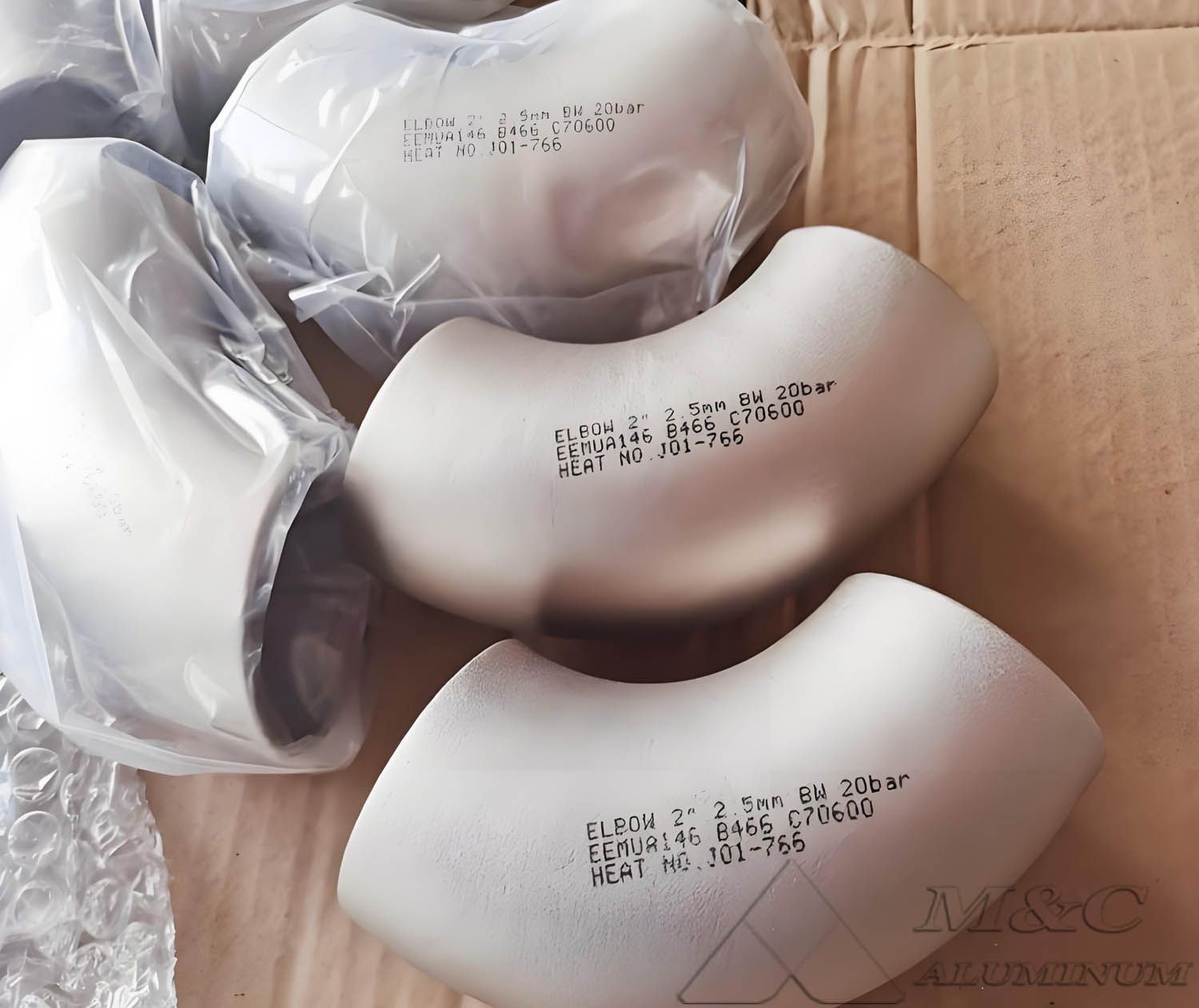
Thanks to the excellent seawater and corrosion resistance of C70600 copper-nickel alloy, ASTM B466 seamless 90° long radius elbows are widely used in the following systems:
Marine Seawater Piping Systems
Used in vessel cooling water systems, fire-fighting systems, ballast water systems, bilge water systems, seawater desalination systems, and auxiliary equipment piping. Copper-nickel alloy materials can withstand long-term marine corrosion conditions during vessel operation.
Offshore Platforms and Marine Engineering Equipment
Suitable for offshore oil and gas platforms, offshore wind facilities, subsea engineering auxiliary systems, seawater lift systems, and offshore platform cooling water systems. C70600 fittings offer strong long-term service value in high-humidity, high-salinity, and continuously corrosive environments.
Seawater Desalination Projects
In seawater pretreatment, transfer, circulation, and auxiliary piping systems, elbows must withstand salt content, high humidity, and flow velocity impact. C70600 long radius elbows can help reduce erosion risk at pipe bends and improve overall piping system reliability.
Industrial Circulating Cooling Water Systems
Suitable for cooling water pipelines in power plants, chemical plants, metallurgical facilities, coastal industrial parks, and large manufacturing installations. Systems using seawater or saline cooling water have particularly high requirements for corrosion-resistant materials.
Coastal Engineering and Port Facilities
Applications include dock water supply systems, seawater fire-fighting systems, port equipment cooling systems, coastal infrastructure, and marine aquaculture piping systems.
FAQ
Q1: Is ASTM B466 an elbow standard?
A: No. ASTM B466 is a material standard for seamless copper-nickel base pipe. Elbow dimensions are generally specified according to ASME B16.9, while pressure capability is evaluated based on ASME B16.9, pipe wall thickness, material allowable stress, and actual operating conditions. After forming, the elbow remains within the ASTM B466 material system.
Q2: Do long radius elbows and short radius elbows have the same pressure rating?
A: In theory, under the same material grade and wall thickness, their pressure-bearing capability is similar. However, in seawater service, short radius elbows generate greater local turbulence and may have a shorter erosion-corrosion service life. Therefore, long radius elbows are generally preferred for offshore and marine seawater piping systems.
Q3: Does a C70600 elbow require hydrostatic testing?
A: For export offshore and marine orders, hydrostatic testing is commonly performed on each piece. Ultrasonic testing and liquid penetrant testing can also be carried out according to project requirements. EN 10204 3.1 material certificates can be provided.
Q4: Does Class 150 mean the elbow can operate continuously at 150 psi?
A: No. Class 150 is a pressure-temperature rating designation, not simply a continuous working pressure of 150 psi. At temperatures of 66°C and below, the applicable allowable pressure may be higher depending on the material and standard. As temperature increases, allowable pressure decreases. Pressure-temperature derating must be verified against the applicable standard; selecting fittings based only on class designation at elevated temperature may create safety risks.
Q5: Can C70600 copper-nickel elbows be directly welded to stainless steel?
A: Direct dissimilar-metal welding is generally not recommended. A suitable transition joint or specialized welding procedure should be used to reduce the risk of galvanic corrosion and ensure connection reliability.
Original Source: https://www.marinealum.com/a/astm-b466-c70600-seamless-90-degrees-lr-elbow-pressure-rating.html
Tag: ASTM B466 seamless 90° long radius elbow ASTM B466 C70600 elbow C70600 90-degree elbow copper-nickel alloy long radius elbow 90/10 copper-nickel elbow C70600 seamless elbow pressure rating 90° long radius elbow C70600 90° long radius elbow marine