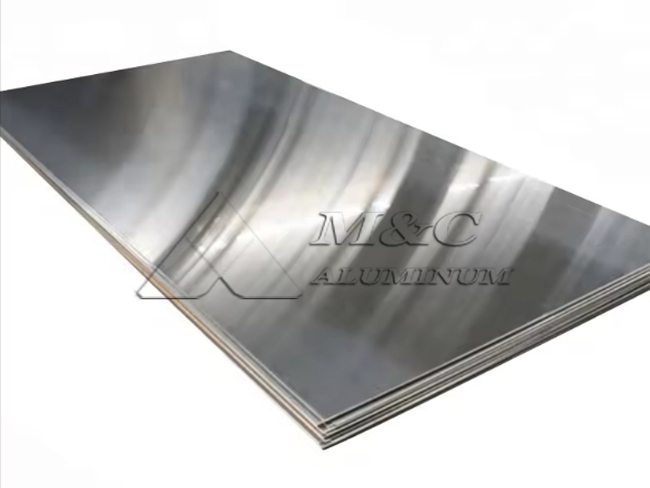
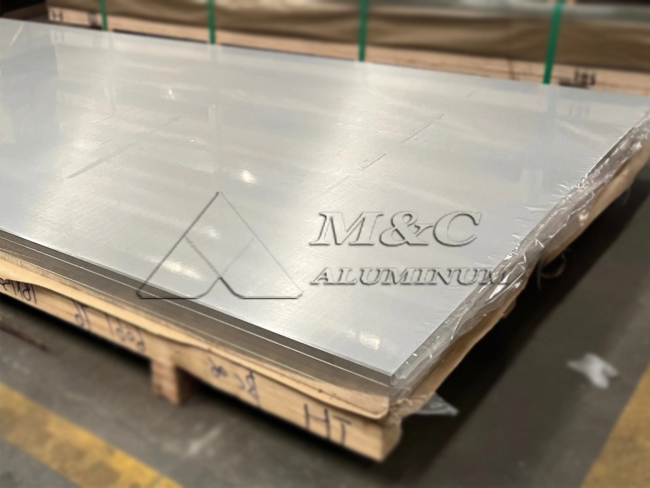
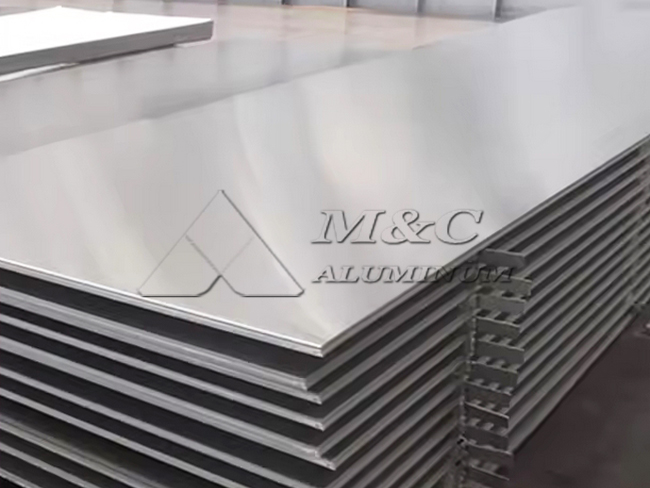
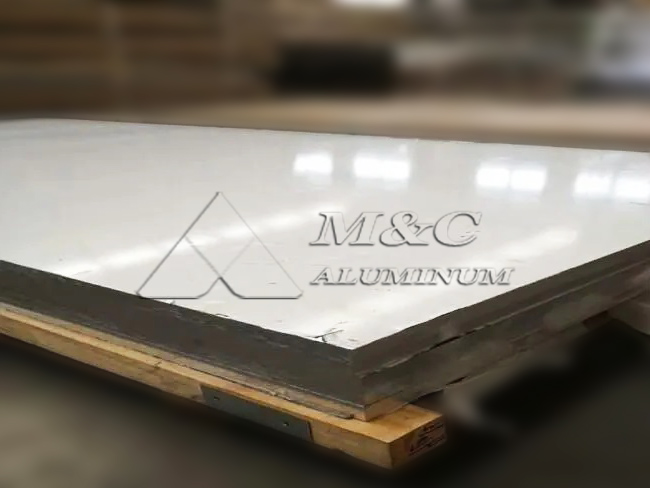
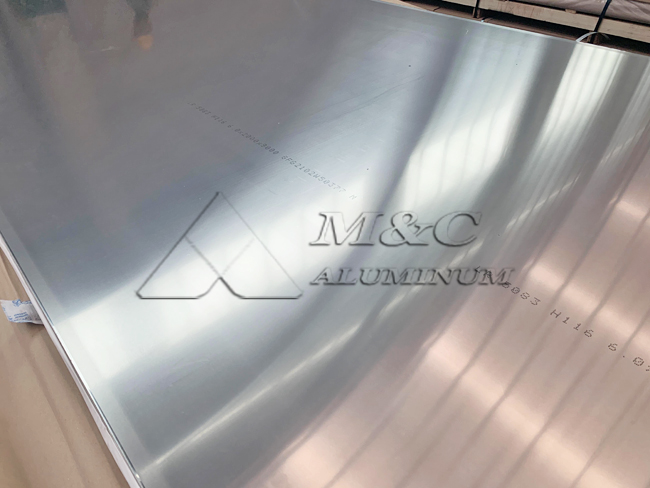
5083-H116/H321 hot rolled aluminum plate is an Aluminum-Magnesium alloy containing approximately 4.0-4.9% magnesium, along with small amounts of manganese and chromium. With its excellent corrosion resistance, weldability, and moderate strength, it has become a core material in modern shipbuilding.
The density of 5083 aluminum alloy is only about one-third that of steel, which significantly reduces vessel weight, improves fuel efficiency, and increases payload capacity. Due to the formation of a dense oxide layer in seawater environments, marine-grade 5083 aluminum exhibits outstanding resistance to seawater corrosion, making it ideal for structural components exposed to humid marine atmospheres for extended periods.
Additionally, its excellent weldability ensures that complex welded structures used in ship construction can achieve high-quality joints and structural reliability.
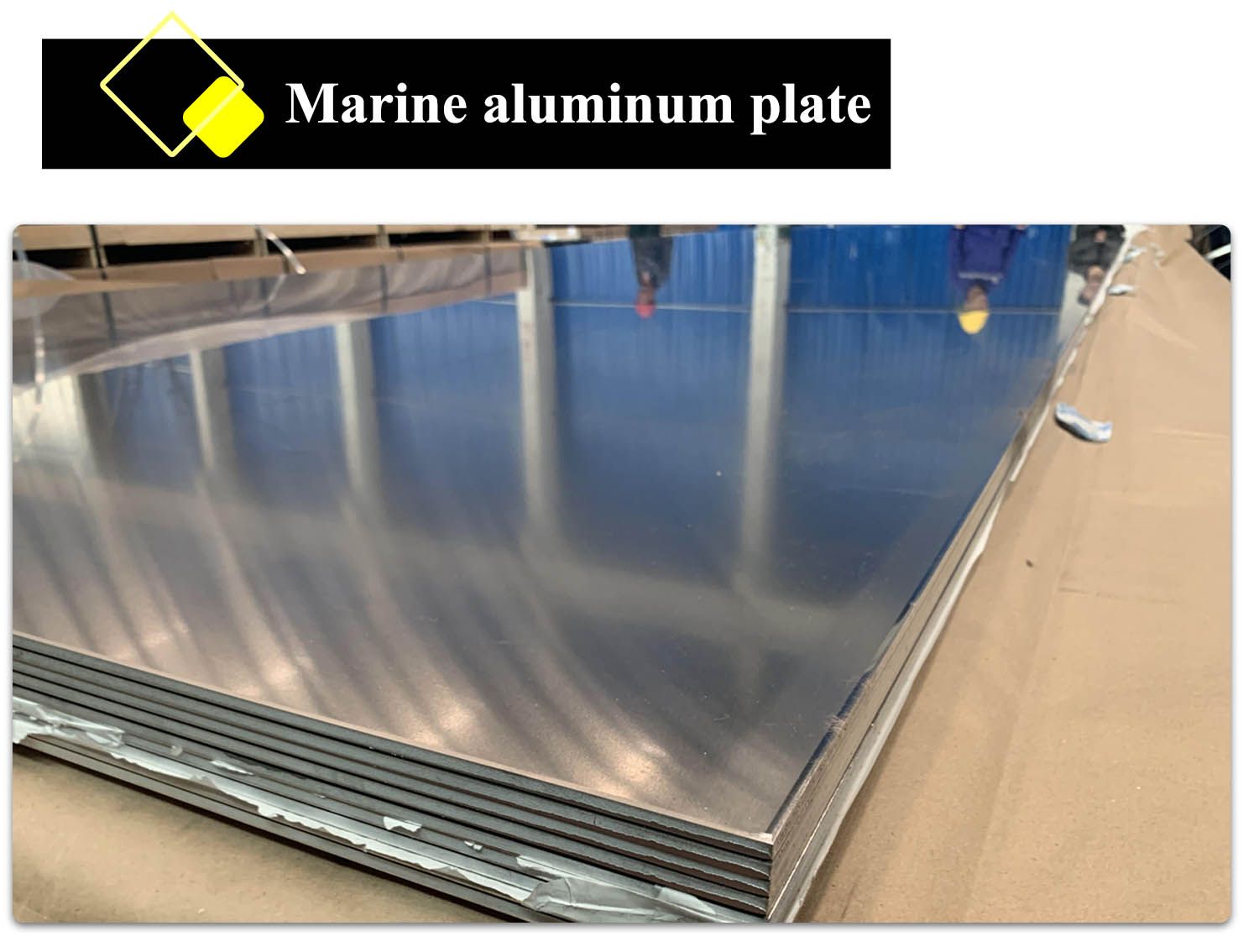
Temper Analysis: H116 vs H321
Among marine 5083 aluminum plates, H116 and H321 are the most commonly used tempers. Although they appear similar, each is optimized for specific applications in ship structures.
H116 Temper
H116 is a temper specifically designed for marine environments, particularly suitable for 5xxx-series aluminum alloy products with a magnesium content above 4%. Its key feature is that, through a special stabilization treatment, the material achieves excellent resistance to exfoliation corrosion and intergranular corrosion.
From a technical standpoint, materials in the H116 temper must meet strength requirements while also complying with stringent specifications for corrosion resistance and magnesium content. In 5083 aluminum plate in this temper, the precipitation of the β phase (Al₃Mg₂) in the microstructure is effectively controlled, thereby avoiding the intergranular-corrosion susceptibility that may occur during long-term service in seawater environments.
H321 Temper
The H321 temper is applicable to materials that have undergone both hot working and cold working, with a degree of strain hardening slightly lower than that of H32. Compared with H116, the key advantage of H321 lies in better property stability, particularly superior performance in terms of heat resistance.
This means that in higher-temperature areas such as ship engine foundations and regions around boilers, the H321 temper is a more ideal choice. It can maintain microstructural stability in moderately elevated-temperature environments, reducing the risk of performance degradation during long-term service.
How to choose between H116 and H321?
Simply put: H116 is suitable for general ship hull welded structural components, such as the outer shell and deck; H321 is more suitable for high-temperature areas such as engine mounts. If the project involves both types of work, a combination can be used depending on the specific location.
Specifications of 5083 Marine Aluminum Plate
| Item | Specification |
| Alloy | 5083 |
| Temper | H116 / H321 |
| Thickness | 3 mm – 50 mm |
| Width | 1000 – 2800 mm |
| Length | 2000 – 16000 mm |
| MOQ | 1–3 tons |
Technical Properties
| Property | Typical Value |
| Density | 2.66-2.7 g/cm³ |
| Tensile Strength | 275-420 MPa |
| Yield Strength | 200–-345 MPa |
| Elongation | ≥12% |
| Elastic Modulus | 70-71 GPa |
| Thermal Conductivity | 117 W/m·K |
| Hardness | About 90-95 HB |
| Corrosion Resistance | Excellent |
Performance Characteristics of 5083 Marine-Grade Aluminum Plate
Corrosion resistance: 5083 aluminum alloy offers extremely strong resistance to seawater corrosion and can maintain stable performance during long-term exposure to marine environments. Compared with ordinary steel, it is far less prone to rusting, significantly reducing vessel maintenance costs.
Weld strength: 5083 is one of the best aluminum alloys for welding and can be welded using MIG and TIG processes. Its weld joint strength can reach over 90% of the base metal strength, which is crucial for hull structures that must withstand long-term wave and wind-induced loading.
Low-temperature toughness: Unlike many carbon steels that become brittle at low temperatures, 5083 aluminum plate does not embrittle even at extremely low temperatures; its strength may even increase. This makes it an ideal material for cargo tanks on LNG (liquefied natural gas) carriers.
Safety: 5083 aluminum plate is non-magnetic and non-sparking, helping to improve navigation safety.
High strength and good structural stability: Among non-heat-treatable aluminum alloys, 5083 provides relatively high strength while maintaining good ductility, making it well suited for structural components of ship hulls.
Application Areas of 5083 Hot-Rolled Aluminum Plate
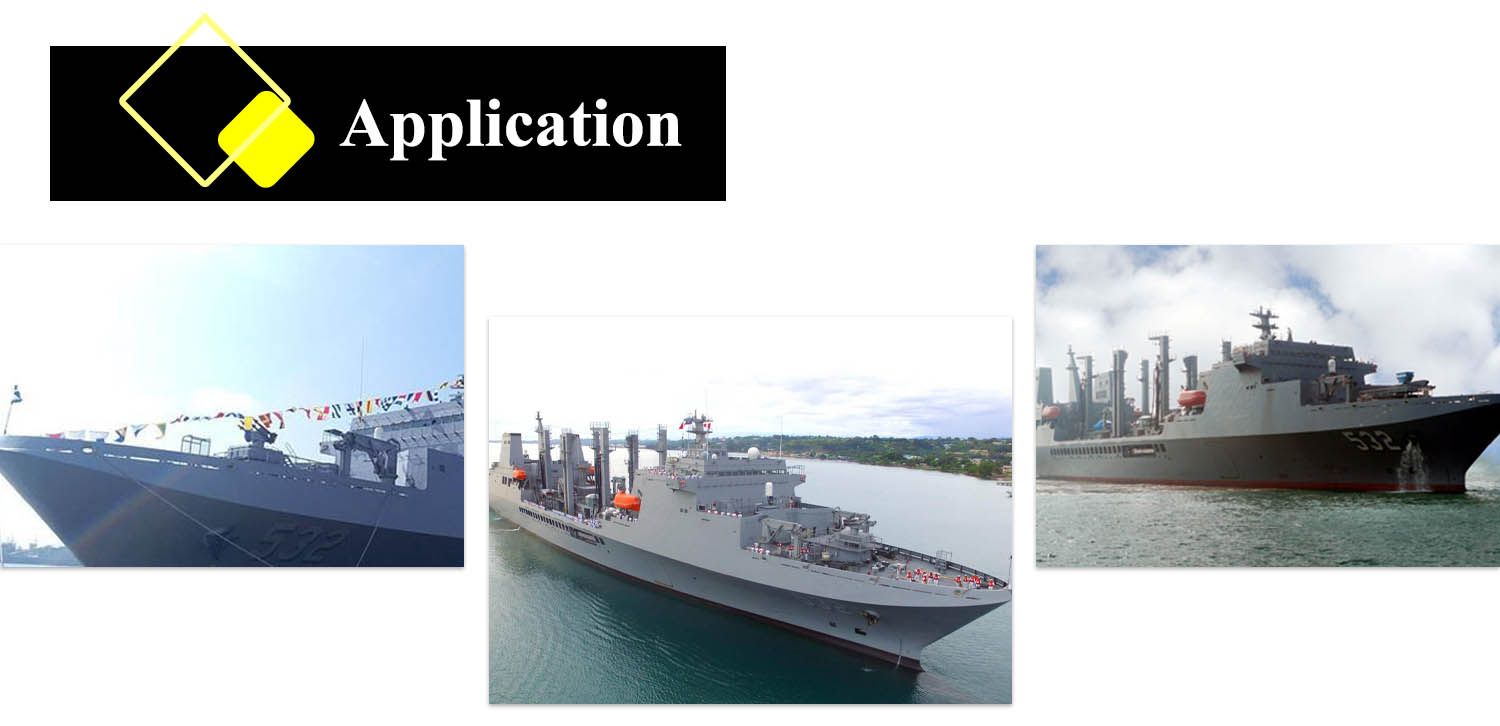
Hull structure: Bottom shell plating, side shell plating, decks, keel, frames, and floor plates-withstanding seawater pressure and wave impact to ensure hull strength and watertight integrity.
Compartments and equipment foundations: Cargo holds, engine rooms, bulkheads of superstructures, as well as engine beds and equipment supports-balancing strength, corrosion resistance, and weldability.
Special vessel components: LNG carrier cargo containment systems, fishing vessel fish holds, yacht hulls, and high-speed craft structures-meeting requirements for low-temperature service, high-corrosion environments, and lightweight design.
Offshore engineering equipment: Offshore platform decks, trestles/bridges, pontoons, and mooring equipment-enduring harsh marine conditions and reducing maintenance frequency.
Marine Aluminum Plate Purchasing Guide
1. Classification Society Certificates
Aluminum materials used for marine vessels must be certified by relevant classification societies,this is the "passport" for market entry. Common certifications include:
CCS (China Classification Society)
ABS (American Bureau of Shipping)
LR (Lloyd's Register)
BV (Bureau Veritas)
DNV (DNV, Norway)
2. Dimensions and Tolerances
Our products strictly follow international tolerance standards such as ASTM B209, EN 485, or GB/T 3880, ensuring deviations are controlled within a very small range.
Thickness tolerance: ±0.2 mm and ±0.8 mm
Width tolerance: +5 mm / -0 mm
Length tolerance: +10 mm / -0 mm
3. Surface Quality
The surface must be free of cracks, bubbles/blisters, corrosion spots (alkali stains/white rust), and inclusions.
Cut edges should be neat, with no burrs and no edge cracks. For medium and thick plates, the edges must not show delamination (laminations).
Plate flatness can be controlled to ≤ 2 mm/m.
4. Product Labels
Coil label: Each coil should indicate the product name, alloy and temper, dimensions, weight, coil number, number and locations of joints, inspector's stamp, and company name.
Packing case label: Each case should indicate the order number, technical agreement, product name, alloy and temper, dimensions, case number, gross weight, net weight, production date, and number of joints.
5. Packaging and Shipment
Standard export packaging with plastic film or kraft paper covering. Wooden crates or wooden pallets are used to protect the product from damage during transportation.
Storage: In accordance with China national standard GB/T 3199, avoid moisture and extreme temperatures.
Original Source: https://www.marinealum.com/a/5083-h116-h321-hot-rolled-aluminum-plate-for-marine-shipbuilding.html
Tag: AA5083 H116 marine aluminum plate 5083 H321 marine aluminum plate 5083 marine grade aluminum plate 5083 hot rolled aluminum plate 5083 marine aluminum 5 series marine aluminum alloy 5083 aluminum plate marine aluminum manufacturer