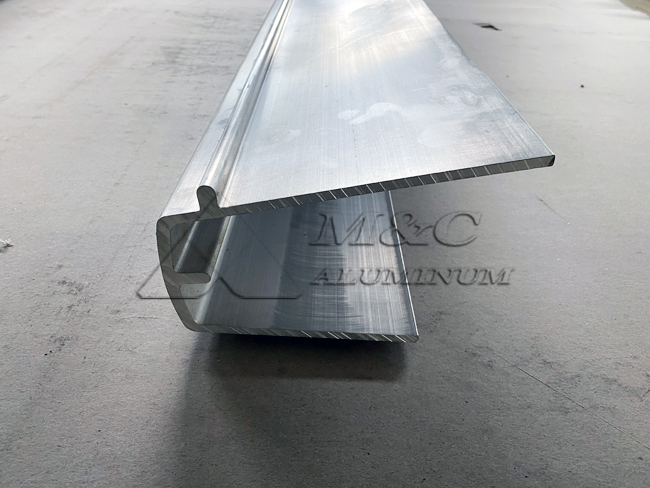
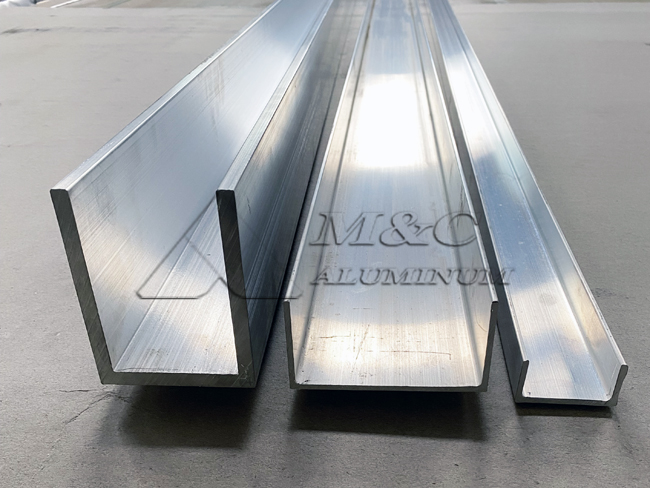
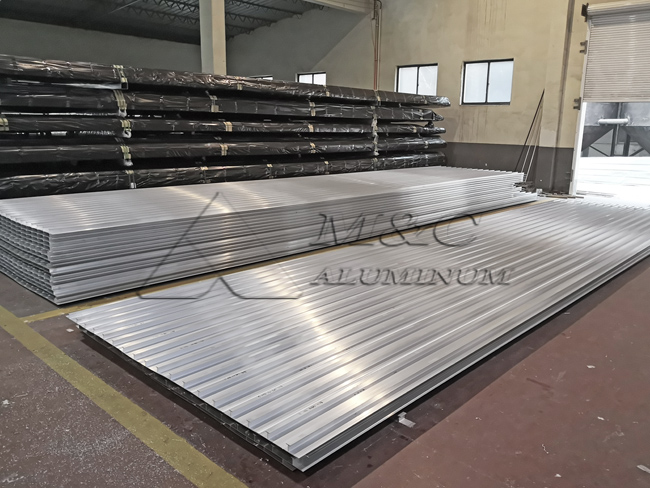
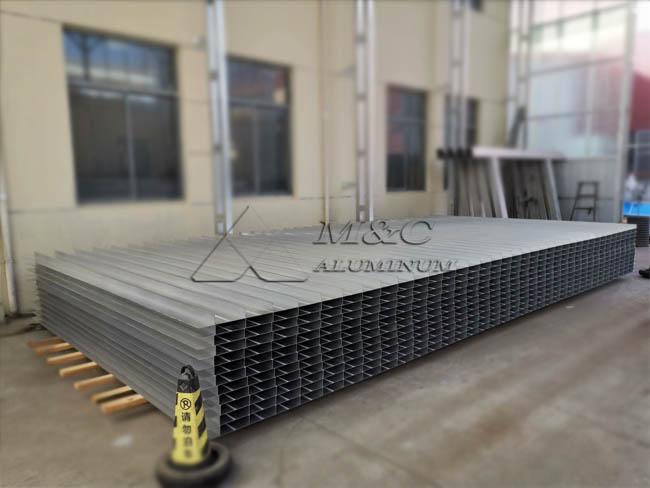
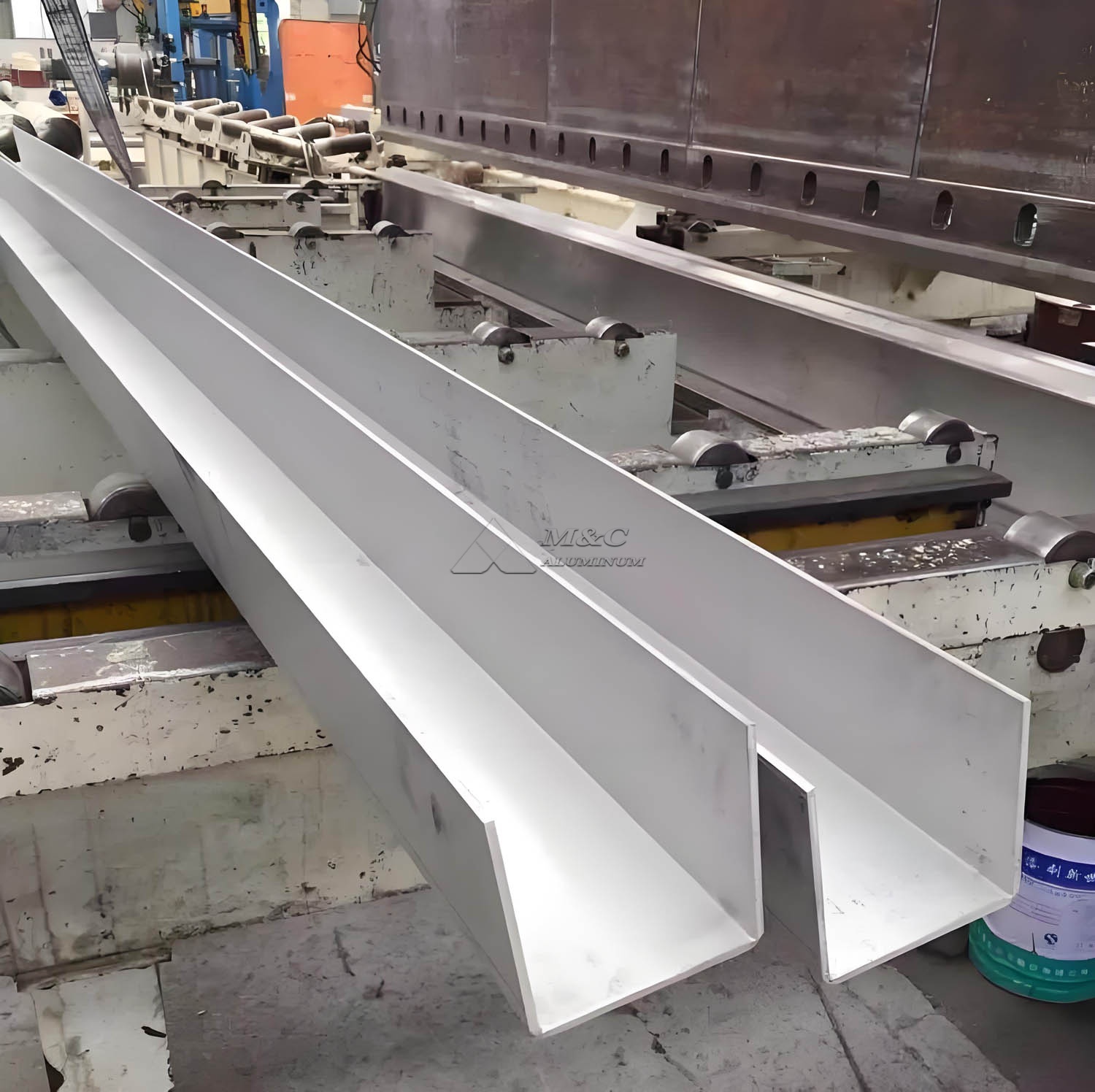
As an aluminum extrusion manufacturer, we produce 6063-T6 aluminum U-channels for marine fabricators, boat builders, shipyard contractors, and offshore equipment manufacturers. A marine aluminum U-channel is commonly used where a lightweight, straight, corrosion-resistant profile is required for edging, framing, guide tracks, partitions, covers, and non-primary structural assemblies.
6063 aluminum alloy is widely selected for extruded marine components because it combines good extrusion performance, a smooth surface finish, and reliable corrosion resistance in wet and saline environments. After T6 heat treatment, the profile obtains improved mechanical strength while retaining the dimensional consistency required for downstream cutting, drilling, machining, anodizing, and assembly.
Our factory supplies standard and custom 6063-T6 aluminum extrusion sections according to drawings, dimensional tolerances, alloy requirements, surface specifications, and packing conditions for international marine projects.
Why 6063-T6 Aluminum U-Channel Is Used in Marine Construction
Marine structures are exposed to humidity, salt spray, temperature variation, vibration, and frequent cleaning. Material selection must therefore consider more than nominal strength. It must also account for corrosion behavior, weight reduction, fabrication efficiency, appearance, and maintenance requirements.
A 6063-T6 aluminum U-channel offers several practical benefits in these conditions:
Low density helps reduce vessel weight compared with many steel channel solutions.
Good atmospheric corrosion resistance supports use in marine interiors, topside structures, and protected external applications.
Excellent extrudability enables consistent channel dimensions and smooth surfaces.
T6 temper provides higher strength than annealed or lower-temper 6063 profiles.
Good response to anodizing, powder coating, and other protective finishes.
Easy cutting, drilling, routing, and mechanical fastening during marine assembly.
Recyclable material supports efficient material utilization and end-of-life recovery.
Although 6063-T6 aluminum is suitable for many marine profile applications, alloy selection should always be based on the component's function and exposure condition. For heavily loaded primary structural members, permanently immersed parts, or highly stressed weldments, marine engineers may choose 5083, 5086, 6061, or 6082 according to design rules, welding conditions, and classification requirements.
Typical Marine Applications
Our 6063-T6 aluminum U-channel profiles are manufactured for a wide range of vessel and waterfront applications. The channel shape protects panel edges, provides a receiving groove, improves assembly alignment, and can create clean transitions between adjoining components.
Common applications include:
Interior Cabin and Deck Fittings
6063-T6 aluminum U-channel is often used for cabin partitions, lightweight wall panels, ceiling trims, door surrounds, furniture frames, locker edges, and equipment housings. Its clean extruded surface is particularly suitable for visible components that require anodized or powder-coated finishes.
Glazing, Hatch, and Panel Retention
U-shaped aluminum channels can serve as tracks or edge retainers for acrylic sheets, composite panels, glass assemblies, access covers, and removable protective screens. The final channel dimensions must account for panel thickness, gasket compression, thermal movement, and drainage requirements.
Railings, Covers, and Protective Edges
Marine aluminum U-channel can be installed as an edge guard on walkways, bulkheads, deck boxes, instrument panels, and fabricated covers. In these applications, the profile helps reduce sharp exposed edges and provides a more durable finishing detail.
Equipment Frames and Utility Installations
For light-duty equipment supports, cable containment covers, ventilation trims, solar panel subframes, and modular service enclosures, 6063-T6 channels offer a practical balance of weight and fabrication convenience. Where enclosed drainage or cable-routing sections are needed, our Aluminum trough profiles can also be specified as part of a coordinated extrusion package.
Dock, Pontoon, and Waterfront Equipment
Protected or above-water dock components, signage frames, access panel edges, and light equipment guards can also use 6063-T6 aluminum U-channels. Surface protection and isolation from dissimilar metals remain essential for long-term service in saltwater locations.
Technical Parameters of 6063-T6 Aluminum U-Channel
The following values are typical reference data for 6063-T6 aluminum extrusions. Actual mechanical properties, dimensions, tolerances, and surface requirements are confirmed against the final profile drawing, production standard, and order specification.
| Parameter | Typical Specification | Notes |
|---|---|---|
| Alloy | AA 6063 | Al-Mg-Si extrusion alloy |
| Temper | T6 | Solution heat treated and artificially aged |
| Density | 2.70 g/cm3 | Approximately one-third the density of steel |
| Tensile strength | 205-245 MPa | Depends on wall thickness and extrusion geometry |
| Yield strength | 170-215 MPa | Typical range for extruded sections |
| Elongation | 8-12% | Varies by profile dimensions and test direction |
| Elastic modulus | Approximately 69 GPa | Standard value for aluminum alloys |
| Thermal conductivity | Approximately 200 W/m.K | Useful for heat-dissipation applications |
| Standard finish | Mill finish | Protective film available on request |
| Optional finishes | Anodized, powder coated, brushed, polished | Selected according to exposure and appearance needs |
| Typical wall thickness | 1.0-6.0 mm | Custom thicknesses subject to profile design review |
| Typical channel length | 3-6 m | Custom cut lengths available |
| Dimensional tolerance | Per agreed drawing or extrusion standard | Controlled by section size and complexity |
Profile Design Considerations for Marine U-Channels
A well-designed U-channel reduces production difficulty and improves installation performance. As the manufacturer, we review cross-section drawings before tooling production to identify areas that may affect extrusion flow, straightness, wall consistency, die life, or surface quality.
Important design points include wall thickness balance, inside corner radii, channel opening width, flange height, and total profile mass. Extremely thin walls, sharp internal corners, or major thickness differences can increase the risk of distortion and dimensional variation. Where possible, uniform wall thickness supports more stable extrusion and heat treatment.
For channels intended to hold panels, the design should define the required clearance clearly. The nominal panel thickness alone is not sufficient. Engineering drawings should consider coating thickness, gasket material, adhesive allowance, moisture drainage, installation sequence, and thermal expansion. For long exterior channels, slots or movement provisions may be necessary to avoid stress caused by temperature changes.
When a complete marine framing system is required, we can manufacture matching Aluminum Profile sections, including channels, trims, angles, T-sections, and custom interlocking extrusions from coordinated dies.
Corrosion Protection and Surface Finishing
6063 aluminum forms a natural oxide layer that provides basic protection in normal atmospheric conditions. However, marine exposure is more demanding, especially where salt deposits remain on the surface or where the profile contacts other metals.
For visible marine applications, anodizing is frequently specified because it creates a harder, more uniform oxide layer and improves appearance. Clear anodized finishes are common for natural metallic surfaces, while black, bronze, champagne, or other colors may be used for architectural and vessel interior design requirements.
Powder coating is another suitable option for marine aluminum U-channel applications. A properly prepared and coated profile can provide color consistency and an additional protective barrier. For severe coastal exposure, the coating system should be selected according to the expected environment, cleaning routine, and project corrosion specification.
Galvanic corrosion must also be addressed. Aluminum should be electrically isolated from carbon steel, copper-bearing alloys, and other dissimilar metals when moisture can bridge the materials. Suitable isolation methods include non-conductive pads, sealants, gaskets, coated fasteners, and drainage-oriented joint design. Saltwater residue should be removed regularly from exposed installations.
Fabrication, Joining, and Installation
6063-T6 aluminum U-channel can be processed using standard aluminum fabrication methods. Our profiles are supplied in mill lengths or cut-to-length formats for efficient customer fabrication. Depending on the design, the channels can be saw cut, drilled, punched, milled, countersunk, bent within appropriate limits, or assembled using rivets, screws, bolts, structural adhesives, or welding.
Welding requires proper procedure control. Heat from welding reduces the strength of the T6 temper in the heat-affected zone. Therefore, welded marine assemblies must be designed using the applicable reduced material properties rather than the original T6 values. For many light-duty channel installations, mechanical fastening or adhesive bonding may be more suitable than welding.
Before installation, channels should be checked for straightness, cut-end condition, finish integrity, and correct orientation. Open channels installed outdoors should avoid trapping water, salt, or debris. Drain holes, end caps, sealant details, and access for cleaning should be considered during design.
Our Manufacturing and Quality Control Process
We manufacture 6063-T6 aluminum U-channel through controlled billet selection, die design, hot extrusion, quenching, stretching, artificial aging, cutting, finishing, inspection, and packing. Each production stage influences the final profile performance.
Our quality control process can include chemical composition verification, dimensional inspection, wall thickness measurement, straightness checks, surface inspection, hardness testing, mechanical property testing, and finish evaluation. For export orders, we can provide mill test certificates, packing lists, commercial documents, and inspection records according to the agreed supply scope.
Custom tooling is available for project-specific channel geometries. To prepare an accurate quotation and production assessment, we recommend providing a CAD drawing or sample, alloy and temper requirement, finish, length, estimated quantity, tolerance expectations, and intended marine application.
Conclusion
6063-T6 aluminum U-channel is a dependable extrusion solution for marine trim, panel retention, interior framing, equipment enclosures, protective edges, and other lightweight non-primary structural applications. Its smooth finish, practical strength, corrosion resistance, and processing flexibility make it particularly suitable for fabricated marine systems.
As a direct aluminum extrusion manufacturer, we produce marine aluminum U-channels to customer drawings and project specifications, with controlled dimensional tolerances, optional finishing, and export-ready packaging. Proper profile design, surface protection, drainage, and dissimilar-metal isolation are essential to achieving reliable performance in marine service.
Original Source: https://www.marinealum.com/a/6063-t6-aluminum-u-channel-marine-application.html
Tag: 6063 T6 aluminum U-channel marine aluminum U-channel 6063-T6 aluminum extrusion marine aluminum profile anodized aluminum channel aluminum U-channel manufacturer boat aluminum extrusions Aluminum extruded profiles