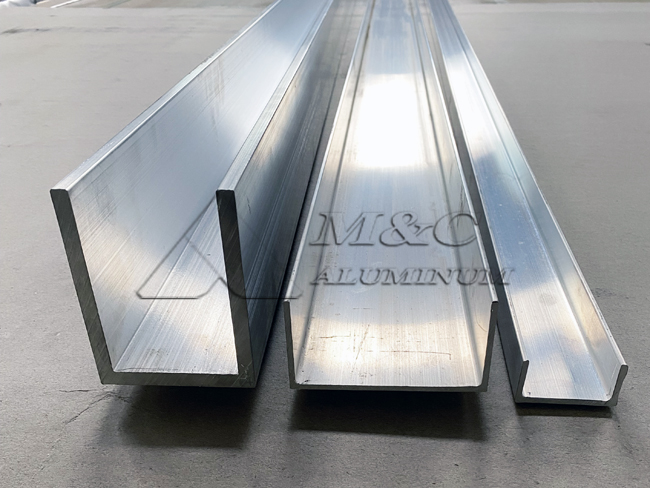
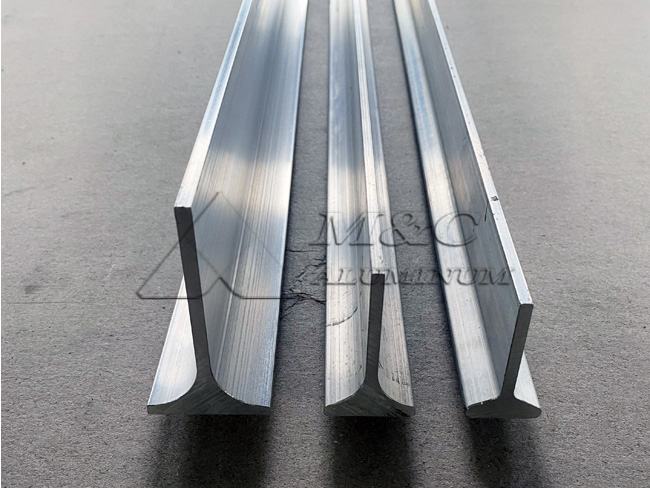
As a manufacturer of marine aluminum extrusions, we produce anodized marine grade aluminum alloy U-channel extrusions for applications where corrosion resistance, structural reliability, controlled dimensions, and clean surface quality are required. Our U-channel profiles are supplied for shipbuilding, offshore equipment, marine interiors, dock systems, vessel outfitting, transport structures, and industrial environments exposed to moisture or salt spray.
A marine aluminum alloy U-channel combines the light weight of aluminum with practical section strength and efficient fabrication. The U-shaped geometry supports edge protection, panel framing, rail systems, partitions, cable routing, trim assemblies, and secondary structural components. When combined with a controlled anodized finish, the extrusion receives an enhanced surface layer that improves resistance to atmospheric corrosion, abrasion, and routine marine service exposure.
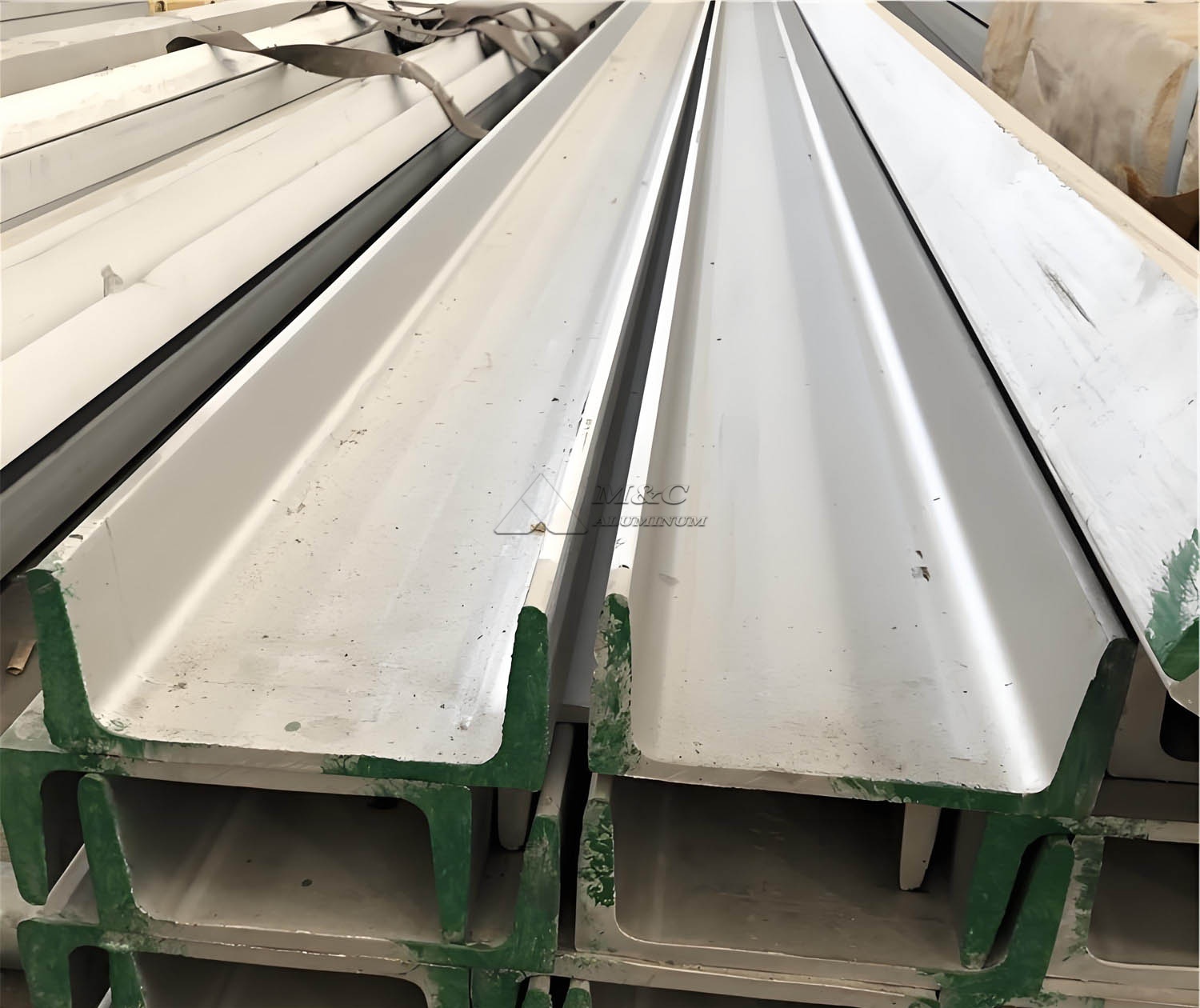
Marine Alloy Selection for U-Channel Extrusions
The performance of an anodized aluminum U-channel extrusion begins with alloy selection. For marine applications, we commonly manufacture U-channel profiles in 5xxx and 6xxx series aluminum alloys. The selected grade depends on section complexity, required mechanical properties, forming requirements, joining method, and the specific operating environment.
For standard architectural and general marine fabrication, 6061 and 6082 are widely specified because they offer good strength, machinability, and extrusion performance. These alloys are suitable for frames, support rails, walkways, cabin structures, equipment housings, and fabricated assemblies. For applications requiring enhanced resistance to seawater exposure, 5083 and 5052 alloys may also be considered, especially where welding performance and corrosion behavior are critical.
We review the intended use before confirming the material grade. A U-channel used as a decorative edge trim has different requirements from one used in a load-bearing support assembly or exposed deck structure. Our engineering team can recommend suitable aluminum grades, tempers, wall thicknesses, and surface treatments based on the project drawings and service conditions.
Standard Technical Parameters
The following table shows typical production options for our marine aluminum alloy U-channel extrusions. Final values depend on profile geometry, alloy, temper, wall thickness, and order requirements.
| Parameter | Typical Specification | Notes |
|---|---|---|
| Alloy options | 5052, 5083, 6061, 6063, 6082 | Grade selected according to corrosion, strength, and fabrication requirements |
| Temper | O, H112, T4, T5, T6 | Common marine structural tempers include H112 and T6 |
| Profile type | Equal-leg U-channel, unequal-leg U-channel, lipped channel, custom section | Custom tooling is available for project-specific designs |
| Wall thickness | 1.0 mm to 8.0 mm | Thicker sections can be evaluated according to extrusion feasibility |
| Channel width | 10 mm to 300 mm | Produced according to drawing dimensions and tolerances |
| Maximum profile width | Up to 450 mm | Subject to cross-section design and extrusion press capacity |
| Standard length | 3 m, 5.8 m, 6 m, or custom length | Cut-to-length service available |
| Surface treatment | Mill finish, clear anodized, hard anodized, powder coated | Anodizing specification can be tailored to the application |
| Anodized film thickness | 10 to 25 microns, or custom | Higher thickness may be specified for demanding environments |
| Dimensional tolerance | According to EN 755, GB/T 6892, or agreed drawing | Critical dimensions inspected during production |
| Packaging | Protective film, kraft paper, pearl cotton, export pallet | Designed to reduce transit scratches and deformation |
Why Anodizing Is Used in Marine Environments
Anodizing is an electrochemical finishing process that converts the aluminum surface into a dense oxide layer. Unlike paint, the anodic layer becomes integrated with the base metal. This treatment improves surface hardness and provides additional protection against oxidation and environmental exposure.
For anodized marine grade aluminum U-channel products, the anodizing process is particularly useful in coastal, humid, and salt-laden environments. The surface film helps protect the extrusion during installation, cleaning, handling, and long-term service. Clear anodizing preserves the metallic appearance of aluminum, while black, bronze, champagne, and other colors can be supplied where visual consistency is required.
It is important to recognize that anodizing is only one part of a complete marine corrosion-control strategy. The alloy grade, profile design, drainage capability, fastener material, installation method, and contact with dissimilar metals all affect service life. We therefore consider the full assembly environment when producing marine aluminum extrusions.
For example, direct contact between aluminum and certain metals can create galvanic corrosion in the presence of an electrolyte. Appropriate isolating materials, compatible fasteners, sealants, and drainage details should be used during installation. Our manufacturing team can provide surface and handling recommendations to support downstream fabrication.
Manufacturing Process and Quality Control
Our factory controls each main stage of anodized aluminum U-channel extrusion production, from billet selection through packing. This integrated process supports traceability, stable dimensions, and repeatable finish quality.
The manufacturing sequence generally includes billet inspection, die preparation, hot extrusion, online quenching when required, stretching, aging, cutting, surface preparation, anodizing, final inspection, and export packing. For custom aluminum U-channel extrusions, we first review the section drawing to assess wall thickness balance, corner radii, hollow or solid profile characteristics, extrusion ratio, and tolerance requirements.
During extrusion, process parameters are controlled to reduce twisting, bowing, die lines, and dimensional variation. After extrusion, profiles can be stretched and aged to obtain the required mechanical properties. We then inspect the channel opening, leg height, base width, straightness, surface condition, and cut length according to the approved specification.
Anodizing requires careful surface preparation. Profiles are cleaned, etched where appropriate, anodized, colored if required, and sealed. We monitor coating appearance, film thickness, adhesion-related surface condition, and color consistency for applicable orders. For projects with defined inspection procedures, we can arrange material certificates, chemical composition reports, mechanical property reports, anodizing thickness records, and dimensional inspection reports.
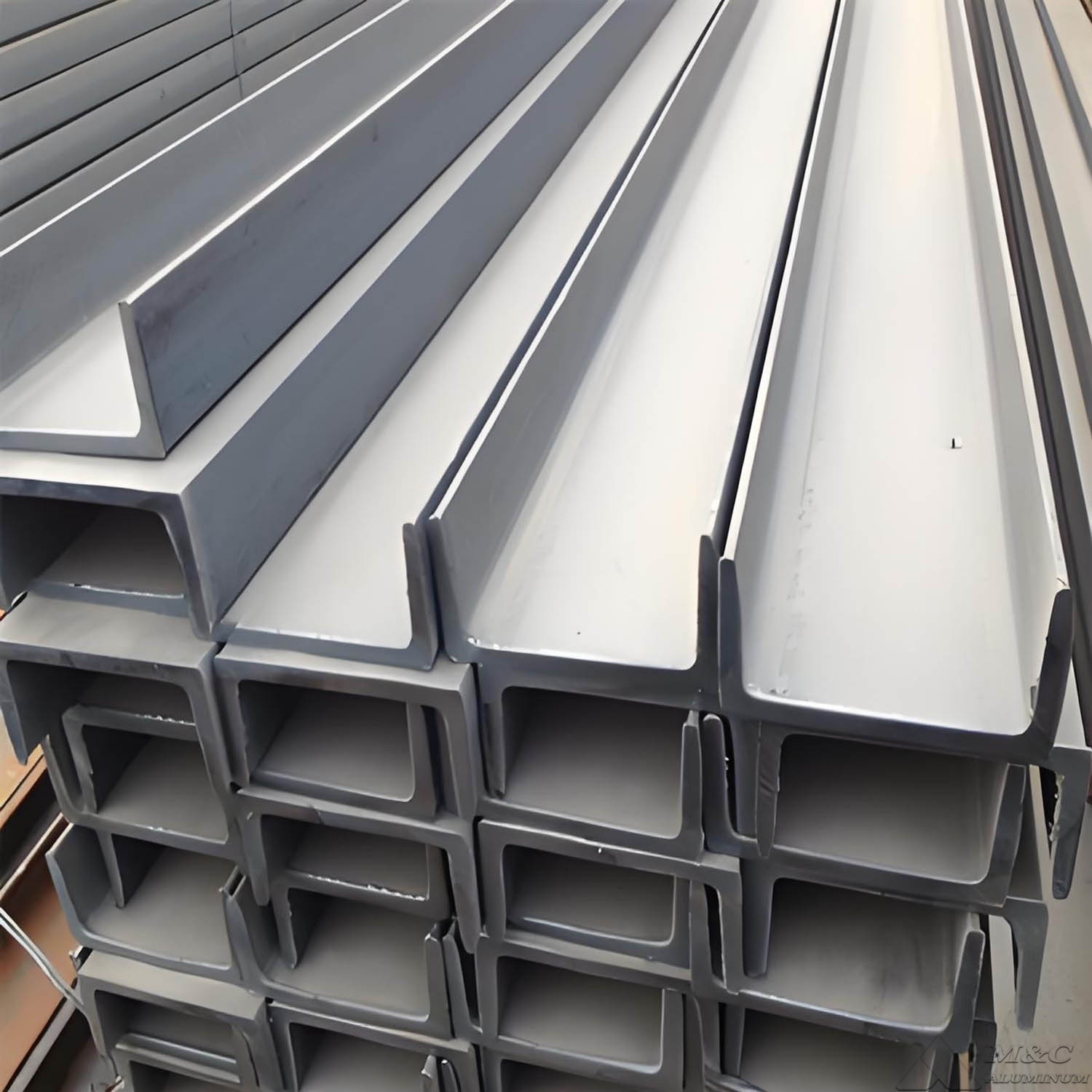
Profile Design Considerations
A well-designed marine aluminum alloy U-channel can improve both manufacturing efficiency and installation performance. We recommend that customers provide a detailed drawing with section dimensions, tolerances, alloy and temper requirements, surface finish, length, application environment, and annual or project quantity.
Uniform wall thickness is generally preferred because it supports more stable metal flow during extrusion. Sharp internal corners should be avoided where possible, as suitable radii improve extrusion performance and reduce stress concentration. Where a channel will receive fasteners, drainage holes, welding, machining, or bending, these downstream operations should be identified at the design stage.
For large panel installations, channel straightness and thermal expansion must be considered. Aluminum expands more than steel as temperatures change. Allowance for movement, suitable fixing intervals, and drainage paths can help prevent distortion and water retention in service.
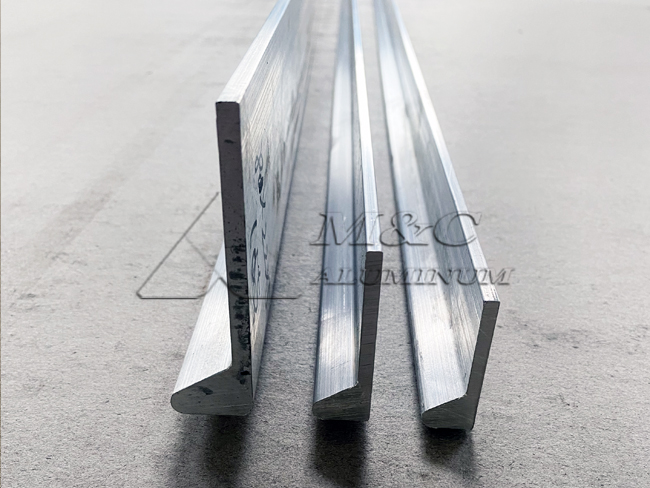
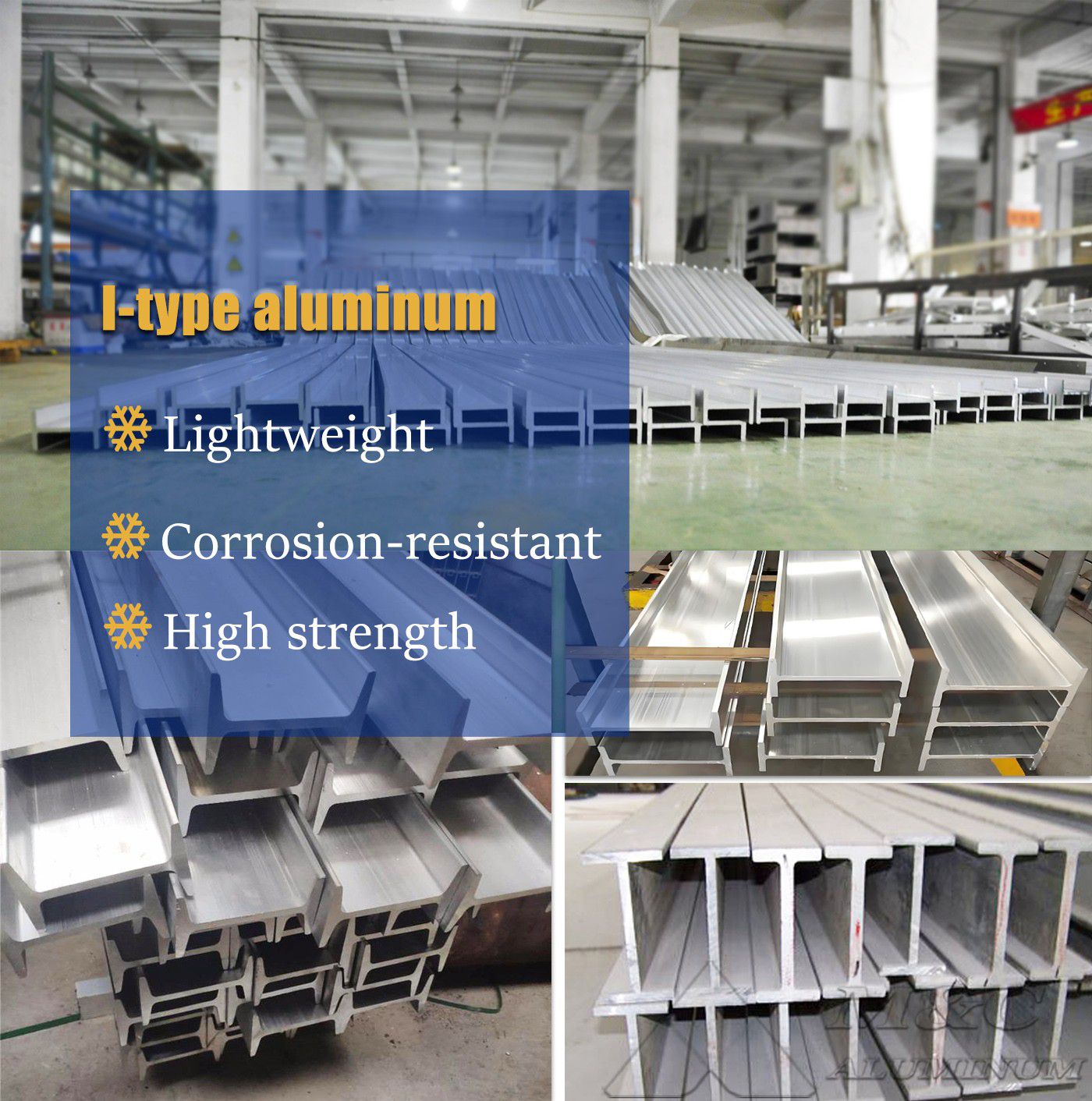
Our Aluminum Profile manufacturing capability also supports related sections such as angles, T-sections, rails, trims, and custom framing profiles. Producing compatible profiles from the same manufacturing source can improve dimensional coordination and finish consistency across a marine project.
Typical Applications
Anodized marine grade aluminum U-channel extrusions are used across commercial, recreational, offshore, and infrastructure projects. Typical applications include:
Deck and bulkhead edge protection.
Cabin partition and interior framing systems.
Hatch, door, and panel reinforcement assemblies.
Equipment support channels and mounting rails.
Cable tray covers and protective routing sections.
Dock, pontoon, gangway, and marina fittings.
Marine vehicle body structures and utility enclosures.
Offshore platform access systems and secondary supports.
Architectural trim in coastal buildings and waterfront facilities.
For fabricated vessel systems, U-channels are often combined with plate, tube, flat bar, and welded components. Where welding is part of the assembly, material compatibility and filler selection should be confirmed. We can also supply related Aluminum welding wire for aluminum fabrication programs that require compatible joining consumables.
Custom Extrusion and Supply Capabilities
We manufacture both standard and custom aluminum U-channel extrusions. For existing sections, customers may specify alloy, temper, length, anodized finish, protective film, and packaging requirements. For new developments, we can support die design and sample production based on a CAD file, PDF drawing, or physical sample.
Before mass production, we confirm key parameters including cross-sectional dimensions, tolerance limits, surface requirements, mechanical properties, and packing method. Sample inspection can be arranged for profiles with complex geometry or critical assembly interfaces. This process helps reduce the risk of installation issues after shipment.
Our export packaging is designed for long-length aluminum profiles. Depending on profile size and surface finish, we use interleaving protection, protective film, paper wrapping, foam materials, bundled packaging, wooden frames, or pallets. The objective is to preserve the anodized surface and maintain straightness during container loading and international transportation.
Conclusion
Anodized marine grade aluminum alloy U-channel extrusions provide a practical solution for marine structures that require low weight, corrosion resistance, controlled dimensions, and adaptable profile design. The correct combination of alloy, temper, extrusion geometry, anodized film thickness, and installation practice is essential for reliable performance.
As a direct manufacturer, we produce marine aluminum alloy U-channel profiles according to customer drawings and technical specifications. From alloy selection and extrusion tooling to anodizing, inspection, cutting, and export packing, our production process is organized to support consistent quality for marine and coastal engineering applications.
Original Source: https://www.marinealum.com/a/anodized-marine-grade-aluminum-alloy-u-channel-extrusions.html
Tag: anodized marine grade aluminum U-channel marine aluminum alloy U-channel anodized aluminum U-channel extrusion 6061 aluminum U-channel 6082 marine aluminum profile custom aluminum U-channel extrusions marine aluminum extrusions aluminum trough