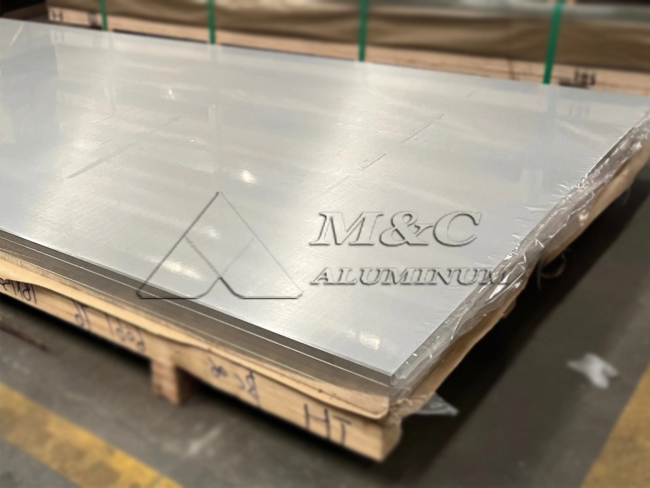
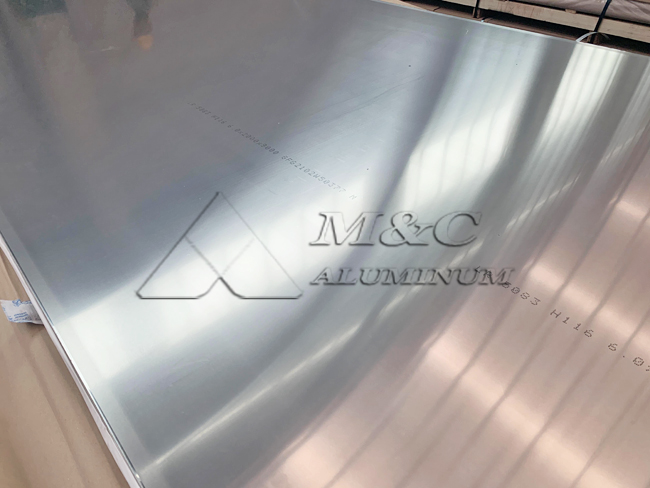
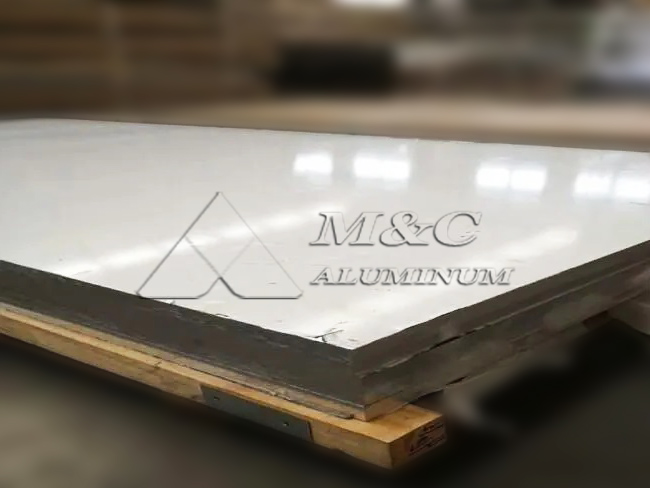
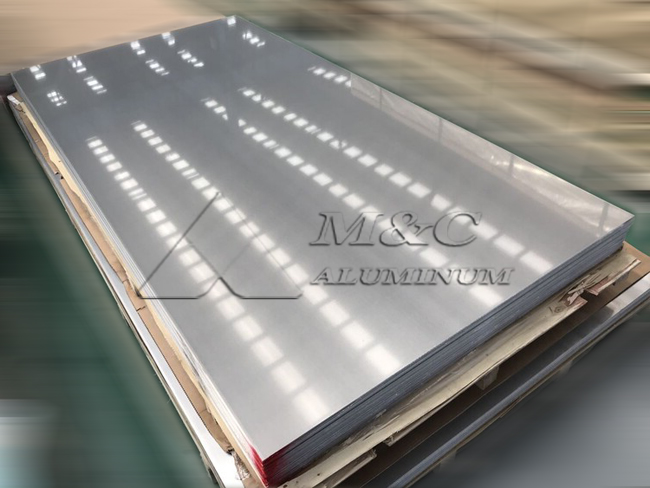
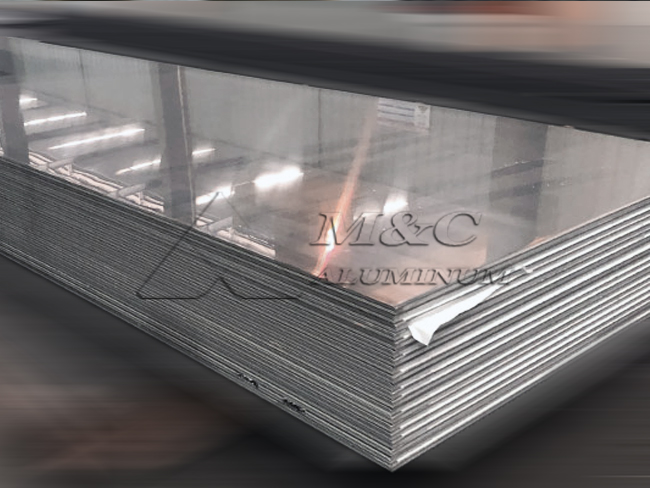
As a marine aluminum plate manufacturer, we produce and process 5000 series aluminum for shipyards, boat builders, offshore equipment fabricators, and marine engineering contractors. In deck applications, material selection is not only a cost decision. It affects corrosion resistance, welding quality, fatigue performance, weight control, safety, and long term maintenance.
For marine decks, 5000 series aluminum is widely selected because it combines seawater corrosion resistance with practical strength and reliable fabrication behavior. Grades such as 5052, 5083, 5086, 5456, 5754, and 5059 are non-heat-treatable aluminum-magnesium alloys. Their strength is mainly obtained through magnesium alloying and strain hardening, which makes them suitable for welded deck structures, working platforms, patrol boats, ferries, fishing vessels, yachts, and offshore service vessels.
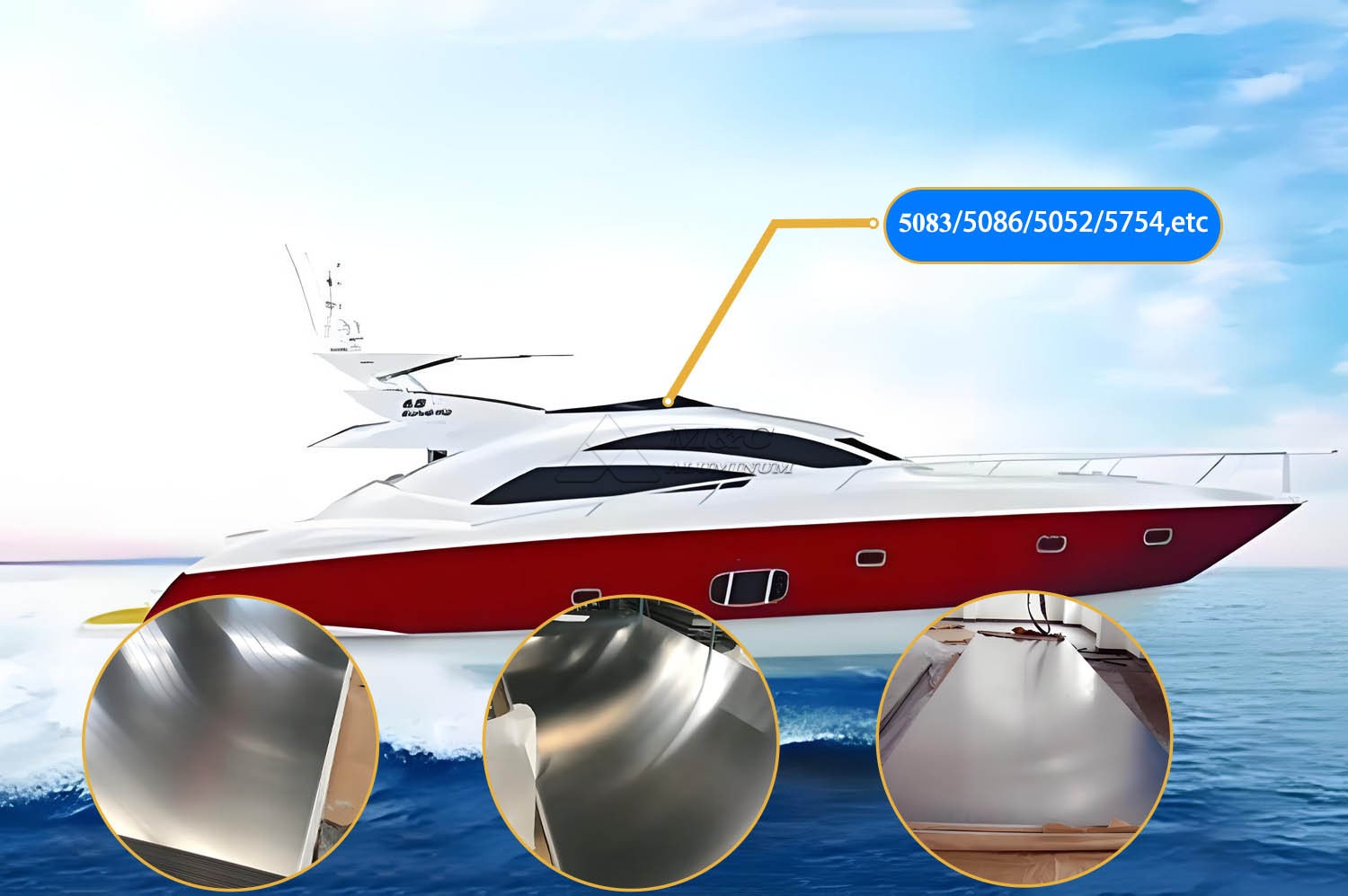
What 5000 Series Aluminum Means for Marine Decks
The 5000 series refers to aluminum alloys with magnesium as the principal alloying element. Magnesium improves strength, corrosion resistance, and weldability without making the alloy difficult to process. For marine deck plate, this balance is important because decks are exposed to salt spray, standing water, mechanical loading, vibration, thermal cycling, and frequent cleaning.
Compared with carbon steel, marine aluminum plate provides a significant weight reduction. This helps reduce vessel displacement, improve fuel efficiency, increase payload, or support higher speed design. Compared with many 6000 series alloys, 5000 series aluminum generally offers better resistance to seawater corrosion in plate form and is often preferred for hulls, decks, bulkheads, superstructures, and marine flooring.
From our production perspective, the main advantage of 5000 series aluminum for marine decks is process stability. The alloys can be supplied as flat plate, tread plate, checker plate, and cut-to-size sheets. They can be sheared, CNC cut, bent, rolled, welded, and surface treated according to engineering drawings.
Key Technical Parameters of Common Marine Deck Alloys
The exact values vary according to thickness, temper, production standard, and certification requirement. The table below gives typical reference data used during preliminary material selection. Final specifications should be confirmed according to project drawings, class society requirements, and purchase standards.
| Alloy | Common Temper | Typical Tensile Strength MPa | Typical Yield Strength MPa | Elongation A50 % | Main Features | Typical Deck Use |
|---|---|---|---|---|---|---|
| 5052 | H32, H34, O | 210 to 260 | 130 to 200 | 8 to 16 | Good corrosion resistance, excellent formability | Light decks, interior platforms, small craft flooring |
| 5754 | H111, H22, H32 | 190 to 270 | 80 to 220 | 10 to 18 | Stable forming, good seawater resistance | Boat decks, access platforms, non-slip floor plates |
| 5083 | H111, H116, H321 | 275 to 350 | 125 to 240 | 10 to 16 | High strength, excellent marine corrosion resistance | Main decks, working decks, hull-deck structures |
| 5086 | H111, H116, H32 | 240 to 310 | 105 to 220 | 10 to 16 | Good weldability and corrosion resistance | Deck panels, bulkheads, patrol boat structures |
| 5456 | H116, H321 | 310 to 380 | 160 to 270 | 8 to 14 | Higher strength, good resistance in marine service | Heavy duty decks, offshore vessel structures |
| 5059 | H116, H321 | 330 to 400 | 220 to 300 | 8 to 14 | High strength and improved toughness | High performance vessels, naval and offshore decks |
For projects requiring a proven combination of strength and seawater performance, we often recommend 5083 Marine aluminum in H116 or H321 temper, especially where the deck is part of a welded structural system.
Corrosion Resistance in Seawater Conditions
Marine decks are frequently exposed to chloride ions, wet and dry cycles, cleaning chemicals, and mechanical abrasion. The natural oxide film on aluminum provides basic protection, but alloy chemistry and temper stability determine how well the material performs over years of service.
5000 series marine aluminum has strong resistance to general corrosion in seawater and marine atmosphere. The magnesium content contributes to this performance, while controlled production and proper temper selection help reduce risks such as exfoliation corrosion and intergranular corrosion. For high-magnesium alloys such as 5083, 5456, and 5059, marine tempers like H116 and H321 are important when the plate is used in aggressive environments.
As a factory, we control chemical composition, rolling reduction, final temper, and inspection procedures to support consistent corrosion resistance. For marine deck plate, we can also provide surface options such as mill finish, brushed finish, anti-slip tread pattern, or coated surface preparation according to the customer specification.
Strength-to-Weight Advantage for Deck Structures
Weight reduction is one of the main reasons shipbuilders use aluminum deck plate. Aluminum has a density of about 2.70 g/cm3, roughly one third that of steel. Although aluminum has a lower elastic modulus than steel, proper deck design can achieve the required stiffness through plate thickness, stiffener spacing, structural layout, and welding design.
In working decks and passenger decks, lower weight can improve vessel stability and reduce the load on supporting structures. For high speed craft, crew boats, ferries, and patrol vessels, the weight saving is particularly valuable. A lighter deck structure can help improve acceleration, reduce operating cost, and increase design flexibility.
5000 series aluminum is not selected only because it is light. It is selected because it retains good mechanical properties after welding compared with many alternatives. Since decks often require long weld seams, stiffener connections, hatch openings, and railing supports, weld performance is a critical engineering factor.
Weldability and Fabrication Performance
Most marine deck structures are fabricated by MIG or TIG welding. 5000 series aluminum alloys offer good weldability when the correct filler wire, welding parameters, joint preparation, and post-weld cleaning procedures are used. Common filler choices include 5356, 5183, and 5556, depending on the base alloy and required strength.
During production, the deck plate must remain dimensionally stable enough for assembly. We provide leveling, trimming, and surface inspection to reduce fabrication issues. For cut-to-size deck panels, CNC cutting and protective film options can be arranged to reduce handling damage during transport and installation.
For formed deck components, 5052 and 5754 offer excellent formability. For higher load-bearing structural decks, 5083 and 5086 are often preferred. For heavy duty or high performance applications, 5456 and 5059 may be specified after engineering review.
Anti-Slip Deck Requirements
Marine decks must provide secure footing in wet conditions. 5000 series aluminum can be supplied as tread plate, checker plate, or embossed plate for anti-slip applications. The pattern improves traction while retaining the basic advantages of marine grade aluminum alloy.
Typical tread patterns include five-bar, diamond, and customized raised patterns. The selection depends on the walking direction, cleaning requirement, drainage design, and expected mechanical wear. For passenger vessels, the visual finish and ease of cleaning may be important. For workboats and offshore service vessels, wear resistance, load capacity, and weld compatibility are usually the priority.
When a coating system is required, the aluminum deck plate surface should be properly cleaned, degreased, and treated before coating. Paint adhesion depends on surface preparation as much as on alloy selection.
Manufacturing Control from Our Factory
We manufacture marine aluminum plate through controlled casting, homogenization, hot rolling, cold rolling where required, heat stabilization, leveling, cutting, and inspection. Each stage affects final deck performance.
Chemical composition is checked to confirm alloy grade. Rolling procedures are controlled to obtain the required temper and mechanical properties. Surface inspection is performed to identify scratches, dents, rolling marks, oil stains, and other surface defects that may affect fabrication or coating. Dimensional inspection covers thickness, width, length, diagonal tolerance, flatness, and edge condition.
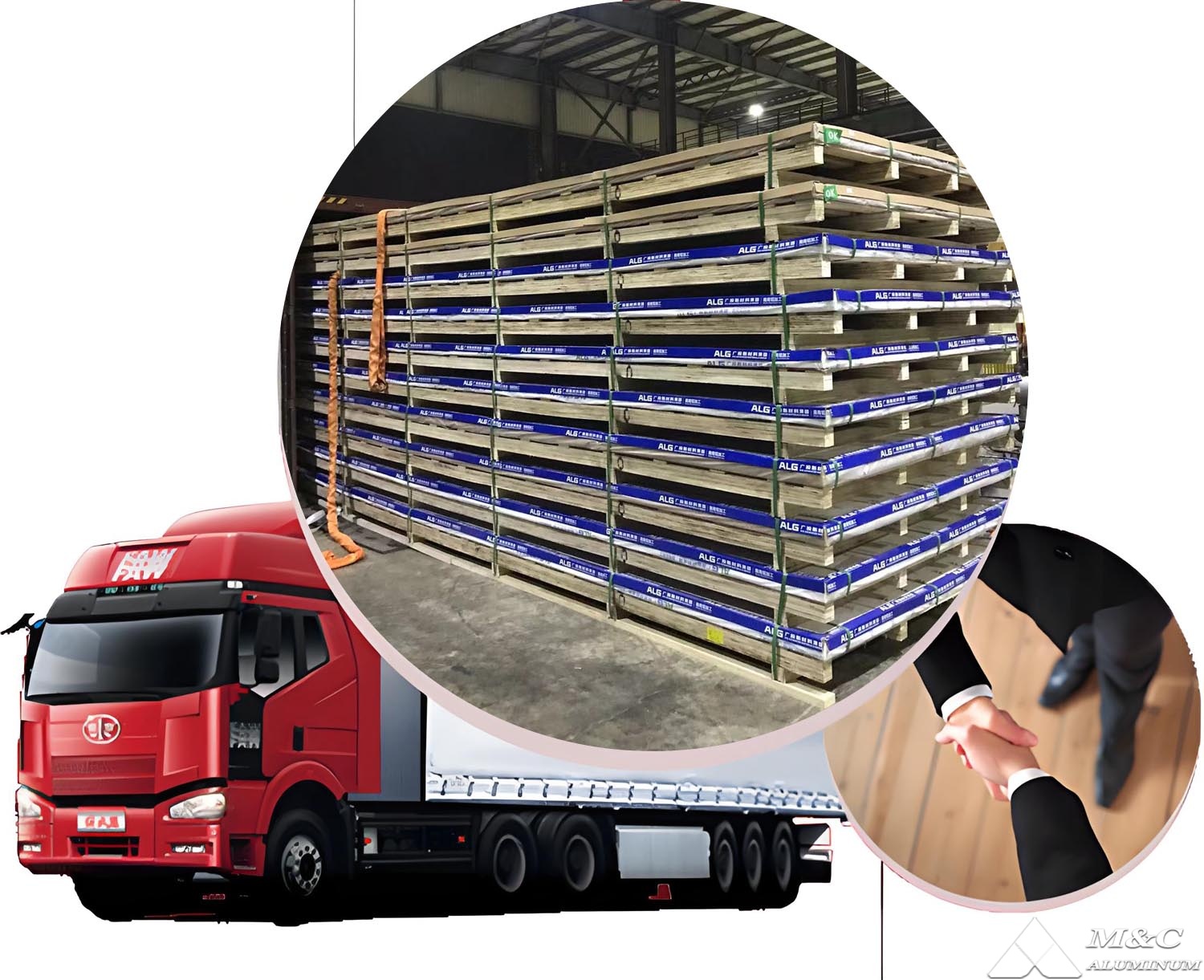
For marine projects, traceability is important. We can supply mill test certificates according to the agreed standard, and for classed vessels we can coordinate inspection requirements where applicable. Our production planning also considers packing methods for export shipments, including moisture protection, wooden pallets, steel strapping, and container loading stability.
Recommended Thickness and Product Forms
The correct thickness for a marine deck depends on vessel type, span, stiffener spacing, load class, and deck function. We do not recommend selecting thickness only by experience. Engineering calculation and class rules should be followed.
| Product Form | Common Thickness Range mm | Common Width mm | Common Length mm | Main Application |
|---|---|---|---|---|
| Flat marine aluminum plate | 3 to 80 | 1000 to 2500 | 2000 to 12000 | Structural decks, welded panels, platforms |
| Aluminum tread plate | 2 to 12 | 1000 to 2000 | 2000 to 6000 | Anti-slip walking decks, ramps, work areas |
| Cut-to-size deck sheet | 2 to 20 | As specified | As specified | Fabricated deck modules, repair panels |
| Heavy marine plate | 20 to 100 | 1500 to 2500 | 3000 to 12000 | Heavy duty decks, offshore components |
For general marine engineering, our Marine Aluminum Alloy product range covers multiple 5000 series grades for deck, hull, superstructure, and platform applications.
Design Considerations for Long Service Life
Even the correct alloy can fail early if the deck design ignores marine service conditions. Several practical points should be considered during design and fabrication.
First, avoid water traps. Drainage design should prevent standing seawater around weld seams, corners, and bolted connections. Second, isolate aluminum from dissimilar metals such as carbon steel and copper alloys to reduce galvanic corrosion. Non-conductive gaskets, sealants, or suitable fastening systems may be needed. Third, avoid unnecessary deep scratches during handling and installation, especially if the deck will remain uncoated.
Welding heat input should be controlled to reduce distortion and preserve mechanical performance. After welding, spatter, flux residues, and contaminants should be removed. If stainless fasteners are used, the contact area should be evaluated carefully, especially in wet conditions.
Why Factories and Shipyards Continue to Choose 5000 Series Aluminum
From long term manufacturing experience, 5000 series aluminum provides a practical balance for marine decks. It is strong enough for many structural applications, corrosion resistant enough for seawater exposure, and workable enough for efficient fabrication. It also supports multiple product forms, from lightweight aluminum deck sheet to heavy marine aluminum plate.
For shipyards, this means fewer material compromises during cutting, forming, welding, and installation. For vessel owners, it supports lower structural weight and reduced maintenance when compared with many traditional materials. For engineering teams, it offers a mature material system with established specifications and reliable supply options.
Conclusion
5000 series marine aluminum sheet is widely used for marine decks because it offers seawater corrosion resistance, favorable strength-to-weight ratio, good weldability, and flexible fabrication performance. Grades such as 5052, 5754, 5083, 5086, 5456, and 5059 can be selected according to deck load, corrosion exposure, forming requirement, and class specification.
As a manufacturer, we focus on alloy control, temper accuracy, surface quality, dimensional tolerance, and export packaging. For marine deck projects, the best result comes from matching the correct aluminum alloy with proper structural design, welding practice, surface treatment, and installation method. This is why 5000 series aluminum remains one of the most dependable material choices for modern marine deck construction.