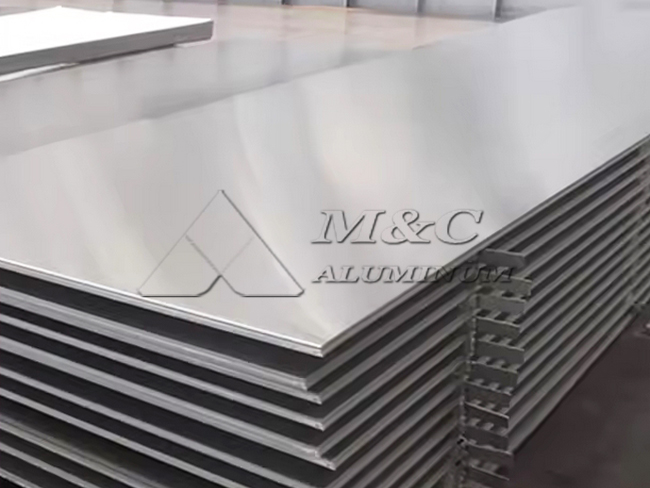
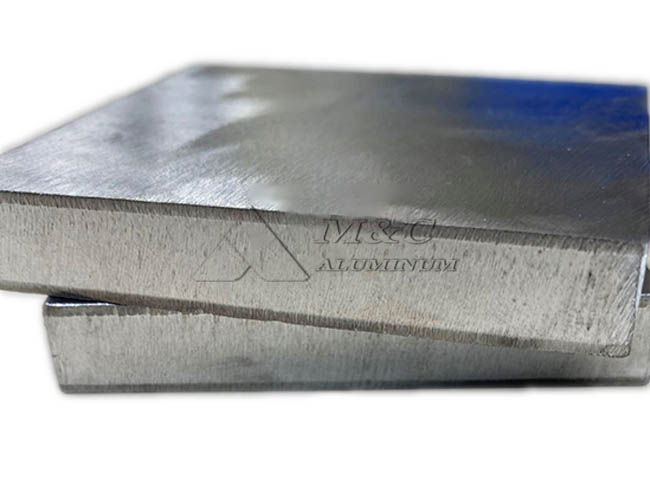
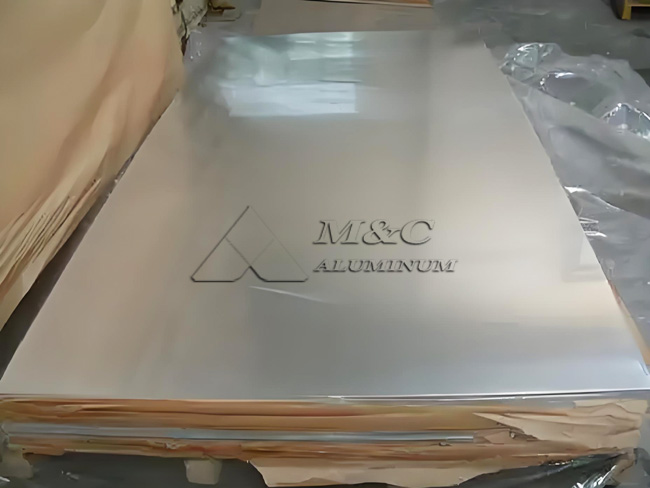
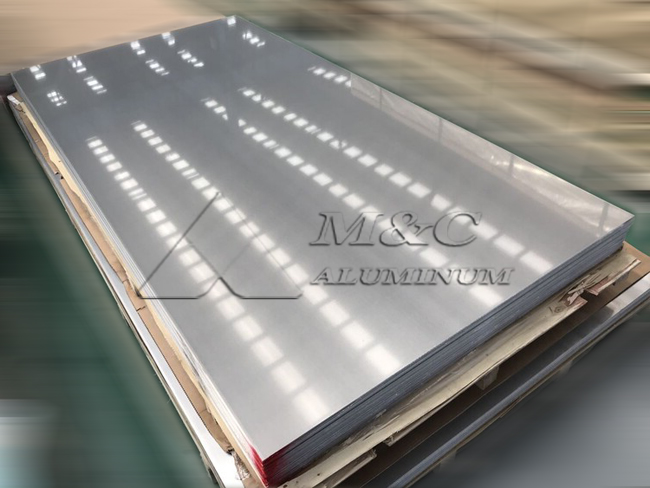
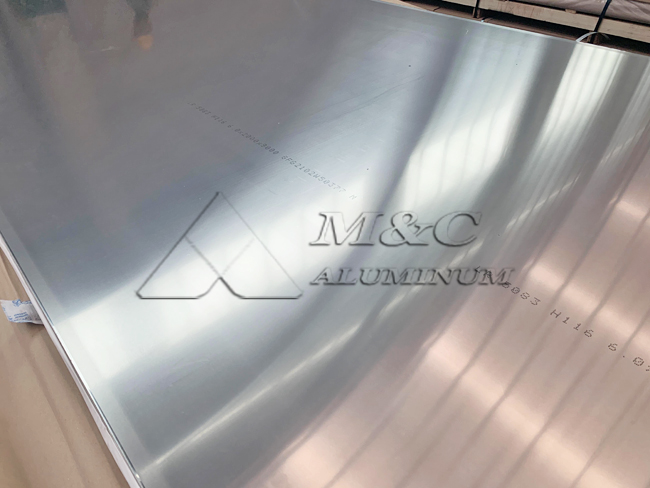
Selecting the best aluminum alloy for saltwater environments is not a single-material decision. It depends on exposure level, mechanical load, welding method, forming requirements, service temperature, and certification requirements. As a manufacturer of marine aluminum sheet, plate, coil, and processed aluminum parts, we evaluate alloy selection from production capability and end-use performance, not only from a catalog description.
In practical marine construction, 5xxx series aluminum-magnesium alloys are usually the first choice for continuous saltwater exposure. Among them, 5083, 5086, 5052, 5754, 5456, and 5059 are widely used. For most structural marine applications, 5083 marine aluminum in H116 or H321 temper provides the best balance of strength, weldability, and resistance to saltwater corrosion. For lighter-duty parts, 5052 can be more economical and easier to form. For higher strength structures, 5059 and 5456 may be considered when specification and welding procedures support their use.
Why Saltwater Is Demanding for Aluminum
Saltwater contains chloride ions, dissolved oxygen, and biological contaminants. These factors can accelerate localized corrosion, especially pitting and crevice corrosion. Aluminum naturally forms a protective oxide film, but in marine environments this film must be supported by the correct alloy chemistry, stable temper, suitable surface condition, and proper design.
The main risks in saltwater service include:
Pitting corrosion caused by chloride attack.
Crevice corrosion under overlapping plates, fasteners, seals, and deposits.
Galvanic corrosion when aluminum contacts stainless steel, copper alloys, carbon steel, or other dissimilar metals.
Exfoliation and intergranular corrosion in unsuitable tempers or sensitized high-magnesium alloys.
Weld-zone corrosion if filler metal, heat input, and post-weld cleaning are not controlled.
For this reason, the best corrosion resistant aluminum alloy for saltwater is usually not a heat-treatable 6xxx or 7xxx alloy for plate structures. The more reliable choice is a marine grade aluminum sheet or plate from the 5xxx series, produced and tested according to recognized marine standards.
Performance Advantages of Marine-Grade Aluminum Alloys
1. Lightweight: With a density of approximately 2.7 g/cm³-only one-third that of steel—it can significantly reduce hull weight, thereby enhancing fuel efficiency and cargo capacity.
2. High Specific Strength: It possesses an excellent strength-to-weight ratio, enabling weight reduction while simultaneously ensuring structural integrity.
3. Corrosion Resistance: A dense oxide film (Al₂O₃) forms on the surface of the aluminum alloy, effectively blocking chloride ion intrusion and providing robust resistance against seawater corrosion.
4. Ease of Forming: Aluminum alloys exhibit excellent plasticity, allowing them to be processed into profiles, sheets, and die-cast components of complex shapes.
5. Weldability: Many marine-grade aluminum alloys (such as the 5-series magnesium alloys) possess exceptional welding properties, ensuring the strength of welded joints and simplifying the construction process for large-scale marine engineering projects.
6. Resistance to Low-Temperature Embrittlement: In extremely cold marine climates (such as polar regions) or environments involving cryogenic media (such as Liquefied Natural Gas—LNG), ordinary steel is prone to brittle fracture; however, the strength and toughness of aluminum alloys do not diminish under such conditions—on the contrary, they tend to increase.
7. Non-Magnetic Properties: Unlike steel materials, aluminum alloys are non-magnetic; this characteristic holds significant importance for the electromagnetic compatibility of ships and marine equipment.
8. Environmental Friendliness: They are 100% recyclable and reusable, aligning perfectly with the trends of green manufacturing.
Best Overall Choice: 5083 Marine Aluminum
For hulls, decks, bulkheads, tanks, ship superstructures, offshore platforms, and other welded marine structures, 5083 Marine aluminum is our standard recommendation when strength and seawater corrosion resistance must be balanced. Its magnesium content gives higher strength than 5052 and 5754, while its non-heat-treatable structure provides excellent weldability and stable corrosion performance when supplied in correct marine tempers.
5083-H116 and 5083-H321 are especially important for saltwater service. These tempers are designed to control susceptibility to exfoliation and intergranular corrosion in marine environments. For classification projects, plates are commonly supplied with test reports according to ASTM B928, EN standards, or ship classification society requirements.
From a manufacturing perspective, 5083 is also practical. It can be cut, bent within proper radius limits, welded by MIG or TIG processes, and machined into marine components. The alloy retains good performance after welding, although the heat-affected zone must always be considered during structural design.
Comparison of Common Marine Aluminum Alloys
The following table summarizes typical marine aluminum alloy choices for saltwater environments. Values are general references and may vary by standard, thickness, and temper.
| Alloy | Common Tempers | Main Advantages | Typical Saltwater Applications | Selection Comment |
|---|---|---|---|---|
| 5083 | O, H111, H116, H321 | High strength, excellent seawater corrosion resistance, good weldability | Hull plate, deck, bulkhead, tank, offshore structure | Best overall choice for welded marine structures |
| 5086 | H116, H32, H34 | Good corrosion resistance, good formability, moderate-high strength | Small vessels, workboats, marine panels | Strong option where formability is important |
| 5052 | H32, H34, O | Excellent formability, good corrosion resistance, economical | Covers, cabinets, light marine parts, small tanks | Suitable for lighter-duty saltwater exposure |
| 5754 | H111, H22, H32 | Good corrosion resistance, good forming performance | Marine panels, floors, vehicle and boat parts | Often used where medium strength is acceptable |
| 5456 | H116, H321 | Higher strength than 5083 in some conditions | Heavy marine structures, pressure components | Requires careful temper and corrosion control |
| 5059 | H116, H321 | High strength, good toughness, marine corrosion resistance | High-performance vessels, defense and offshore parts | Good for demanding projects with approved procedures |
| 6061 | T6, T651 | Good machinability and extrusion availability | Frames, fittings, machined parts above waterline | Not our first choice for continuous seawater immersion |
| 6082 | T6, T651 | Higher strength 6xxx alloy, good machining | Structural profiles, brackets, supports | Useful for profiles, but design must control corrosion |
Chemical and Mechanical Reference Parameters
For engineering procurement, chemical composition and mechanical properties must be confirmed by the applicable standard and mill test certificate. The table below provides typical reference data used during initial material selection.
| Alloy | Typical Mg Content | Typical Tensile Strength | Typical Yield Strength | Marine Corrosion Resistance | Weldability |
|---|---|---|---|---|---|
| 5083-H116 | 4.0-4.9% | 305-350 MPa | 215-250 MPa | Excellent | Excellent |
| 5086-H116 | 3.5-4.5% | 260-320 MPa | 195-240 MPa | Excellent | Excellent |
| 5052-H32 | 2.2-2.8% | 210-260 MPa | 160-215 MPa | Very good | Very good |
| 5754-H111 | 2.6-3.6% | 190-240 MPa | 80-125 MPa | Very good | Excellent |
| 5456-H116 | 4.7-5.5% | 330-380 MPa | 230-280 MPa | Excellent when properly tempered | Excellent |
| 5059-H116 | 5.0-6.0% | 370-430 MPa | 270-330 MPa | Excellent when properly specified | Excellent |
These figures are not a substitute for project design calculations. For pressure vessels, offshore platforms, fast patrol boats, ferries, or classification-approved hull structures, designers should specify the governing standard, temper, thickness tolerance, flatness, ultrasonic testing if required, and certificate type.
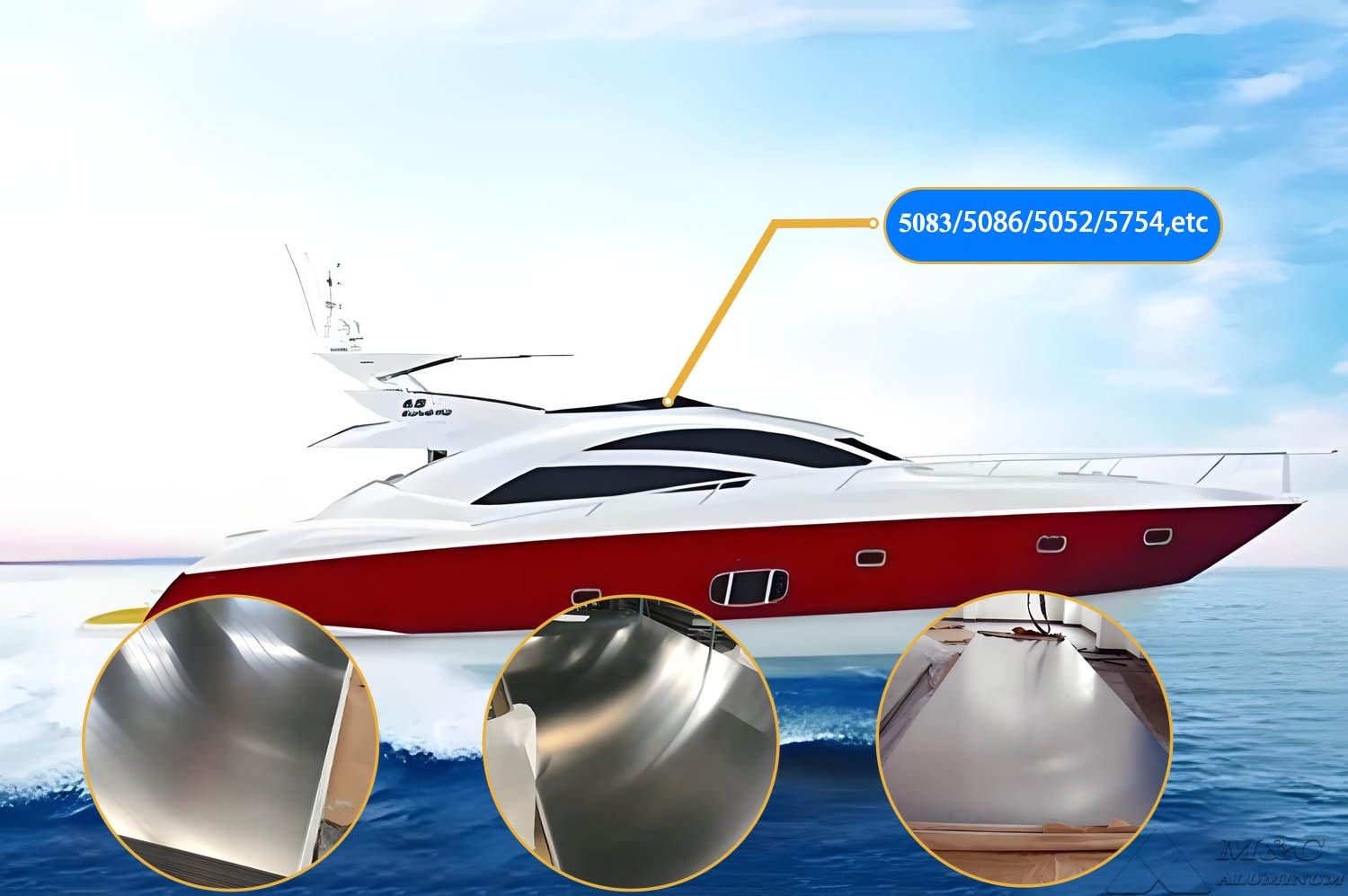
5083 vs 5086 vs 5052 in Saltwater
The most common buyer question is whether 5083, 5086, or 5052 is the best aluminum alloy for saltwater. The answer depends on the load and forming requirements.
5083 provides higher strength and is preferred for structural plate. It is commonly selected for welded hulls, decks, bulkheads, and load-bearing marine structures. If the component will be exposed to seawater and must carry load, 5083-H116 or H321 is usually the most reliable choice.
5086 has slightly lower strength than 5083 but offers good corrosion resistance and formability. It is used for marine plate, workboats, small vessel structures, and formed parts. Many manufacturers choose 5086 Marine Aluminum when the design requires bending and welding with consistent saltwater durability.
5052 is not as strong as 5083 or 5086, but it has excellent formability and good corrosion resistance. It is suitable for light marine parts, instrument enclosures, interior panels, covers, cabinets, tanks, and non-primary structures. For cost-sensitive projects that do not require high structural strength, 5052-H32 or H34 may be appropriate.
Where 6xxx Alloys Fit in Marine Environments
6xxx series alloys such as 6061, 6063, and 6082 are used in marine environments, but their role is different from 5xxx marine plate. They are heat-treatable aluminum-magnesium-silicon alloys with good extrusion performance, machining properties, and general corrosion resistance. They are commonly used for profiles, handrails, ladders, brackets, frames, and machined fittings.
However, for continuous saltwater immersion, welded hull plate, or long-term wet crevice conditions, 6xxx alloys are usually not the best primary material. Welding reduces their local strength unless procedures and design allowances are properly applied. When 6xxx parts are connected to 5xxx plate, galvanic compatibility, fastener isolation, coating systems, and drainage design must be controlled.
Manufacturing Factors That Influence Saltwater Performance
As a factory, we emphasize that alloy grade alone does not determine service life. Production route, temper control, surface condition, and inspection are equally important. Marine aluminum plate should be produced with stable rolling parameters, controlled annealing or strain hardening, and correct finishing to reduce surface defects that may initiate corrosion.
| Manufacturing Factor | Why It Matters in Saltwater Service | Our Control Focus |
|---|---|---|
| Alloy composition | Mg, Mn, Cr, and impurity elements affect strength and corrosion resistance | Spectrometer inspection and heat traceability |
| Temper selection | H116 and H321 improve marine corrosion reliability for high-Mg alloys | Temper control and mechanical testing |
| Surface quality | Scratches, embedded particles, and stains can initiate localized corrosion | Visual inspection, cleaning, protective packaging |
| Thickness tolerance | Affects forming, welding fit-up, and structural calculation | Rolling control and dimensional inspection |
| Flatness | Important for ship panels and welded assemblies | Leveling and flatness inspection |
| Certification | Required for marine and offshore projects | Mill test certificate and class certificate support when specified |
Design Recommendations for Saltwater Aluminum Components
Correct material selection should be combined with corrosion-conscious design. Even the best marine aluminum alloy can fail early if water is trapped in crevices or if dissimilar metals are directly connected without insulation.
Recommended practices include:
Avoid narrow crevices and allow drainage wherever possible.
Use compatible fasteners or apply proper insulating washers and sealants.
Separate aluminum from copper, brass, carbon steel, and unprotected stainless steel in wet areas.
Select suitable filler metals, commonly 5356 or 5183 depending on alloy and procedure.
Remove welding residues and contaminants after fabrication.
Use coating, anodizing, or painting systems where additional protection is required.
Avoid unnecessary grinding that damages the protective surface layer.
Specify H116 or H321 tempers for high-magnesium marine plate when required by the application.
Recommended Alloy by Application
| Application | Recommended Alloy | Preferred Temper | Reason |
|---|---|---|---|
| Welded boat hull | 5083 | H116, H321 | Best balance of strength and seawater resistance |
| Workboat side plate | 5083 or 5086 | H116 | Strong, weldable, durable in marine exposure |
| Deck and bulkhead | 5083 | H111, H116, H321 | Good structural performance and weldability |
| Light covers and cabinets | 5052 | H32, H34 | Good formability and corrosion resistance |
| Formed marine panels | 5086 or 5754 | H111, H32 | Good bending performance with marine durability |
| High-strength vessel structure | 5059 or 5456 | H116, H321 | Higher strength for approved designs |
| Extruded rails and frames | 6061, 6063, 6082 | T6 | Good extrusion and machining performance |
Conclusion: The Best Practical Choice
For most saltwater environments, the best aluminum alloy is 5083 in marine tempers such as H116 or H321, especially for welded structural plate. It offers high strength, excellent seawater corrosion resistance, reliable weldability, and broad acceptance in shipbuilding and offshore engineering.
5086 is also a strong marine option when forming performance is important. 5052 is suitable for lighter non-structural components where excellent formability and moderate strength are sufficient. 5059 and 5456 can be selected for higher strength applications, provided the project specification, welding procedure, and corrosion requirements are clearly defined.
As a marine aluminum manufacturer, we recommend that buyers define the exposure condition, load level, fabrication method, certification requirement, and target service life before finalizing the alloy. With correct alloy selection, temper control, and fabrication practice, aluminum provides a durable and efficient material solution for saltwater environments.
Original Source: https://www.marinealum.com/a/best-aluminum-alloy-for-saltwater-environments.html
Tag: 5-series marine aluminum alloy 6-series marine aluminum alloy marine grade aluminum sheet 5083 marine aluminum corrosion resistant aluminum alloy saltwater aluminum alloy 5086 marine aluminum 5052 marine aluminum 6061-t6 marine aluminum sheet