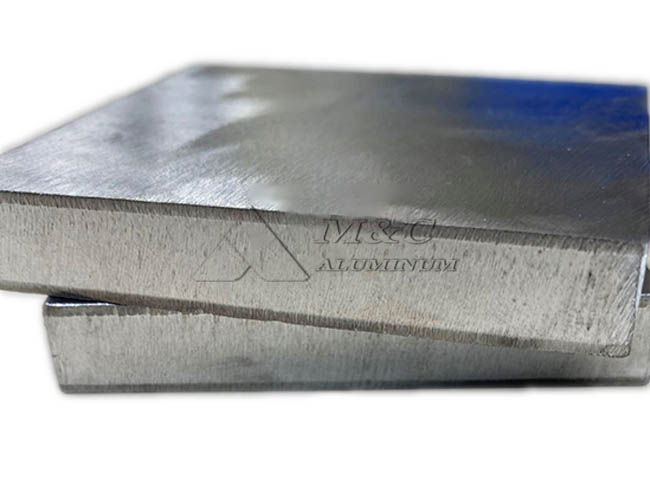
As an aluminum sheet and plate manufacturer supplying marine fabrication projects, we are often asked whether 5052 marine aluminum sheet or 6061 aluminum is the better choice for boat building, deck structures, tanks, brackets, and other marine components. Both alloys are widely used, but they are designed for different performance priorities.
5052 belongs to the 5xxx aluminum-magnesium alloy series. It is valued for seawater corrosion resistance, formability, and weldability. 6061 belongs to the 6xxx aluminum-magnesium-silicon alloy series. It is heat treatable and offers higher strength in T6 temper, with good machinability and structural performance.
The correct selection depends on whether the project requires superior corrosion resistance and forming, or higher mechanical strength and machining stability. In our production and technical communication with shipyards, equipment builders, and marine part fabricators, 5052 is generally preferred for formed sheet parts and corrosion exposed panels, while 6061 is selected for machined and structural parts where strength is more important.
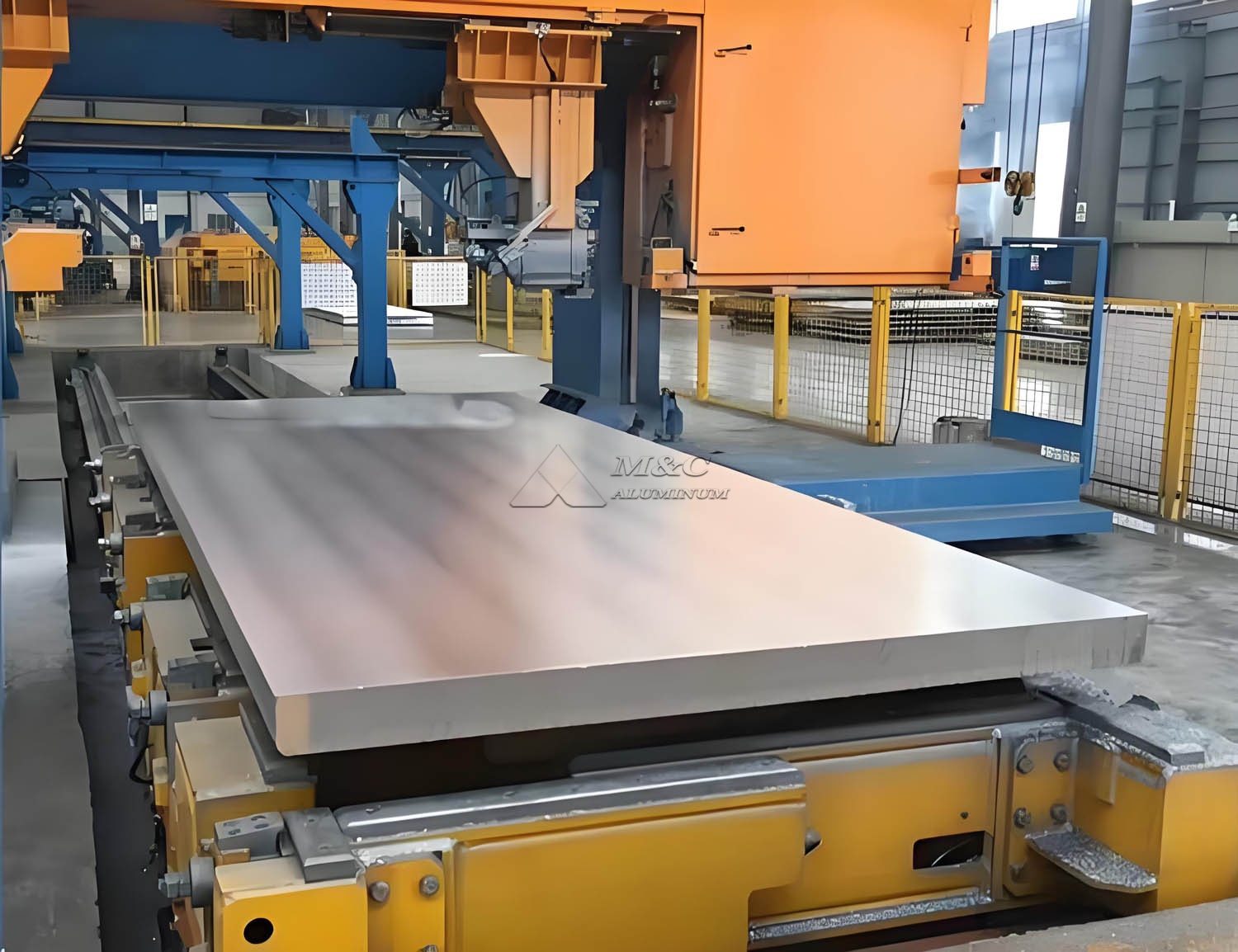
Basic Alloy Positioning
5052 marine aluminum sheet is a non-heat-treatable alloy. Its strength is improved mainly by cold working, and common marine tempers include H32, H34, and H36. The alloy contains magnesium as its main strengthening element, which gives it excellent resistance to saltwater and humid marine atmospheres.
6061 marine aluminum is a heat-treatable alloy. It can reach significantly higher strength after solution heat treatment and artificial aging, especially in T6 temper. Its main alloying elements are magnesium and silicon, forming Mg2Si strengthening phase. 6061 is often produced as plate, sheet, bar, extrusion, and profile products.
For buyers comparing 5052 marine aluminum sheet vs 6061, the key point is not which alloy is universally better. The key point is matching the alloy to the service condition, fabrication method, and inspection requirements.
Chemical Composition Comparison
The chemical composition determines the alloy family and influences corrosion resistance, weld behavior, and mechanical properties. The following values are typical ranges based on common international standards. Final supply values should be confirmed according to the required standard, such as ASTM B209, EN 485, or customer specification.
| Element | 5052 Aluminum, Typical Range | 6061 Aluminum, Typical Range | Influence |
|---|---|---|---|
| Magnesium, Mg | 2.2 to 2.8 percent | 0.8 to 1.2 percent | Strengthening and corrosion resistance |
| Silicon, Si | 0.25 percent max | 0.4 to 0.8 percent | Heat-treatable strengthening in 6061 |
| Chromium, Cr | 0.15 to 0.35 percent | 0.04 to 0.35 percent | Grain control and corrosion performance |
| Copper, Cu | 0.10 percent max | 0.15 to 0.40 percent | Improves strength but may reduce corrosion resistance |
| Manganese, Mn | 0.10 percent max | 0.15 percent max | Strength and workability control |
| Aluminum, Al | Balance | Balance | Base metal |
From a marine corrosion perspective, 5052 has an advantage because of its magnesium-rich 5xxx composition and lower copper content. 6061 contains more silicon and copper, which contributes to strength but requires more attention when used in direct seawater exposure.
Mechanical Properties
Mechanical properties vary with thickness, temper, and production standard. The table below shows typical reference values for commonly used tempers. These figures are for engineering comparison only. As a factory, we provide mill test certificates for actual delivered batches according to the purchase specification.
| Alloy and Temper | Tensile Strength | Yield Strength | Elongation | Hardness | Typical Form |
|---|---|---|---|---|---|
| 5052-H32 | 210 to 260 MPa | 130 to 180 MPa | 8 to 12 percent | About 60 HB | Sheet, coil, plate |
| 5052-H34 | 230 to 280 MPa | 160 to 210 MPa | 6 to 10 percent | About 68 HB | Sheet and plate |
| 6061-T6 | 290 to 330 MPa | 240 to 280 MPa | 8 to 12 percent | About 95 HB | Plate, sheet, extrusion |
| 6061-O | 120 to 150 MPa | 55 to 80 MPa | 16 to 25 percent | About 30 HB | Forming stock |
6061-T6 is clearly stronger than 5052-H32 or 5052-H34. If the part is a load-bearing bracket, machined fitting, rail component, or structural support, 6061 can be more suitable. However, if the part must be bent, pressed, rolled, or exposed to splash zones for a long period, 5052 marine grade aluminum sheet often provides better overall reliability.
Corrosion Resistance in Marine Environments
Marine aluminum must resist saltwater, condensation, industrial atmosphere, and galvanic interaction with other metals. In this aspect, 5052 is one of the most widely used aluminum sheet alloys for marine and coastal applications.
5052 has excellent resistance to seawater corrosion and atmospheric corrosion. It is commonly used for boat hull panels, cabin panels, pontoon structures, fuel tanks, gangways, and non-slip deck plates. For customers requiring stable corrosion performance in sheet form, our 5052 Marine aluminum production is commonly supplied in H32 and H34 tempers with controlled surface quality and dimensional tolerances.
6061 also has good corrosion resistance in general environments, but in severe marine conditions it normally requires careful surface protection, anodizing, coating, or isolation from dissimilar metals. If 6061 is used for marine hardware, attention should be paid to fastener materials, joint design, drainage, and coating maintenance.
In simple terms, 5052 is more corrosion focused, while 6061 is more strength focused.
Weldability and Post-Weld Performance
Welding is a major factor in boat building and marine equipment fabrication. 5052 has excellent weldability and maintains good corrosion resistance after welding. It can be welded by MIG, TIG, and resistance welding methods. Common filler metals include 5356, depending on the required corrosion resistance, color matching after anodizing, and strength.
6061 can also be welded, but the heat affected zone loses part of the T6 strength during welding. The welded area may show significantly lower mechanical properties unless post-weld heat treatment is performed, which is often not practical for large marine structures. For this reason, 6061-T6 is frequently used for bolted, machined, or extruded components rather than heavily welded hull structures.
When a marine assembly contains extensive welding seams, 5052 is usually easier to control in production. When the design uses precision machining, threaded holes, or bolted frames, 6061 can be an efficient option.
Formability and Fabrication Performance
5052 marine aluminum sheet has better formability than 6061-T6. It can be bent, rolled, deep drawn, and pressed more easily, particularly in H32 or softer tempers. This makes it suitable for curved panels, formed tanks, ventilation covers, instrument boxes, and cabin interior panels.
6061-T6 has limited formability compared with 5052. It can be bent, but a larger bending radius is recommended to avoid cracking. For severe forming, 6061-O may be used first and then heat treated, but this increases processing complexity and cost.
From a factory production viewpoint, the alloy selection must consider not only the final strength but also the forming route. If a customer submits drawings with tight bends and multiple forming steps, we usually review whether 5052-H32, 5052-H34, or another 5xxx alloy is more appropriate than 6061-T6.
Machinability and Surface Treatment
6061 has better machinability than 5052. It produces cleaner chips, holds threads better, and is widely used for CNC machined marine parts. Typical applications include flanges, fittings, mounting plates, frames, brackets, and equipment bases. Our 6061 Marine Aluminum products are often selected when customers need plate flatness, stable thickness tolerance, and machining performance.
5052 can be machined, but it is softer and more ductile, so tool selection and cutting parameters should be controlled to avoid built-up edge. It is not usually the first choice for precision machined parts with fine threads or tight dimensional tolerance.
Both alloys can be anodized, painted, brushed, or coated. 6061 generally provides a more uniform anodized appearance. 5052 can also be anodized, but color uniformity may vary depending on surface condition, temper, and processing method. For painted marine panels, surface cleaning, conversion coating, and proper primer selection are important for both alloys.
Typical Marine Applications
The following table summarizes common application choices for 5052 marine aluminum sheet vs 6061 aluminum.
| Application | Recommended Alloy | Reason |
|---|---|---|
| Boat hull side panels | 5052 | Better seawater corrosion resistance and formability |
| Cabin wall panels | 5052 | Good surface quality and easy forming |
| Fuel tanks and water tanks | 5052 | Weldability and corrosion resistance |
| Non-slip deck plates | 5052 | Good durability in wet conditions |
| CNC machined brackets | 6061 | Higher strength and better machinability |
| Marine equipment bases | 6061 | Good stiffness and structural strength |
| Bolted frames and supports | 6061 | Better mechanical performance in T6 temper |
| Welded hull structures | 5052 or higher 5xxx alloys | More stable weld performance |
For more demanding hull and offshore structures, shipyards may also evaluate 5083, 5086, or 5754 depending on the classification requirement, thickness, strength level, and service environment. 5052 and 6061 remain important choices, but they should be selected within a complete design framework.
Thickness, Size, and Supply Considerations
As a manufacturer, we produce marine aluminum sheet and plate based on required alloy, temper, thickness, width, length, surface finish, and packing method. Common 5052 marine aluminum sheet thicknesses include 1.0 mm to 6.0 mm for sheet applications, and thicker plates can be supplied according to project requirements. 6061 plate is often supplied in medium and thick gauges for machining and structural components.
Key purchasing parameters should include:
| Parameter | Recommended Information to Confirm |
|---|---|
| Alloy | 5052 or 6061, with standard designation |
| Temper | H32, H34, H36, O, T6, T651, or other required temper |
| Thickness tolerance | According to ASTM, EN, GB, or project specification |
| Width and length | Standard size or cut-to-size requirement |
| Surface | Mill finish, film protected, brushed, anodized, or coated |
| Inspection | Mill test certificate, ultrasonic testing if required, surface inspection |
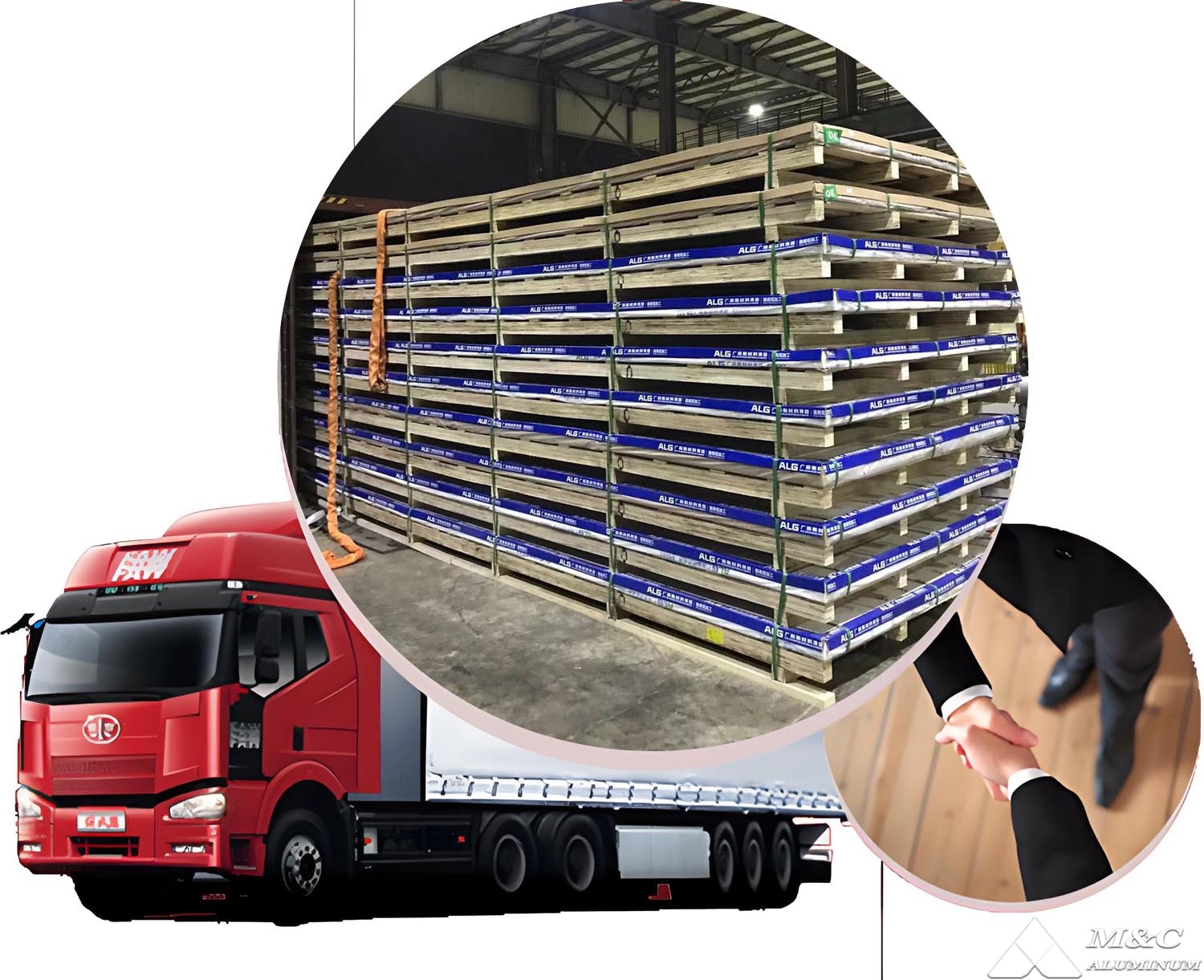
| Packing | Export seaworthy wooden pallet, moisture protection, edge protection |
Before production, we recommend confirming drawings, forming process, welding method, surface treatment, and end-use environment. This allows the factory to select proper production control points and reduce material mismatch risk.
Cost and Availability
In many markets, 5052 marine aluminum sheet is cost effective for general marine sheet applications. It is widely available, easy to fabricate, and suitable for large-area panels. 6061-T6 may cost more depending on plate thickness, heat treatment, flatness requirements, and machining allowance. However, it may reduce downstream processing cost when high strength and machining accuracy are required.
The lowest material price is not always the best engineering choice. If 6061 is used where extensive forming is required, cracking or rework may increase total cost. If 5052 is used where high thread strength or high rigidity is required, the part may need redesign or increased thickness. A correct material selection reduces fabrication risk and improves long-term service performance.
How We Recommend Selecting Between 5052 and 6061
For most marine sheet metal parts, we recommend starting the selection with service environment and fabrication process.
Choose 5052 marine aluminum sheet when the part requires excellent saltwater corrosion resistance, good bending performance, welding stability, and reliable sheet fabrication. It is suitable for panels, tanks, covers, decks, enclosures, and formed marine components.
Choose 6061 aluminum when the part requires higher strength, better machinability, stable structural performance, and bolted or CNC-machined features. It is suitable for brackets, frames, machined bases, fittings, and support members, especially when surface protection is properly designed.
If a component is both highly welded and highly loaded in a harsh marine environment, a stronger 5xxx marine alloy may also be reviewed. Our engineering communication process normally evaluates drawings, load condition, welding ratio, and corrosion exposure before confirming the final alloy.
Conclusion
5052 marine aluminum sheet and 6061 aluminum are both valuable materials, but they are not interchangeable in all marine applications. 5052 provides better corrosion resistance, weldability, and formability, making it a practical choice for boat panels, tanks, deck plates, and formed marine sheet parts. 6061 provides higher strength, better machinability, and good structural performance, making it suitable for machined fittings, frames, brackets, and equipment supports.
From a manufacturing perspective, the best choice is determined by corrosion exposure, mechanical load, forming method, welding process, and surface treatment. By confirming these factors before production, buyers can select the right marine grade aluminum sheet or plate and achieve more stable fabrication and service performance.