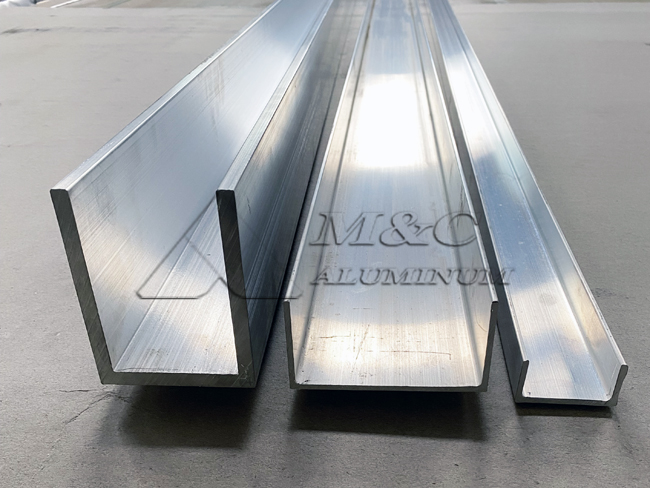
As a manufacturer of extruded aluminum products, we produce 6082-T6 aluminum flat bar for structural, transportation, machining, marine, and industrial engineering applications. EN AW-6082 is a heat-treatable aluminum alloy in the 6000 series, recognized for its combination of medium-to-high strength, corrosion resistance, weldability, and machining performance.
Our 6082-T6 aluminum flat bars are manufactured from controlled alloy billets, extruded to specified rectangular sections, solution heat treated, quenched, and artificially aged to the T6 temper. This process enables us to provide stable mechanical properties and reliable dimensional consistency for customers requiring material for fabricated components, machined parts, frames, supports, and load-bearing assemblies.
What Is 6082-T6 Aluminum Flat Bar?
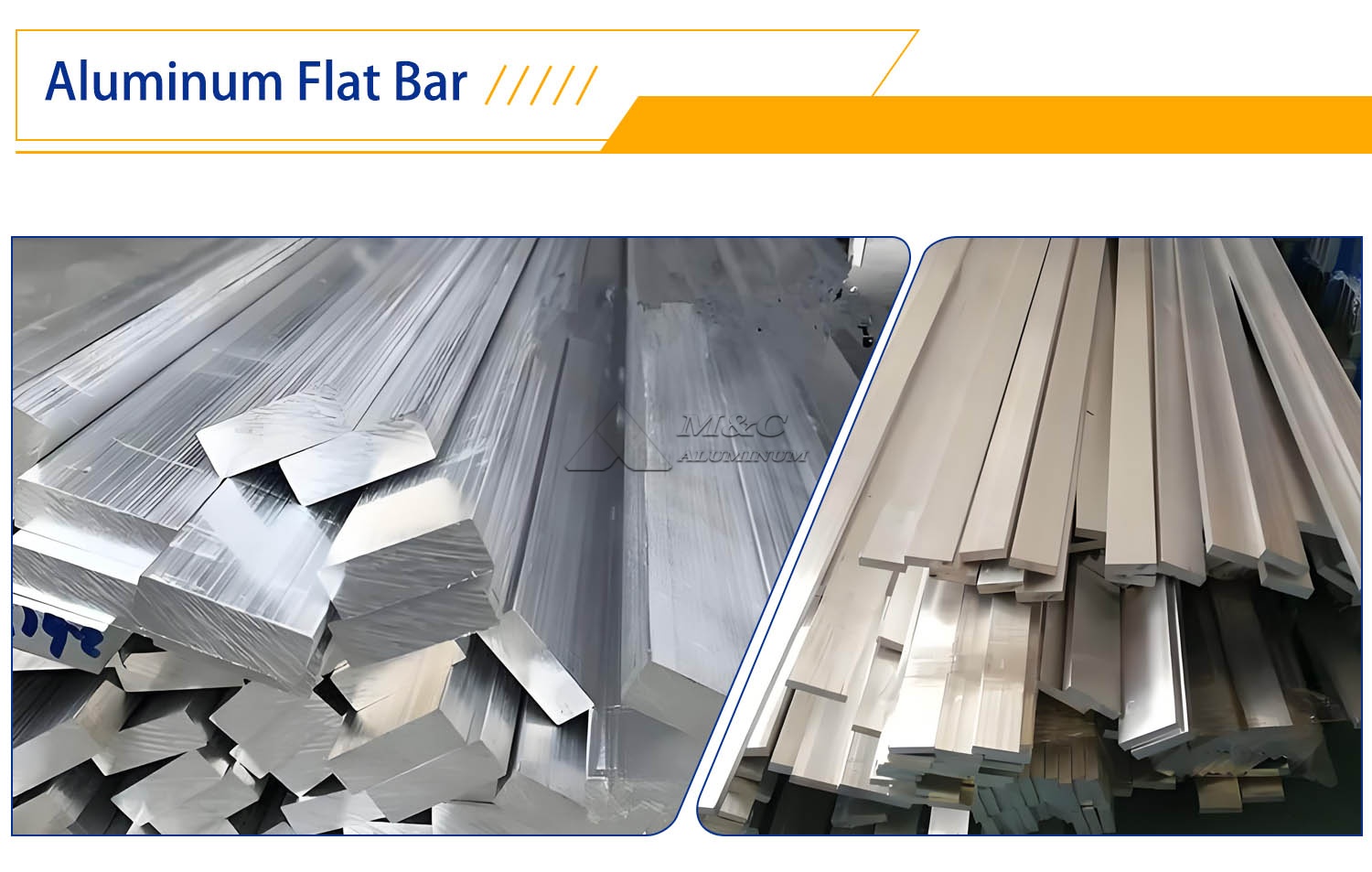
6082 aluminum flat bar is a rectangular aluminum extrusion made from EN AW-6082 alloy. The T6 temper indicates that the material has been solution heat treated and artificially aged to develop its specified strength level. Compared with non-heat-treatable aluminum alloys, 6082-T6 offers significantly improved yield strength and is therefore widely selected for engineering applications where weight reduction and structural performance are both important.
The alloy contains magnesium and silicon as its principal alloying elements, with manganese added to improve strength and control grain structure. This chemistry gives 6082 aluminum bar good resistance to atmospheric corrosion, freshwater exposure, and many industrial environments. It is commonly used as an alternative to 6061 where higher strength or European EN alloy specification compliance is required.
As a 6082 aluminum bar manufacturer, we supply flat bars in standard and custom dimensions, with cut lengths and inspection documentation matched to project requirements.
Chemical Composition of EN AW-6082
Our production chemistry is controlled in accordance with applicable EN AW-6082 composition requirements. Each production batch can be verified through spectrometer analysis and documented in the mill test certificate.
| Element | Typical Specified Range, % by Weight |
|---|---|
| Silicon, Si | 0.70-1.30 |
| Iron, Fe | 0.50 max. |
| Copper, Cu | 0.10 max. |
| Manganese, Mn | 0.40-1.00 |
| Magnesium, Mg | 0.60-1.20 |
| Chromium, Cr | 0.25 max. |
| Zinc, Zn | 0.20 max. |
| Titanium, Ti | 0.10 max. |
| Other elements, each | 0.05 max. |
| Other elements, total | 0.15 max. |
| Aluminum, Al | Balance |
The magnesium-silicon system permits precipitation hardening after solution treatment and artificial aging. Manganese contributes to the alloy's structural capability and makes 6082-T6 aluminum flat bar suitable for applications requiring dependable mechanical performance.
Mechanical Properties of 6082-T6 Flat Bar
Mechanical values depend on the bar cross-section, extrusion ratio, tempering condition, and applicable standard. The values below are representative for commonly produced 6082-T6 extruded flat bars. Project specifications should always define the governing standard, dimensions, and required test conditions.
| Property | Typical Value or Requirement |
|---|---|
| Temper | T6, solution heat treated and artificially aged |
| Tensile strength, Rm | 295-340 MPa |
| Yield strength, Rp0.2 | 240-260 MPa min., depending on section size |
| Elongation, A | 6-10%, depending on section size |
| Hardness | Approximately 95 HBW |
| Density | 2.70 g/cm3 |
| Elastic modulus | Approximately 69 GPa |
| Melting range | Approximately 555-650 degrees C |
| Thermal conductivity | Approximately 170 W/m.K |
| Electrical conductivity | Approximately 42% IACS |
These properties allow a high strength aluminum flat bar to reduce component weight compared with steel while retaining useful stiffness and fabrication capability. For designs involving cyclic loading, bending, or welding, engineers should evaluate the complete assembly and account for local effects caused by fabrication operations.
Manufacturing Process and Quality Control
We manufacture 6082-T6 aluminum flat bar through a controlled extrusion and heat-treatment route. Production begins with qualified 6082 alloy billets. Billets are homogenized as required, heated to the correct extrusion temperature, and pressed through precision dies to form the required flat bar profile.
After extrusion, the bars are cooled under controlled conditions, stretched where necessary to improve straightness, and cut to commercial or customer-specified lengths. The material is then solution heat treated and artificially aged to achieve the T6 condition. This sequence is essential because the strength of 6082-T6 is developed by controlled precipitation during aging.
Our routine inspection procedures may include:
Chemical composition verification by spectrometer.
Dimensional inspection for thickness, width, length, and straightness.
Surface inspection for extrusion defects, dents, scratches, and handling marks.
Tensile testing according to the applicable material standard.
Hardness verification when required by the customer specification.
Lot identification and traceability throughout production and packing.
Mill test certificate issuance for chemical and mechanical properties.
For applications requiring closer dimensional control, we can review drawings and define tolerances before production. Our manufacturing team also evaluates feasibility for special cross-sections, machining allowances, and cut-to-length requirements.
Available Sizes and Supply Conditions
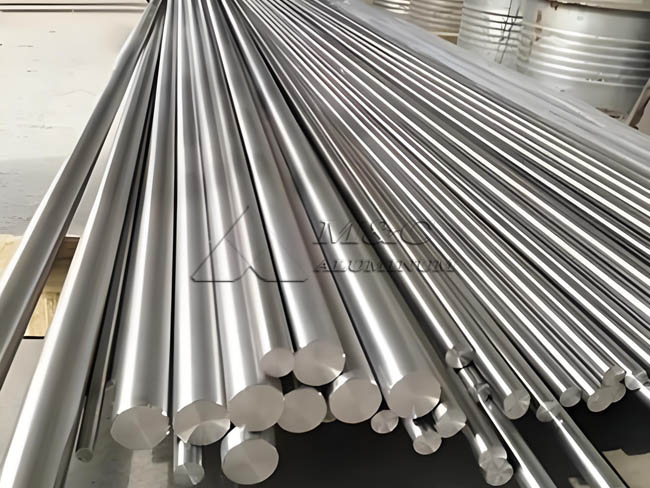
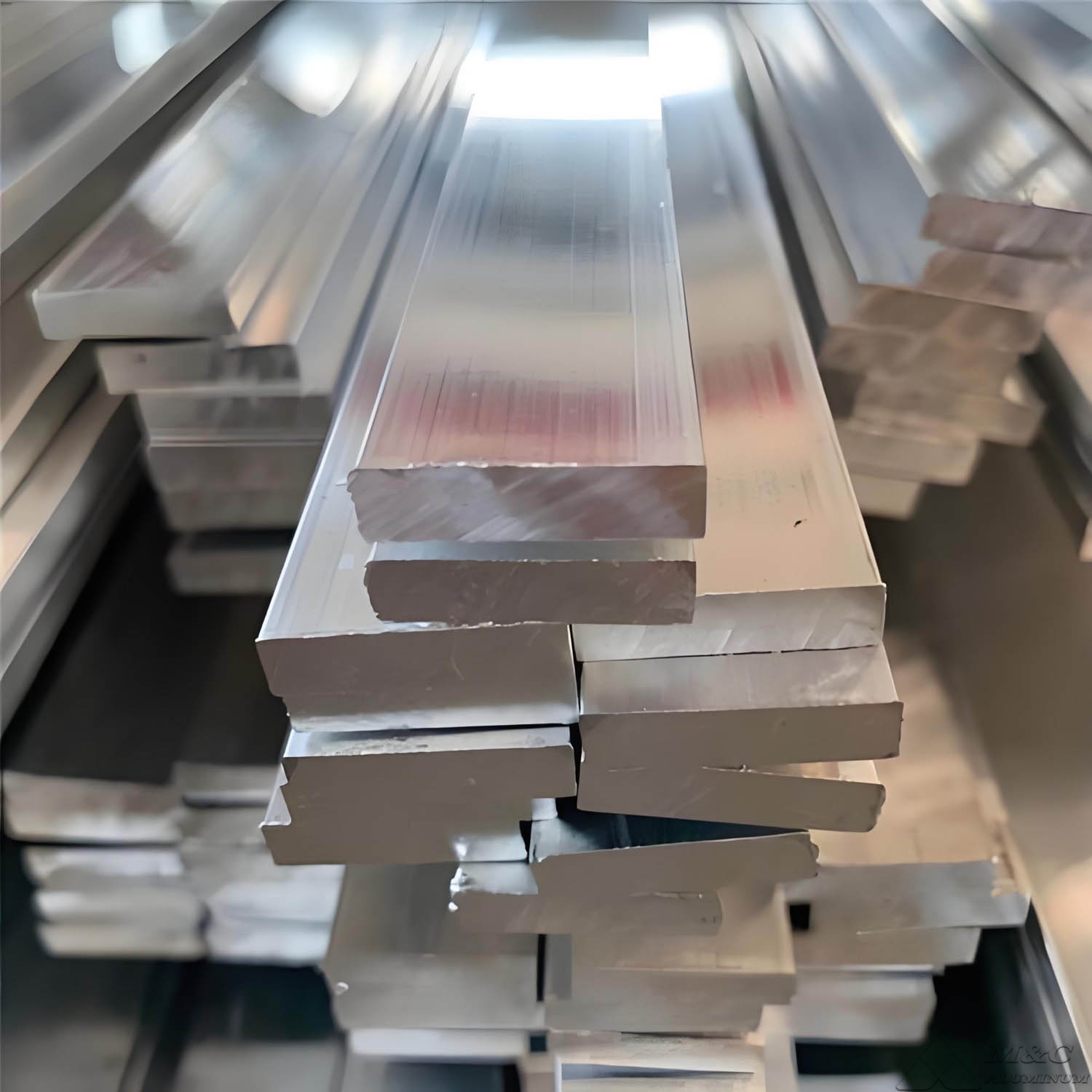
We manufacture 6082 T6 extruded bar in a broad range of rectangular dimensions. Standard stock-oriented dimensions can be produced efficiently, while custom widths and thicknesses can be arranged according to extrusion feasibility and order quantity.
| Parameter | Available Supply Options |
|---|---|
| Thickness | Commonly 3 mm to 100 mm, subject to profile design |
| Width | Commonly 10 mm to 300 mm, subject to section ratio |
| Length | Standard mill lengths or customer cut lengths |
| Temper | T6 as standard; other tempers on request |
| Surface | Mill finish, brushed, polished, anodized, or coated on request |
| Edge condition | Extruded edge, deburred edge, or machined edge |
| Cutting | Saw cut, precision cut, or machining allowance supply |
| Documentation | Mill test certificate, dimensional report, packing list |
| Packaging | Protective film, paper interleaving, bundled, palletized, or export crate |
Thickness-to-width ratio affects extrusion behavior, straightness, and tolerance capability. For this reason, we recommend providing the intended application, final machining requirements, and dimensional drawing when requesting a quotation for custom 6082 aluminum flat bar.
Surface Finish and Machining Performance
Mill finish is the standard condition for extruded 6082-T6 aluminum flat bar. It is suitable for many machined and fabricated components. Where appearance, corrosion protection, or identification is important, we can arrange further processing such as brushing, polishing, anodizing, powder coating, or protective film application.
6082-T6 has good machinability and produces clean chips under appropriate cutting conditions. It is frequently used for CNC-machined brackets, base plates, tooling fixtures, machine components, and structural connectors. Because the T6 temper has higher hardness than softer aluminum conditions, tooling selection, cutting speed, lubrication, and clamping should be adjusted for the specific component geometry.
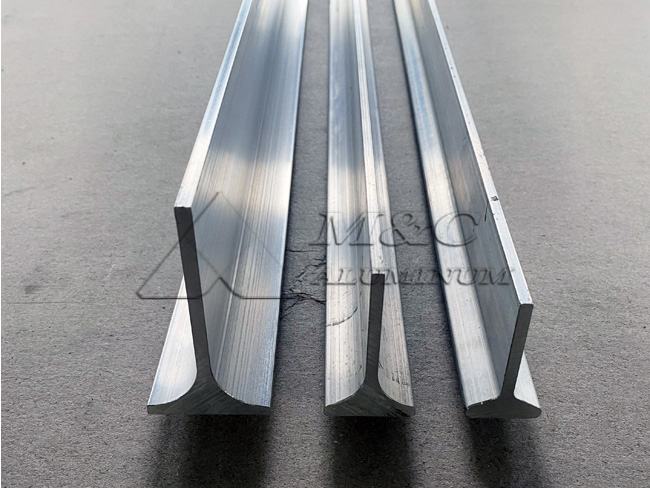
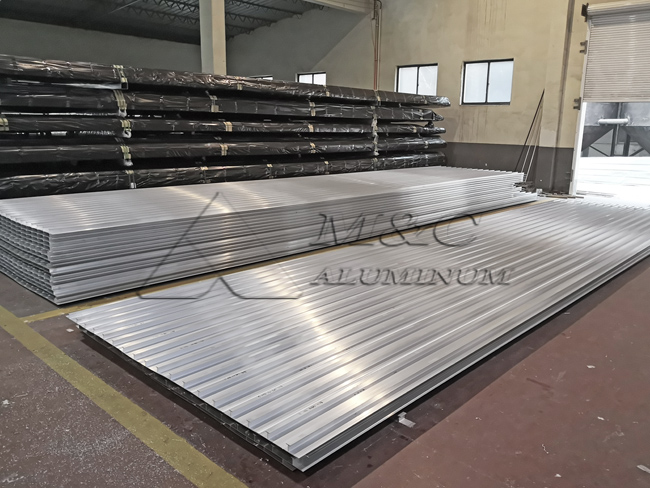
For customers sourcing several aluminum product forms for one assembly, our Flat Aluminum range can support matching requirements for flat material supplied in related specifications.
Welding and Fabrication Considerations
6082-T6 aluminum flat bar has good weldability with suitable processes such as TIG and MIG welding. However, engineers should recognize that the heat-affected zone adjacent to a weld can lose part of its T6 strength. This is a normal characteristic of precipitation-hardened aluminum alloys and should be considered in structural calculations.
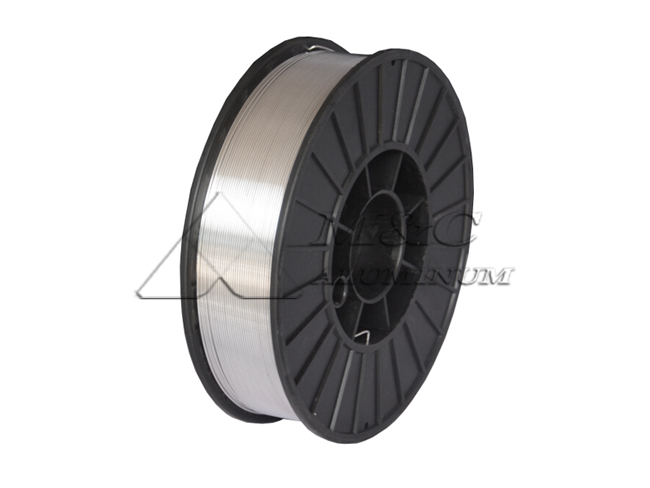
Compatible filler selection depends on the service environment, base material combination, and required weld properties. For welding fabrication programs, we can also support material coordination with Aluminum welding wire grades suitable for aluminum alloy joining.
Mechanical fastening, bending, drilling, tapping, and CNC milling are also common fabrication methods. When bending is required, the bend radius should be selected carefully because T6 material has reduced formability compared with annealed or softer tempers. In some cases, forming before final heat treatment may be more suitable.
Typical Applications
Due to its strength-to-weight ratio and corrosion resistance, 6082-T6 aluminum flat bar is used across industrial sectors where conventional steel sections may increase total weight or create corrosion maintenance concerns.
Typical applications include:
Structural frames, supports, and mounting rails.
Transport vehicle bodies, trailers, and railway components.
Marine fittings, deck structures, and non-submerged support parts.
Machine bases, jigs, fixtures, and automation equipment.
CNC-machined engineering components and connection plates.
Renewable energy support structures and equipment housings.
Scaffolding, access platforms, and material-handling equipment.
Architectural support elements and industrial installations.
Although 6082 offers good general corrosion resistance, alloy selection should be confirmed for severe marine immersion, strongly alkaline exposure, or galvanic contact conditions. Proper drainage, isolation from dissimilar metals, and suitable surface protection can improve long-term service performance.
Why Specify Factory-Manufactured 6082-T6 Flat Bar?
Direct factory production provides greater control over the material chain from billet selection through extrusion, heat treatment, inspection, and export packing. This is particularly important for B2B buyers who require consistent properties across repeated orders, documented traceability, and dimensional conformity for downstream machining or fabrication.
When specifying 6082-T6 aluminum flat bar, customers should state the applicable standard, temper, cross-section dimensions, length, tolerances, surface condition, quantity, certification requirement, and intended end use. Clear technical input allows us to select a suitable production route and provide material that is aligned with the engineering requirement.
Our 6082-T6 aluminum flat bar manufacturing program is designed to provide stable quality, practical customization, and reliable documentation for industrial buyers worldwide.