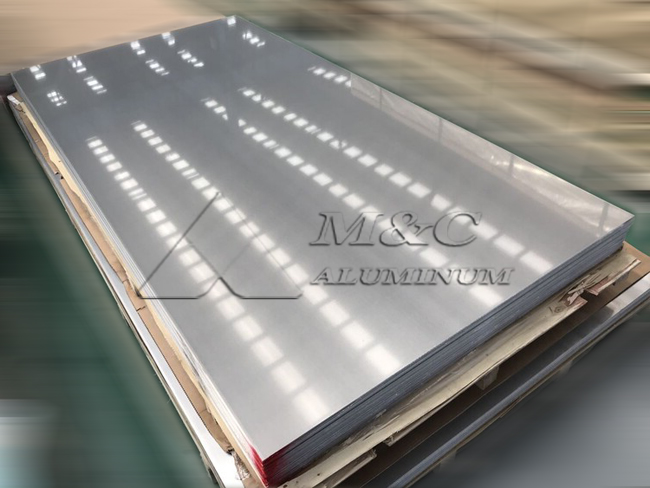
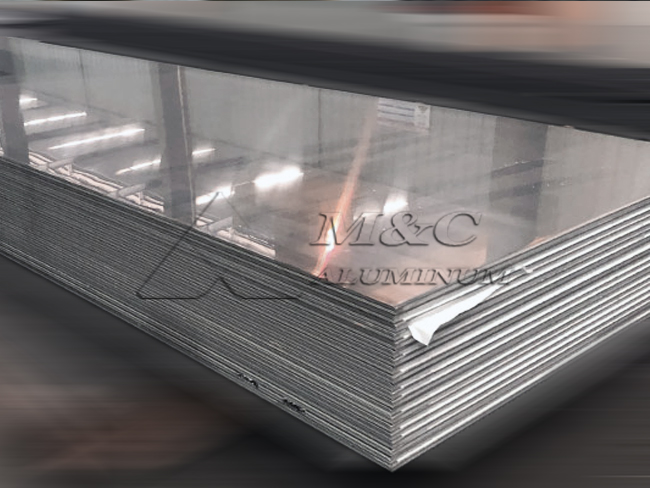
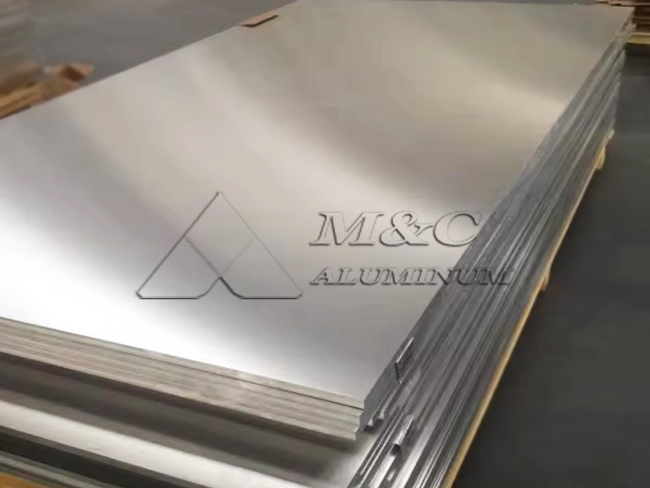
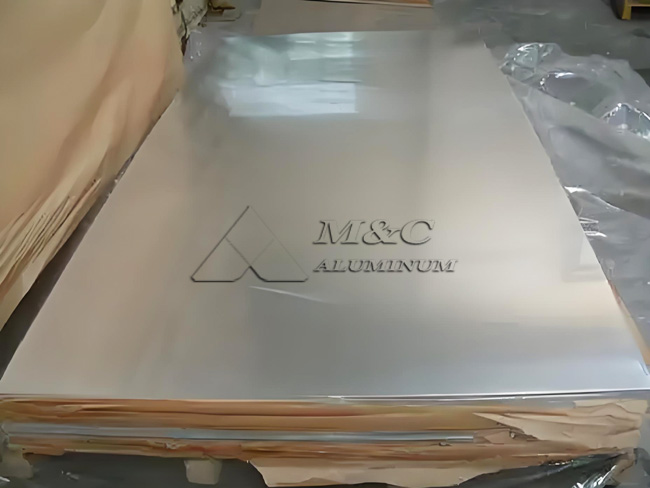
In modern shipbuilding and marine engineering, the safety, corrosion resistance, and structural strength of deck materials are critically important. With the increasing application of aluminum alloys in the shipbuilding industry, 6061 anti-slip aluminum checker plate (6061 Aluminum Checker Plate / Tread Plate) has gradually become an important material for ship decks, boat platforms, and offshore equipment.
6061 aluminum alloy belongs to the Al-Mg-Si series (6000 series) alloys, with magnesium (Mg) and silicon (Si) as its primary alloying elements. After heat treatment, it can achieve significant strengthening. 6061 marine aluminum offers excellent strength, corrosion resistance, and good machinability. Meanwhile, the embossed surface pattern greatly improves anti-slip performance, ensuring safety even in wet, oily, or marine environments.
The 6061 marine-grade checker plates produced by MC Aluminum are certified by major international classification societies, including ABS (American Bureau of Shipping), BV (Bureau Veritas), CCS (China Classification Society), DNV (Det Norske Veritas), and LR (Lloyd’s Register), ensuring that the products meet strict shipbuilding standards.
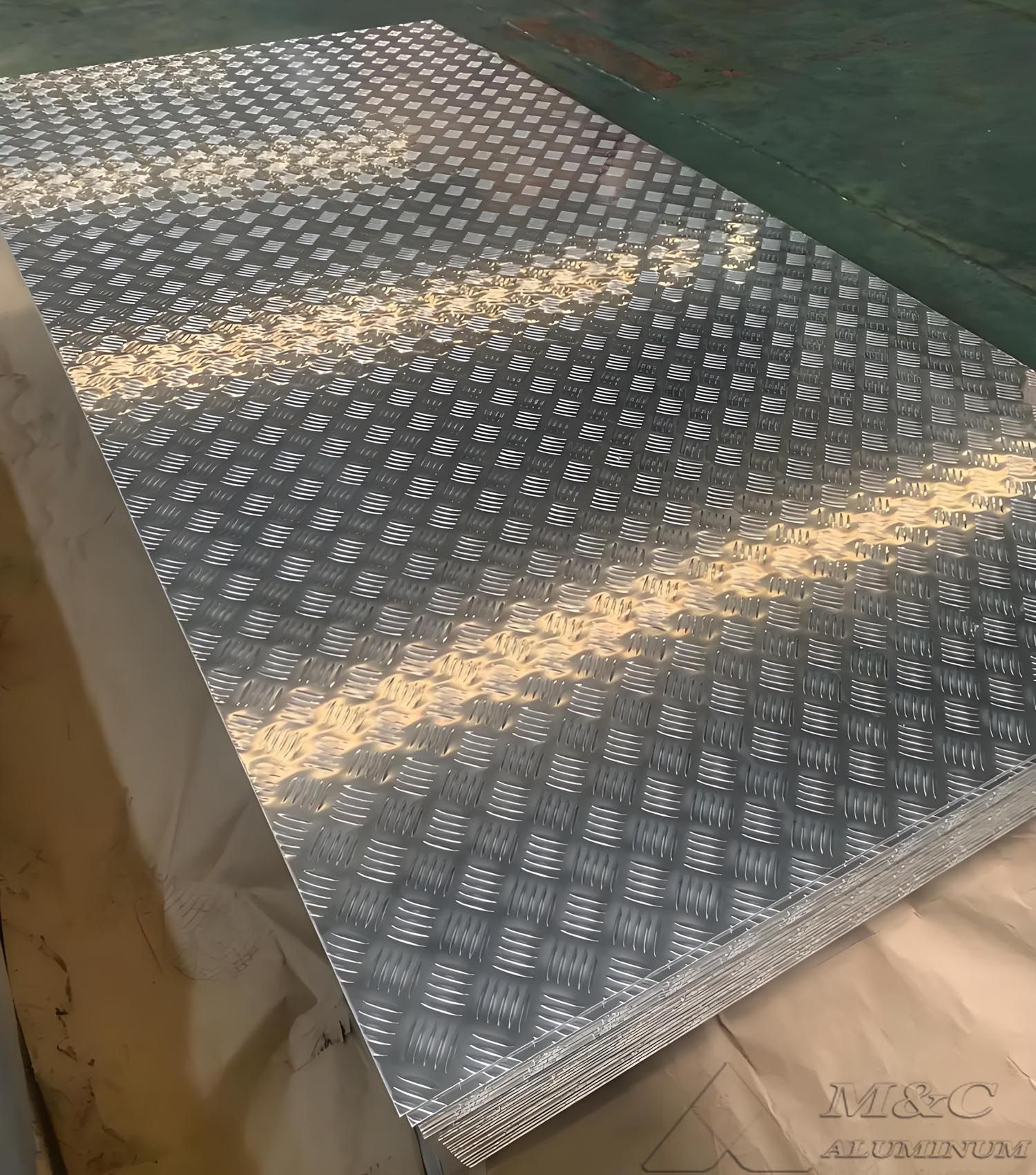
Types of Anti-Slip Patterns
Five-Bar Pattern
This pattern provides the strongest anti-slip performance. The dense and intersecting ribs create excellent traction in both longitudinal and transverse directions. It is the classic choice for high-demand applications such as ship decks, industrial platforms, and stair treads.
Three-Bar / One-Bar Pattern (Pointer or Diamond Pattern)
These patterns offer moderate anti-slip performance and are often used in decorative applications or environments where anti-slip requirements are not as demanding.
Orange Peel Pattern
The surface features small bumps resembling orange peel texture. It is mainly used in packaging, appliance housings, and decorative applications, with relatively lower anti-slip capability.
For marine deck applications, crew members often walk in wet and unstable conditions. Anti-slip performance is directly related to safety. Therefore, five-bar checker plate is the preferred solution for ship decks.
6061 Marine Checker Plate Specifications
| Alloy | 6061 Aluminum |
| Temper | T6 / T651 |
| Thickness | 2 mm – 8 mm |
| Width | 1000 mm – 2000 mm |
| Length | C |
| Pattern Types | Diamond pattern, five-bar pattern, pointer pattern |
| Certification | ABS, CCS, LR, RINA, etc. |
| MOQ | 1-3 tons |
Why Use 6061 Anti-Slip Checker Plate for Marine Decks?
| Core Advantage | Description |
| Anti-slip safety | The five-bar pattern provides excellent traction, ensuring crew safety on wet decks and reducing slip risks |
| Excellent corrosion resistance | 6061 alloy naturally forms a dense oxide film that protects against seawater, salt spray, and humid marine environments |
| High strength & lightweight | Density is only about one-third of steel; T6 temper yield strength exceeds 240 MPa, offering both durability and lightweight benefits |
| Easy fabrication & customization | Can be cut, drilled, bent, and welded, making it adaptable to different ship designs and deck structures |
| Long service life & low maintenance | Resistant to rust and corrosion, maintaining structural stability and appearance over long periods |
| Environmentally friendly & recyclable | Aluminum is fully recyclable, supporting sustainable and eco-friendly manufacturing |
Applications of 6061 Anti-Slip Aluminum Plate on Ships
Main Working Deck
Supports cargo and heavy machinery while benefiting from the alloy’s high strength and structural stability.
Engine Room Walkways
Provides essential anti-slip protection in areas where oil contamination is common.
Boarding Ladders and Gangways
The lightweight property reduces the load on lifting mechanisms and improves handling efficiency.
Offshore Platform Corridors
Ensures safety for personnel working at heights or in harsh offshore environments.
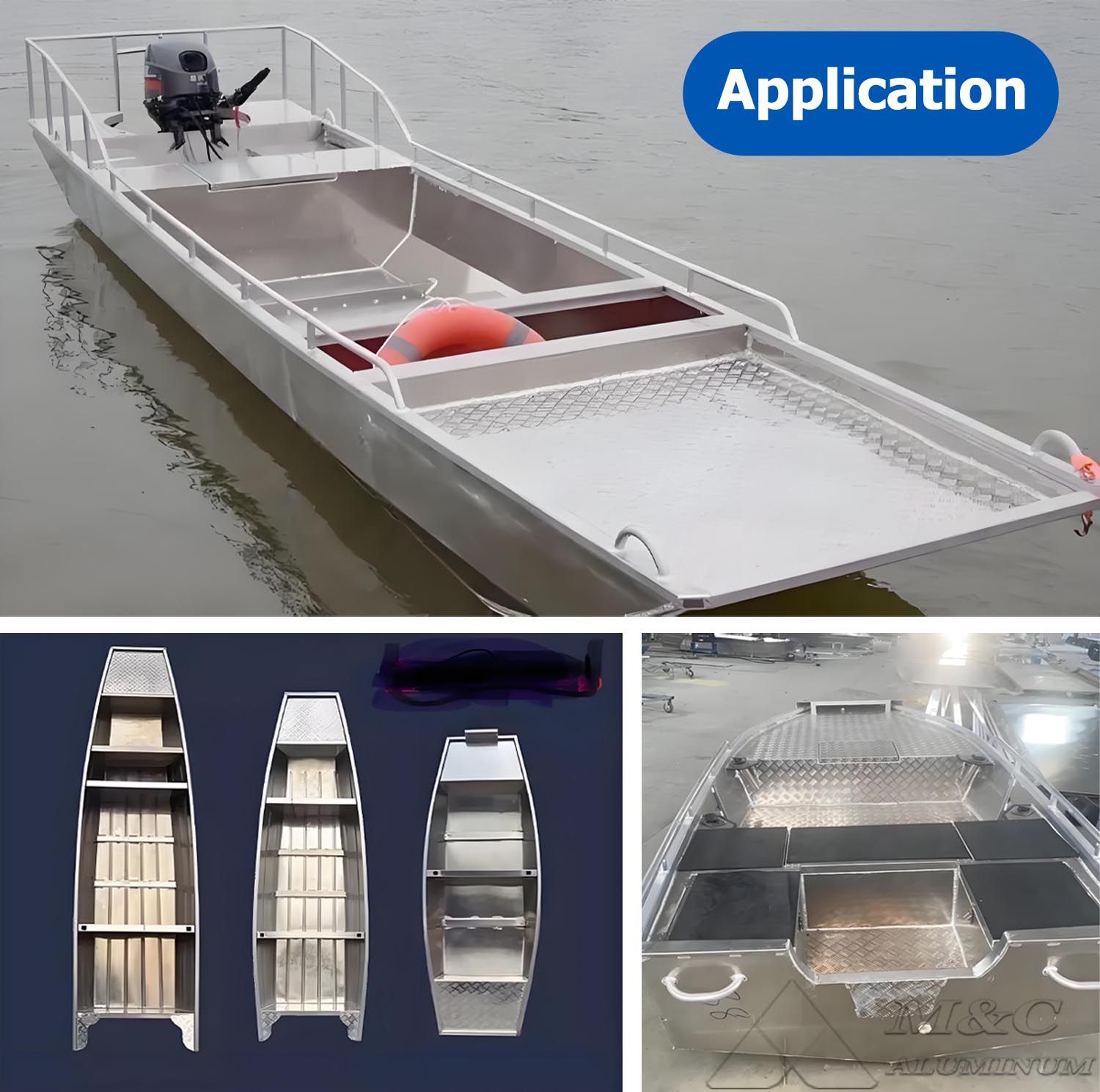
6061 vs. Other Marine Aluminum Alloys
In shipbuilding, besides 6061 aluminum, 5052 and 5083 are also widely used marine-grade alloys. Understanding their differences helps engineers choose the most suitable material.
| Alloy | Characteristics | Typical Applications |
| 5052 | Al-Mg alloy with good corrosion resistance, weldability, and cold workability; moderate strength and relatively low cost | Small boats such as yachts, fishing boats, sightseeing boats; portholes, ladders, sheet metal parts |
| 5083 | Al-Mg alloy with high magnesium content (4.0%–4.9%); excellent seawater corrosion resistance, high strength, and good weld crack resistance | Ship decks, hull sides, bottom plating, engine bases, and critical load-bearing structures |
| 6061 | Al-Mg-Si precipitation-hardening alloy with good mechanical properties, weldability, and machinability; heat-treatable | Ship fittings, hardware components, instrument supports, superstructures, and anti-slip deck flooring |
Original Source: https://www.marinealum.com/a/6061-anti-slip-aluminum-checker-plate-for-marine-decks.html
Tag: anti-slip aluminum checker plate aluminum tread plate marine checker plate 6061 checker plate 6061 marine aluminum 6061 T6 marine aluminum marine grade aluminum plate 5083 marine aluminum 6061 marine aluminum plate aluminum deck plate