As a manufacturer of aluminum flat bars for marine and industrial applications, we understand that buyers require more than a simple per-kilogram figure. The 6061-T6 marine aluminum flat bar price depends on alloy chemistry, temper condition, cross-sectional dimensions, order quantity, machining requirements, inspection standards, and delivery terms.
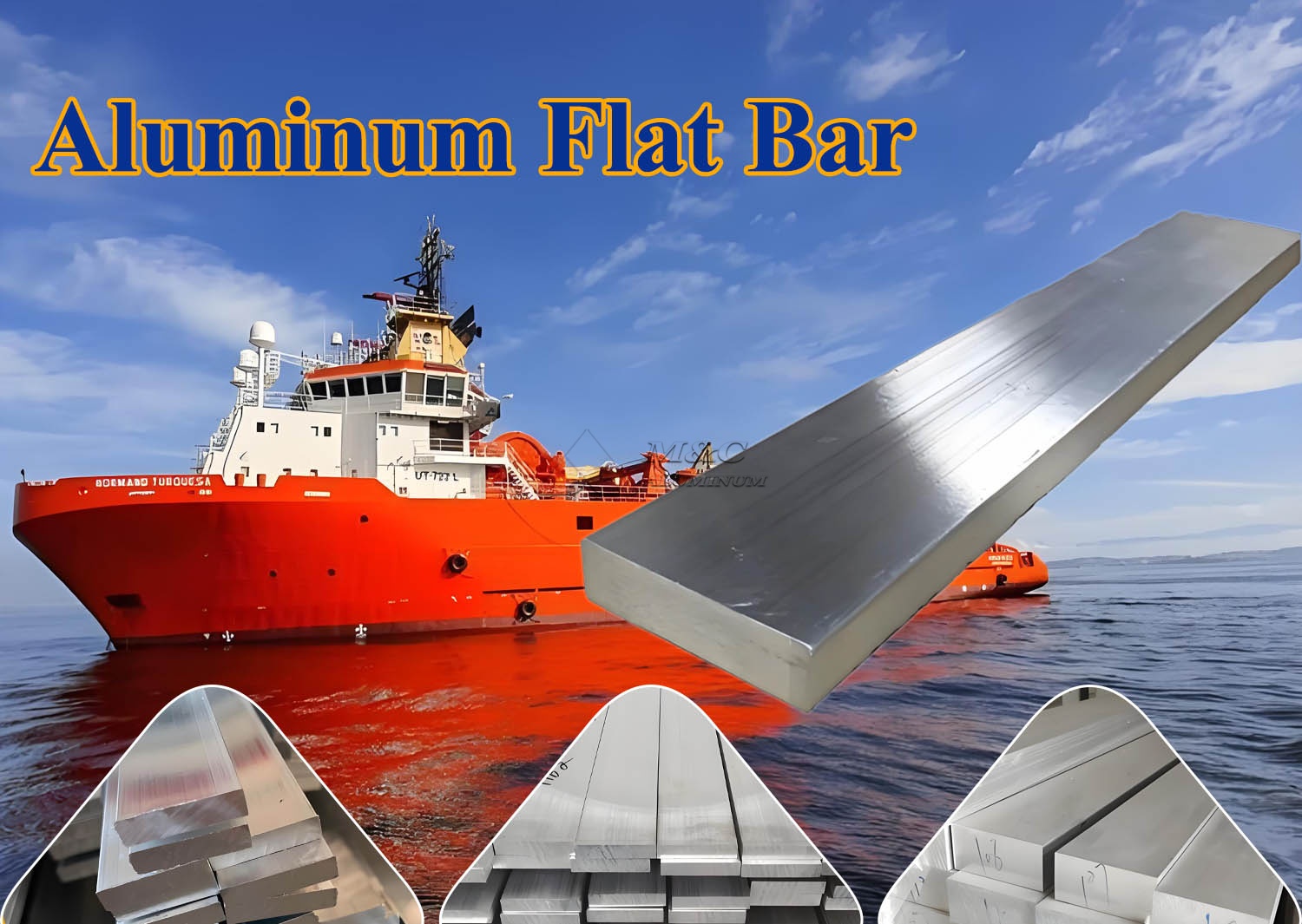
6061-T6 aluminum flat bar is widely used in marine structures, vessel equipment, gangways, support frames, platforms, ladders, rail systems, and fabricated components. Its combination of medium-to-high strength, good machinability, weldability, and corrosion resistance makes it a practical material for many engineered marine projects.
Understanding 6061-T6 Marine Aluminum Flat Bar
6061 is a heat-treatable aluminum alloy in the Al-Mg-Si series. Magnesium and silicon form Mg2Si precipitates during heat treatment, allowing the alloy to develop substantially higher strength in the T6 temper than in annealed or non-heat-treated conditions.
The T6 temper means the material has been solution heat treated and artificially aged to achieve specified mechanical properties. For marine fabricators, this temper is often selected where structural load capacity, dimensional stability, and machining performance are more important than maximum formability.
It is important to distinguish between 6061-T6 and corrosion-focused marine alloys such as 5083 or 5086. Although 6061-T6 has good atmospheric and freshwater corrosion resistance, alloy selection for continuous seawater immersion, hull plating, or highly aggressive saltwater exposure should be evaluated according to the component design and operating environment. For structural bars, fittings, brackets, and framework located above the waterline or suitably protected, 6061-T6 remains a common engineering choice.
Performance Advantages of 6061-T6 Marine-Grade Aluminum Flat Bars
1. High Strength: The T6 heat-treated condition offers excellent mechanical properties, making it suitable for high-load-bearing structures.
2. Good Corrosion Resistance: Strong resistance to seawater corrosion, suitable for long-term use in marine environments.
3. Lightweight: Density is only about one-third that of steel, helping to reduce hull weight and improve fuel efficiency.
4. Excellent Weldability: Easy to weld and fabricate, meeting the requirements for complex marine structural manufacturing.
5. Good Machinability: Easy to cut, drill, mill, and form, enhancing processing efficiency.
6. Dimensional Stability: Minimal deformation after T6 heat treatment ensures structural precision and assembly quality.
7. Long Service Life: Resistant to corrosion and fatigue with low maintenance costs; suitable for long-term marine service.
8. Wide Range of Applications: Suitable for hull frames, deck supports, cabin structures, marine equipment, and offshore engineering components.
Typical Technical Parameters
We manufacture 6061-T6 aluminum flat bars according to customer drawings, applicable ASTM standards, and agreed inspection requirements. The following values are typical reference data for standard 6061-T6 material.
| Parameter | Typical Specification |
|---|---|
| Alloy | AA 6061 |
| Temper | T6 |
| Product form | Extruded aluminum flat bar or cut flat bar |
| Density | Approximately 2.70 g/cm3 |
| Tensile strength | Approximately 290 MPa minimum, depending on thickness and standard |
| Yield strength | Approximately 240 MPa minimum, depending on thickness and standard |
| Elongation | Typically 8% to 12%, depending on section size |
| Modulus of elasticity | Approximately 69 GPa |
| Thermal conductivity | Approximately 167 W/m.K |
| Melting range | Approximately 582 C to 652 C |
| Surface condition | Mill finish, brushed, polished, anodized, or coated upon request |
| Common standards | ASTM B221, EN 755, customer technical specifications |
The final mechanical property values and tolerances must be confirmed against the applicable material standard, product size, and production route. For critical marine applications, we can provide material test certificates and additional inspection documentation as specified in the purchase order.
What Determines 6061-T6 Marine Aluminum Flat Bar Price?
The price of 6061-T6 marine aluminum flat bar is not fixed because the product is manufactured to a range of dimensions and quality requirements. As a factory, we prepare quotations based on the actual technical and commercial scope rather than using a single generic price.
1. Aluminum Ingot Market and Alloying Cost
Primary aluminum market movement is the principal cost driver. The price also reflects magnesium, silicon, alloy conversion, energy, extrusion, heat treatment, and handling. When global aluminum prices change, the base cost of 6061 aluminum flat bar normally changes accordingly.
2. Flat Bar Dimensions and Unit Weight
Thickness, width, and length directly affect extrusion feasibility, metal yield, packing method, and handling efficiency. Narrow bars with thick sections, unusually wide profiles, or non-standard lengths may involve different tooling and production costs than regular stock dimensions.
| Common Dimension Item | Typical Factory Range |
|---|---|
| Thickness | 3 mm to 100 mm or customized |
| Width | 10 mm to 300 mm or customized |
| Standard length | 3 m, 4 m, 5 m, 6 m, or customized |
| Length tolerance | According to agreed cutting requirement |
| Edge condition | Square edge, rounded edge, deburred edge, or machined edge |
| Straightness | Controlled according to product size and applicable standard |
For a reliable comparison of 6061 aluminum flat bar price, buyers should compare the net weight, finished dimensions, required tolerances, and delivery basis, not only the quoted total amount.
3. Production Quantity and Tooling Requirement
Standard-size orders generally provide better production efficiency. For customized cross sections, special corner radii, tight dimensional tolerances, or unique lengths, extrusion dies or additional setup work may be required. Larger volumes can distribute these fixed costs more effectively.
For repeat marine projects, we can retain approved tooling and production parameters to support consistent supply. This approach helps buyers maintain dimensional continuity across multiple batches.
4. Surface Treatment and Further Processing
Mill finish is the standard and most economical surface condition. However, marine projects may require extra finishing for appearance, corrosion protection, assembly, or traceability. Typical value-added processes include:
Precision saw cutting to fixed lengths.
Deburring and edge rounding.
CNC drilling, slotting, and milling.
Brushed or polished finishes.
Anodizing and powder coating.
Protective film application.
Individual wrapping and seaworthy export packing.
Each process adds labor, material, setup, inspection, and packing cost. A detailed drawing is the most effective basis for a complete factory quotation.
Factory Manufacturing Process
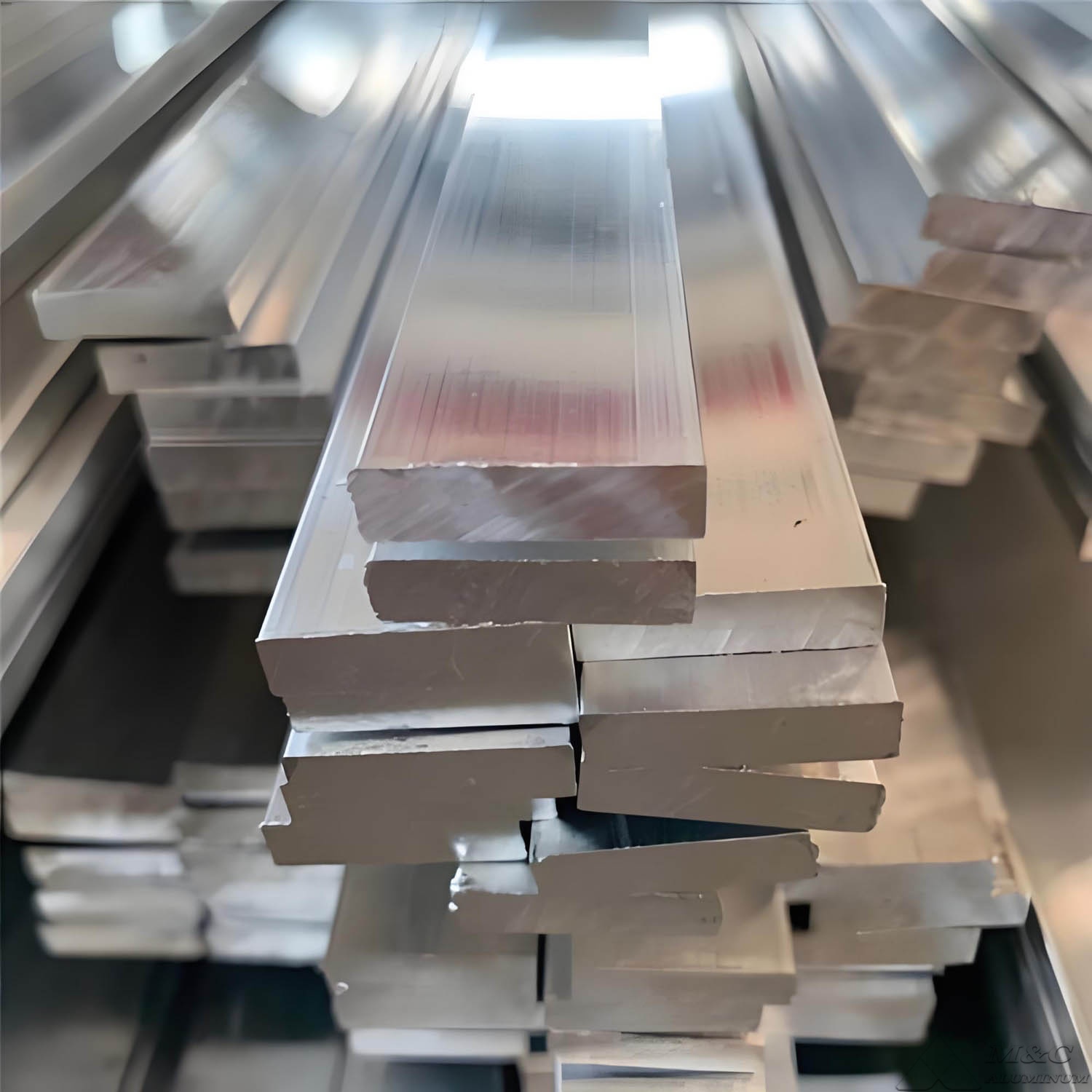
Our manufacturing process for marine aluminum flat bar begins with controlled billet selection. We verify alloy grade and chemical composition before extrusion. The billet is heated to the required temperature and extruded through a die designed for the specified flat bar section.
After extrusion, the profiles are cooled, stretched for straightness control, and cut to preliminary or finished length. The material then receives solution heat treatment and artificial aging to obtain the 6061-T6 temper. Final inspection covers dimensions, surface condition, straightness, hardness or mechanical-property verification when required, and packing quality.
For customers that need fabricated components rather than raw bar stock, our machining process can be integrated before packing. We also support projects requiring complementary Flat Aluminum products in matching alloy, temper, and surface conditions.
Corrosion Resistance in Marine Service
6061-T6 marine aluminum flat bar performs well in many marine atmospheres, particularly when good drainage, insulation, and surface maintenance practices are applied. However, no aluminum alloy should be selected without considering galvanic corrosion risk.
When aluminum flat bars contact stainless steel, carbon steel, copper-containing metals, or wet dissimilar-metal assemblies, proper isolation is recommended. Non-conductive gaskets, sealants, coatings, and controlled fastener selection can reduce galvanic corrosion exposure. Areas subject to trapped seawater, crevices, and damaged coatings should receive particular attention during design and installation.
Welding also requires engineering consideration. The heat-affected zone of 6061-T6 loses part of its T6 strength after welding. Designers should account for reduced post-weld mechanical properties in load-bearing structures. Where welding is required, compatible Aluminum welding wire should be selected according to the welding procedure, required strength, and corrosion conditions.
How to Request an Accurate Factory Quote
To receive a precise 6061-T6 marine aluminum flat bar quotation, please provide the following information:
Alloy and temper requirement, such as 6061-T6.
Thickness, width, and required bar length.
Quantity in pieces, meters, or metric tons.
Dimensional tolerances and straightness requirement.
Surface finish and processing requirements.
Required standard, such as ASTM B221 or a project specification.
Documentation requirements, including material test certificates.
Packing method and destination port.
Preferred trade term, such as EXW, FOB, CFR, or CIF.
Clear technical information allows us to calculate extrusion, heat treatment, finishing, inspection, and export packing costs accurately. It also helps avoid later differences between the quoted material and the project requirement.
Packaging and Export Delivery
Marine aluminum flat bars must be packed to prevent scratching, moisture exposure, deformation, and contamination during transport. Depending on bar length and customer preference, we use protective film, kraft paper, foam separators, bundled wrapping, wooden pallets, or reinforced export crates.
For long-length bars, pallet design and lifting points are planned to reduce bending risk during container loading and unloading. Each package can be marked with alloy, temper, size, batch number, quantity, and customer identification code for warehouse traceability.
Why Work Directly With a 6061-T6 Flat Bar Manufacturer?
Direct factory sourcing gives buyers access to the production source, technical clarification, and quality documentation needed for engineered procurement. Our team can review whether the requested size is suitable for extrusion, advise on practical tolerances, and identify opportunities to reduce unnecessary processing cost without changing the functional requirement.
A properly specified marine grade aluminum flat bar order should balance material performance, corrosion exposure, fabrication method, inspection needs, and total landed cost. By confirming these factors before production, marine contractors, shipbuilders, and industrial fabricators can obtain stable quality and more accurate price control.
Conclusion
The final 6061-T6 marine aluminum flat bar price is determined by aluminum market conditions, bar dimensions, quantity, temper, finishing, processing, certification, packing, and delivery terms. As a manufacturer, we provide quotations based on the complete project specification rather than a generic market estimate.
For a technically sound offer, submit your required flat bar dimensions, quantity, applicable standard, surface condition, and destination. We will evaluate the production route and provide a clear quotation for 6061-T6 aluminum flat bar manufactured for your marine application.
Original Source: https://www.marinealum.com/a/6061-t6-marine-aluminum-flat-bar-price.html
Tag: 6061-T6 marine aluminum flat bar 6061 aluminum flat bar marine grade aluminum flat bar aluminum flat bar manufacturer 6061-T6 flat bar supplier marine aluminum bar specifications aluminum flat bar factory 6061 marine aluminum