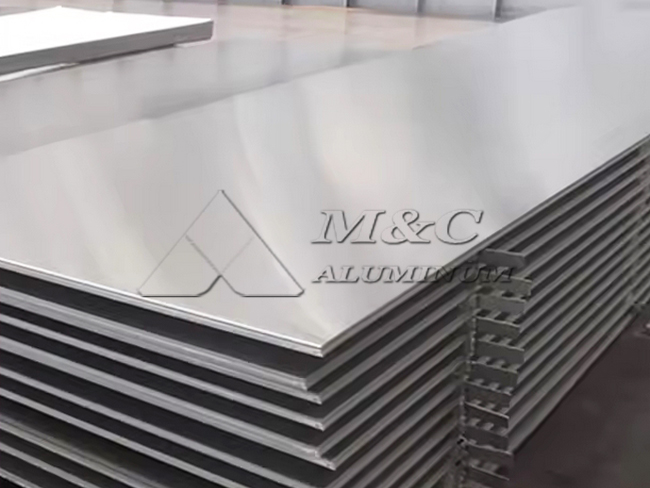
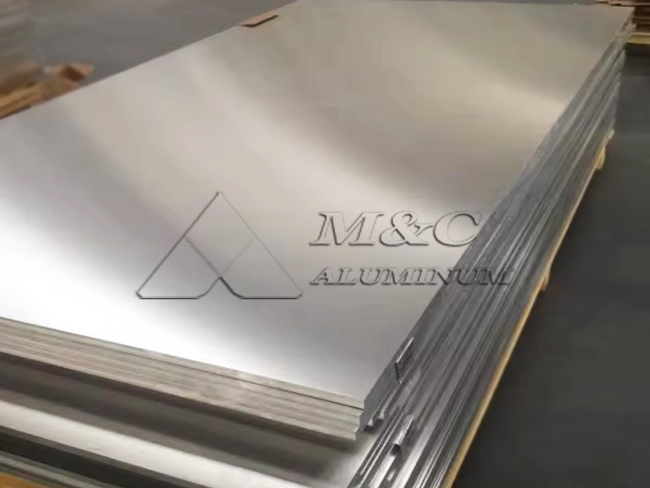
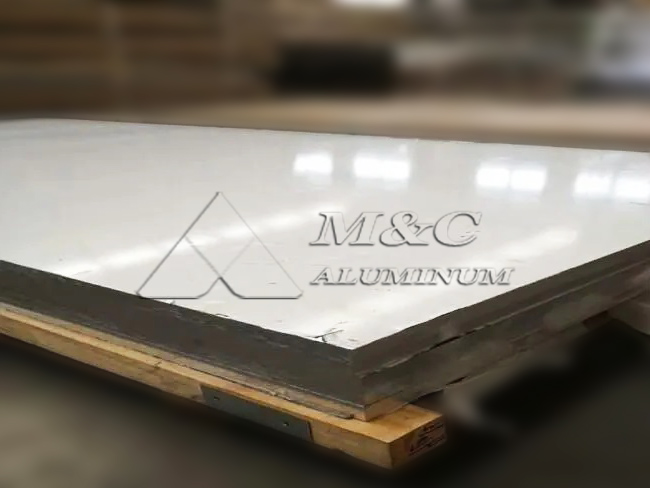
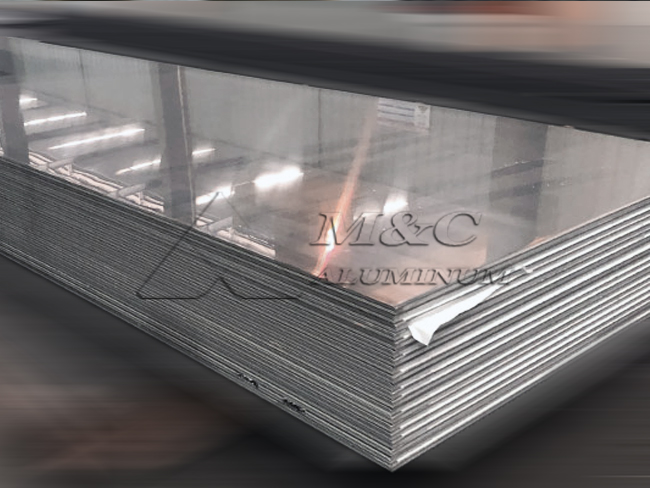
As a manufacturer of marine grade aluminum sheet and plate, we produce 5000 series marine aluminum for structures exposed to cyclic loading, seawater, humidity, and demanding welding conditions. Marine vessels and offshore equipment are subject to repeated vibration, wave impact, engine loads, cargo movement, and thermal stress. Material selection must therefore consider more than initial strength. Fatigue behavior, corrosion resistance, weld performance, dimensional consistency, and surface quality all affect the long-term reliability of the finished structure.
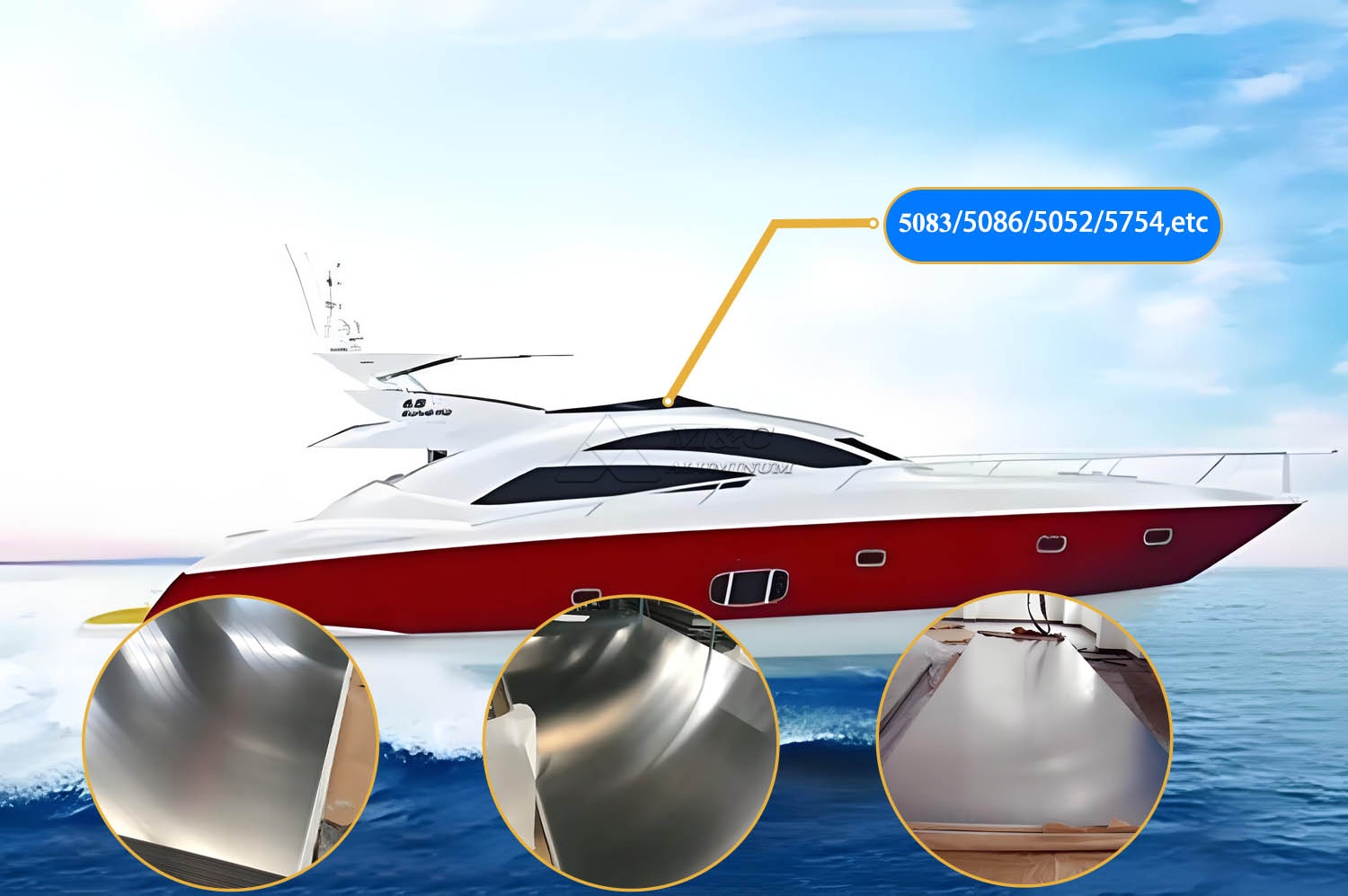
The 5000 series is an aluminum-magnesium alloy family widely used in shipbuilding and marine engineering. Grades such as 5052, 5083, 5086, 5059, 5383, 5454, 5456, and 5754 offer a practical combination of seawater corrosion resistance, medium-to-high strength, and good weldability. Among these alloys, 5083, 5086, 5059, 5383, and 5456 are frequently specified where high fatigue strength marine aluminum is required.
Why Fatigue Strength Matters in Marine Structures
Fatigue is the progressive weakening of a material under repeated stress cycles. In a marine environment, stresses may remain below the material's tensile strength but still initiate microcracks over time. If cyclic loading continues, these cracks can propagate and eventually reduce the structural safety margin.
Typical fatigue-sensitive marine components include hull plating, deck structures, bulkheads, superstructures, fast ferry panels, landing craft, patrol boats, offshore walkways, hatch covers, and welded frame assemblies. High fatigue strength is particularly important near weld seams, stiffener connections, cutouts, openings, and areas subjected to concentrated stress.
For marine aluminum plate, fatigue performance is influenced by alloy chemistry, temper, plate thickness, rolling structure, surface condition, fabrication design, and welding practice. As the material manufacturer, we control the metallurgical factors that establish a stable basis for downstream fabrication. This includes melt composition, homogenization, hot rolling reduction, cold rolling where applicable, annealing, flattening, and final inspection.
Advantages of 5000 Series Marine Aluminum
The primary alloying element in 5000 series marine aluminum is magnesium. Magnesium improves strength through solid-solution strengthening while retaining the excellent corrosion resistance characteristic of aluminum. Unlike heat-treatable 6000 or 7000 series alloys, most 5000 series grades obtain their mechanical properties through work hardening and temper control.
Key advantages include:
Strong resistance to seawater and marine atmospheric corrosion.
Good fatigue performance for cyclically loaded structures when correctly designed and fabricated.
High weldability with commonly used marine welding processes.
Lower density than steel, supporting vessel weight reduction and improved payload efficiency.
Good formability for curved hull sections, deck plates, and fabricated components.
Stable mechanical properties across a wide range of standard plate and sheet sizes.
No requirement for protective coatings solely to prevent base-metal rust, although coatings may still be used for appearance, antifouling, or system protection.
Our production process is designed to supply marine grade aluminum sheet with controlled internal quality, consistent thickness, clean edges, and a surface suitable for cutting, bending, welding, and coating.
Recommended 5000 Series Alloys for Fatigue-Critical Use
Different 5000 series grades are selected according to design strength, corrosion exposure, thickness, welding method, and classification requirements. The following table provides a general comparison of commonly used marine grades.
| Alloy | Main Characteristics | Typical Tempers | Typical Thickness Range | Common Marine Applications |
|---|---|---|---|---|
| 5052 | Good corrosion resistance and formability, moderate strength | H32, H34, H36, O | 0.5-6.0 mm sheet | Interior panels, tanks, small boat components, trim |
| 5083 | High strength, excellent seawater corrosion resistance, proven marine plate alloy | H116, H321, H111, O | 3.0-200 mm plate | Hulls, decks, bulkheads, offshore structures |
| 5086 | Excellent weldability and corrosion resistance, good strength retention after welding | H116, H321, H111, O | 3.0-100 mm plate | Hull plating, workboats, patrol vessels, tanks |
| 5059 | Higher strength marine alloy with good corrosion performance | H116, H321, H111 | 3.0-100 mm plate | Fast vessels, naval structures, high-load components |
| 5383 | High-strength alternative developed for marine welded structures | H116, H321, H111 | 3.0-80 mm plate | High-speed craft, hulls, decks, superstructures |
| 5456 | High magnesium content and strong corrosion resistance | H116, H321, H111 | 3.0-100 mm plate | Marine and offshore structural applications |
| 5754 | Moderate strength, good formability, good corrosion resistance | H22, H32, H111 | 0.8-6.0 mm sheet | Flooring, panels, vehicle and marine enclosures |
For hull plating and heavily loaded welded assemblies, 5083 Marine aluminum remains one of the most widely specified solutions. It provides a reliable balance between base-metal strength, corrosion resistance, weldability, and availability in marine plate dimensions. Where higher strength is required for vessel weight optimization or high-speed applications, 5059 and 5383 may be considered according to the engineering specification.
Mechanical Properties and Technical Parameters
Mechanical properties vary by alloy, temper, thickness, and applicable standard. The values below are representative ranges for commonly supplied 5000 series marine aluminum products. Final purchasing requirements should be confirmed against the relevant specification, such as EN, ASTM, ABS, DNV, LR, BV, CCS, or customer technical documents.
| Alloy and Temper | Tensile Strength, MPa | Yield Strength, MPa | Elongation, percent | Density, g/cm3 | Key Performance Feature |
|---|---|---|---|---|---|
| 5083-H116 | 305-385 | 215 minimum | 10 minimum | 2.66 | High strength and excellent marine corrosion resistance |
| 5083-H321 | 305-385 | 215 minimum | 10 minimum | 2.66 | Stable properties for welded marine structures |
| 5086-H116 | 275-350 | 205 minimum | 10 minimum | 2.66 | Strong corrosion resistance and weldability |
| 5059-H116 | 350-430 | 240 minimum | 8 minimum | 2.66 | Higher strength for demanding lightweight structures |
| 5383-H116 | 330-410 | 230 minimum | 8 minimum | 2.66 | High strength with good welding suitability |
| 5052-H32 | 210-260 | 130 minimum | 10 minimum | 2.68 | Good formability for sheet applications |
| 5754-H111 | 190-240 | 80 minimum | 12 minimum | 2.66 | Formable general marine sheet alloy |
Fatigue strength is not determined by a single universal value because fatigue test results depend on stress ratio, specimen geometry, surface condition, loading frequency, environment, and weld configuration. For this reason, structural designers should use the fatigue design curves and safety factors required by the applicable vessel or offshore standard. Our role as the aluminum manufacturer is to provide material with uniform chemical composition, specified temper, traceable test data, and quality controls that support predictable fabrication performance.

Manufacturing Controls That Support Fatigue Performance
High fatigue strength marine aluminum begins with process control at the mill. We use qualified primary aluminum and alloying materials to maintain magnesium and trace-element levels within the required range. Controlled melting and refining reduce the risk of inclusions and excessive hydrogen content, both of which can affect internal material soundness.
During casting, we monitor process conditions to produce slabs with stable composition and sound microstructure. Homogenization then reduces segregation and improves the material response during rolling. Hot rolling is carefully managed to achieve the required thickness and grain structure. For marine plate, final temper treatment and stress-relief practices are selected according to the alloy, thickness, and delivery condition.
Our inspection procedures may include chemical composition analysis, tensile testing, dimensional measurement, surface inspection, ultrasonic testing where specified, and documentation review. For class-certified orders, we can coordinate production and inspection requirements according to the selected classification society and project standard.
Surface quality also deserves attention. A clean surface reduces the risk of fabrication defects and improves coating preparation where coatings are applied. We supply marine grade aluminum sheet and plate with controlled surface condition, without unacceptable black streaks, deep scratches, edge cracking, delamination, or visible contamination.
Welding Considerations for 5000 Series Marine Aluminum
Welded joints are often the most fatigue-sensitive areas in a vessel structure. Although 5000 series alloys have excellent weldability, welding locally changes the temper and can reduce strength in the heat-affected zone. Structural design and welding procedure qualification must account for this effect.
For 5083, 5086, 5059, and 5383 marine aluminum, commonly used filler alloys include 5183, 5356, and 5556, depending on the base material and project requirements. Proper joint preparation, cleaning, shielding gas control, heat input management, and weld sequencing help reduce porosity, distortion, and residual stress.
To improve fatigue life in welded marine structures, designers and fabricators should avoid abrupt section changes, sharp corners, poorly finished cutouts, and unnecessary weld terminations in high-stress areas. Smooth transitions, correct stiffener design, controlled weld profiles, and removal of surface defects can significantly improve the service performance of the complete assembly.
For workboats, commercial vessels, and welded hull structures, 5086 Marine Aluminum is also a practical choice because of its strong seawater corrosion resistance and dependable fabrication behavior.
Typical Applications
Our 5000 series marine aluminum plate and sheet are manufactured for a broad range of marine and offshore applications, including:
Ship and boat hull plating.
Decks, bulkheads, and transverse frames.
Superstructures and bridge components.
Fast ferries, patrol boats, fishing vessels, and landing craft.
Offshore platforms, gangways, walkways, and access systems.
LNG, chemical, and water storage tanks where compatible alloy selection is required.
Marine flooring, equipment housings, ramps, and protective panels.
Port equipment and coastal engineering structures.
The final alloy and temper should be selected based on engineering load cases, fabrication method, plate thickness, corrosion environment, and classification requirements. A high-strength grade is not automatically the best choice if forming, welding, or service temperature conditions favor another alloy.
Material Supply from Our Manufacturing Facility
We manufacture 5000 series marine aluminum in sheet, plate, coil, tread plate, and custom-cut formats. Available dimensions depend on alloy, temper, and production route. We can provide mill test certificates, chemical analysis, mechanical test data, dimensional records, packing details, and third-party inspection support when required.
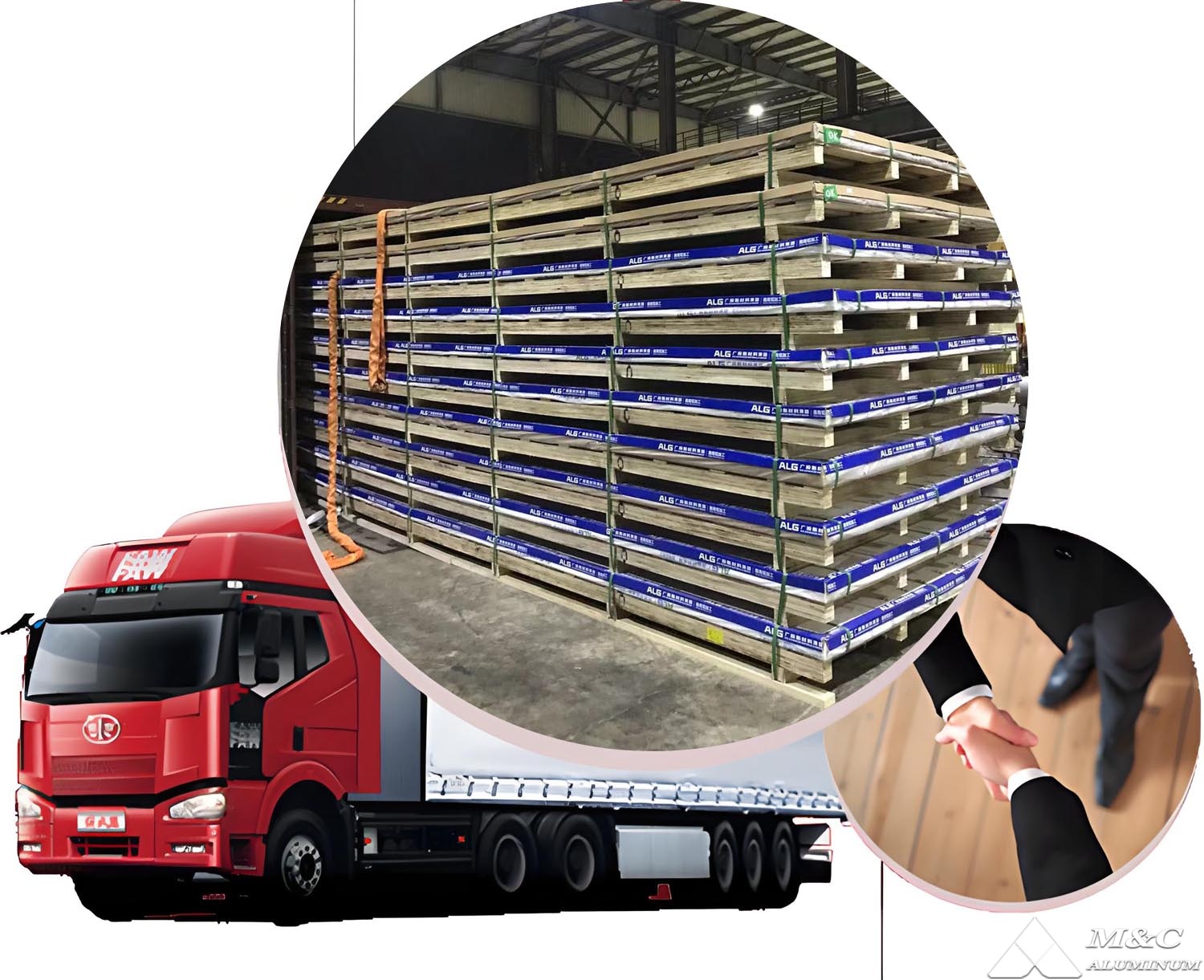
For export packing, marine aluminum plates are protected with interleaving materials, moisture-resistant wrapping, reinforced pallets, and secure strapping appropriate for sea transportation. We also support cut-to-length and custom width requirements to reduce processing waste for shipyards and fabricators.
Conclusion
5000 series marine aluminum is a proven material family for structures that require corrosion resistance, weldability, low weight, and reliable behavior under cyclic loading. Grades such as 5083, 5086, 5059, and 5383 provide strong options for fatigue-critical marine applications when paired with suitable temper selection, sound structural design, and qualified welding procedures.
As a marine aluminum manufacturer, we focus on stable alloy chemistry, controlled rolling and temper processes, traceable testing, and consistent product quality. This manufacturing foundation helps shipbuilders, offshore fabricators, and engineering contractors specify marine aluminum plate and sheet with confidence for long-term service conditions.
Original Source: https://www.marinealum.com/a/high-fatigue-strength-marine-aluminum-5000-series.html
Tag: 5000 series marine aluminum high fatigue strength aluminum marine grade aluminum sheet 5083 marine aluminum 5086 marine aluminum 5059 marine aluminum seawater corrosion resistant aluminum marine aluminum plate